Department of Tropical Disease Biology, Centre for Neglected Tropical Diseases, Liverpool School of Tropical Medicine, Liverpool, UK.
Department of Vector Biology, Liverpool School of Tropical Medicine, Liverpool, UK.
Microb Genom. 2022 Apr;8(4). doi: 10.1099/mgen.0.000805.
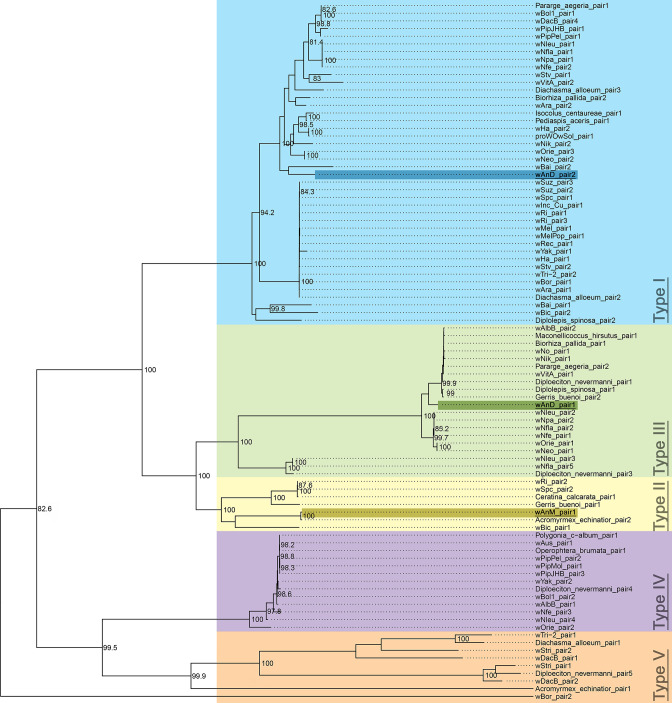
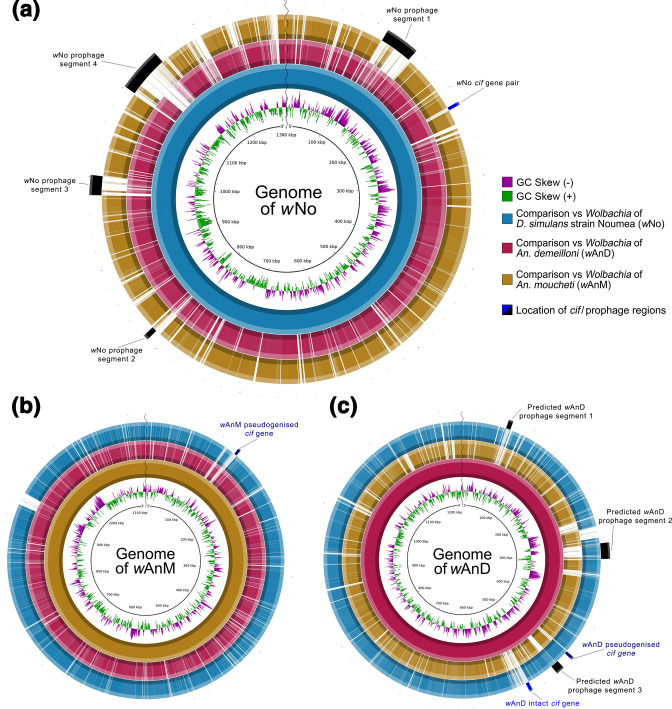
is a genus of obligate bacterial endosymbionts that infect a diverse range of arthropod species as well as filarial nematodes, with its single described species, , divided into several ‘supergroups’ based on multilocus sequence typing. strains in mosquitoes have been shown to inhibit the transmission of human pathogens, including malaria parasites and arboviruses. Despite their large host range, strains within the major malaria vectors of the and complexes appear at low density, established solely on PCR-based methods. Questions have been raised as to whether this represents a true endosymbiotic relationship. However, recent definitive evidence for two distinct, high-density strains of supergroup B within and has opened exciting possibilities to explore naturally occurring endosymbionts in for biocontrol strategies to block transmission. Here, we utilize genomic analyses to demonstrate that both strains have retained all key metabolic and transport pathways despite their smaller genome size, with this reduction potentially attributable to degenerated prophage regions. Even with this reduction, we confirmed the presence of cytoplasmic incompatibility (CI) factor genes within both strains, with AnD maintaining intact copies of these genes while the gene was interrupted in AnM, so functional analysis is required to determine whether AnM can induce CI. Additionally, phylogenetic analysis indicates that these strains may have been introduced into these two species via horizontal transmission events, rather than by ancestral acquisition and subsequent loss events in the species complex. These are the first genomes, to our knowledge, that enable us to study the relationship between natural strain malaria parasites and their anopheline hosts.
是一种专性细菌内共生体,感染范围广泛,包括多种节肢动物物种以及丝虫,其唯一描述的物种 ,根据多位点序列分型(multilocus sequence typing)分为几个“超级组”。蚊子中的 菌株已被证明可以抑制人类病原体的传播,包括疟原虫寄生虫和虫媒病毒。尽管它们的宿主范围很广,但在 和 复合体的主要疟疾传播媒介中, 菌株的密度似乎很低,仅通过基于 PCR 的方法建立。有人质疑这是否代表真正的共生关系。然而,最近在 和 中发现了两个不同的高密度 B 超级组 菌株的明确证据,为探索 和 中自然存在的 内共生体以阻断 传播的生物控制策略开辟了令人兴奋的可能性。在这里,我们利用基因组分析表明,尽管两个 菌株的基因组较小,但它们保留了所有关键的代谢和运输途径,这种减少可能归因于退化的噬菌体区域。即使有这种减少,我们也确认了这两个菌株中细胞质不兼容(CI)因子基因的存在,而 AnD 则完整保留了这些基因的拷贝,而 基因在 AnM 中被中断,因此需要进行功能分析来确定 AnM 是否可以诱导 CI。此外,系统发育分析表明,这些 菌株可能是通过水平传播事件进入这两个 物种的,而不是通过 物种复合体中祖先获得和随后丢失事件进入的。据我们所知,这是第一个 基因组,使我们能够研究自然 疟疾寄生虫与其按蚊宿主之间的关系。