Parsons George John Ian, Lees Rosemary Susan, Balaska Sofia, Vontas John
Vector Biology Department, Liverpool School of Tropical Medicine, Pembroke Place, Liverpool L3 5QA, UK.
Innovation to Impact, Pembroke Place, Liverpool L3 5QA, UK.
Insects. 2022 Mar 22;13(4):311. doi: 10.3390/insects13040311.
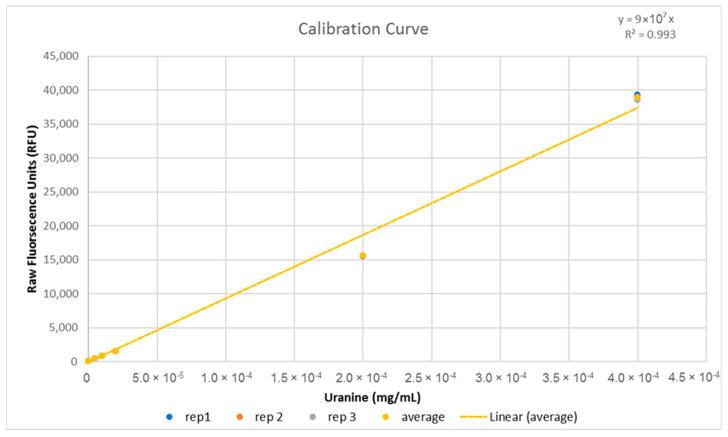
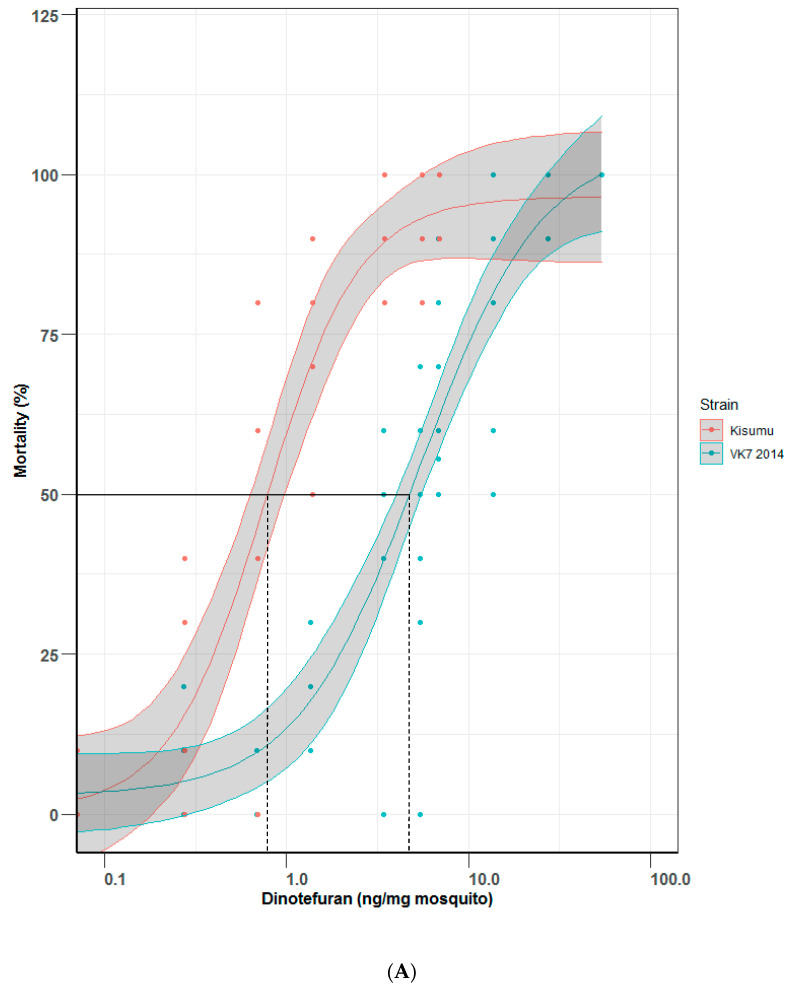
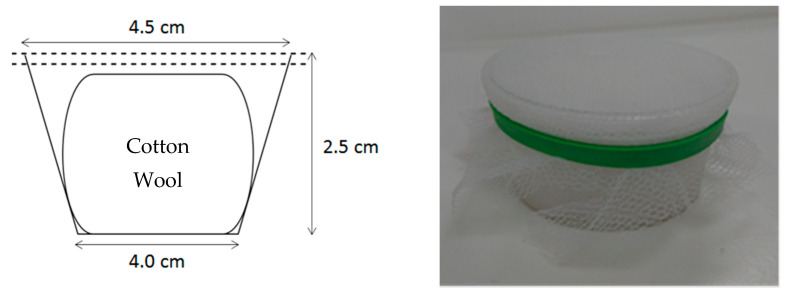
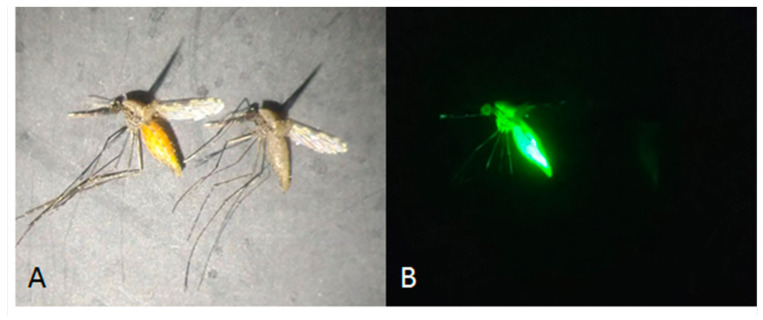
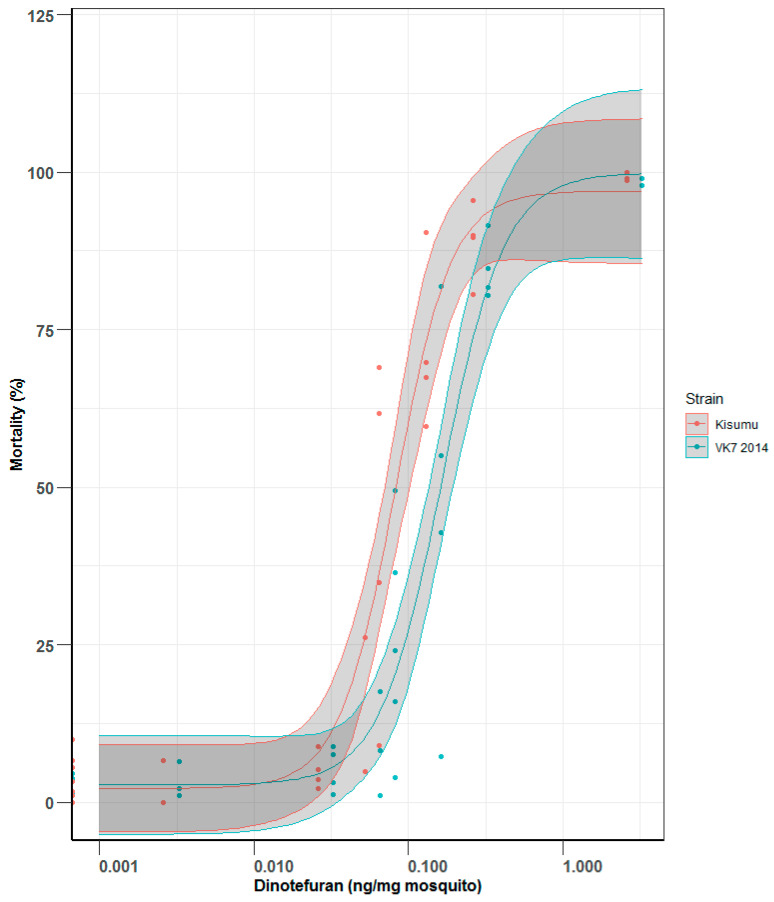
Attractive Toxic Sugar Baits (ATSB) deployed outdoors are likely to be particularly effective against outdoor biting mosquitoes and, if they contain insecticides with a different mode of action, mosquitoes resistant to pyrethroids. One such ATSB based on the neonicotinoid dinotefuran is currently under evaluation in Africa. As with any insecticide-based intervention, it will be important to monitor for the possible emergence of vector resistance. While methods for detecting resistance to insecticides via tarsal contact are recommended by the World Health Organization (WHO), these may not be applicable for orally ingested insecticides. Here, a new ingestion assay, appropriate for a controlled laboratory setting, is described using fluorescein sodium salt (uranine) as a feeding marker. Conventional topical application bioassays, more appropriate for routine deployment, have also been used to apply dinotefuran to the thorax of adult mosquitoes with an organic carrier to bypass lipid cuticle barriers. The two methods were compared by establishing lethal doses (LD) in several strains. The similarity of the ratios of susceptibility to dinotefuran between pairs of pyrethroid susceptible and resistant strains validates topical application as a suitable, more practical and field applicable method for monitoring for the emergence of resistance to orally ingested dinotefuran. A discriminating dose is proposed, which will be further validated against field populations and used to routinely monitor for the emergence of resistance alongside ATSB trials.
在户外部署的诱蚊含糖毒饵(ATSB)可能对户外叮咬的蚊子特别有效,而且,如果其含有具有不同作用方式的杀虫剂,对拟除虫菊酯类产生抗性的蚊子也会受到影响。一种基于新烟碱类呋虫胺的ATSB目前正在非洲进行评估。与任何基于杀虫剂的干预措施一样,监测病媒抗性的可能出现将很重要。虽然世界卫生组织(WHO)推荐了通过跗节接触检测杀虫剂抗性的方法,但这些方法可能不适用于口服杀虫剂。在此,描述了一种适用于受控实验室环境的新摄入试验,该试验使用荧光素钠盐(uranine)作为摄食标记物。传统的局部应用生物测定法更适合常规部署,也已被用于将呋虫胺与有机载体一起应用于成年蚊子的胸部,以绕过脂质表皮屏障。通过在几个品系中确定致死剂量(LD)对这两种方法进行了比较。拟除虫菊酯敏感和抗性品系对呋虫胺的易感性比率相似,这验证了局部应用是一种适用于监测对口服呋虫胺抗性出现的合适、更实用且可在现场应用的方法。提出了一个区分剂量,该剂量将针对野外种群进一步验证,并用于在ATSB试验期间常规监测抗性的出现。