Kimura Akio, Takekoshi Akira, Shimohata Takayoshi
Department of Neurology, Gifu University Graduate School of Medicine, 1-1 Yanagido, Gifu 501-1194, Japan.
Brain Sci. 2022 Mar 29;12(4):462. doi: 10.3390/brainsci12040462.
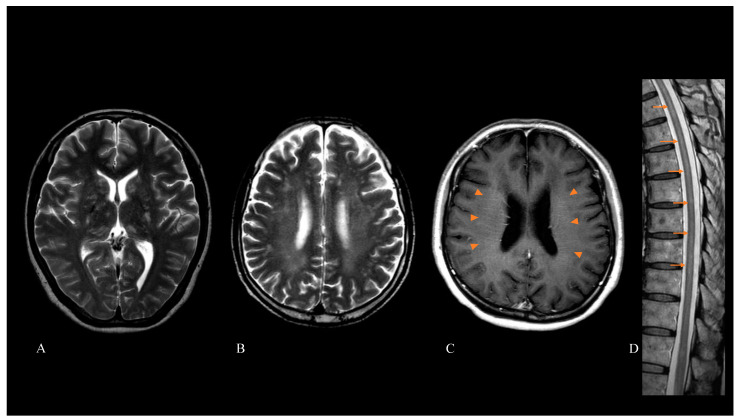
Autoimmune glial fibrillary acidic protein (GFAP) astrocytopathy (GFAP-A) is a type of autoimmune corticosteroid-responsive meningoencephalitis that occurs with or without myelitis. Movement disorders have been reported in GFAP-A patients but have not been characterized. In this study, we examined the characteristics of movement disorders in GFAP-A patients. We retrospectively reviewed clinical data from 87 consecutive patients with GFAP-A attending Gifu University Hospital in Japan. We compared the demographics, clinical features, cerebrospinal fluid characteristics, and neuroimaging findings from patients with and without movement disorders. Seventy-four patients (85%) had movement disorders, including ataxia (49%), tremor (45%), myoclonus (37%), dyskinesia (2%), opsoclonus (2%), rigidity (2%), myokymia (1%), and choreoathetosis (1%). GFAP-A patients with movement disorders were significantly older than those without. Movement disorders are therefore common in GFAP-A patients, and the main types of movement disorders observed in this population were ataxia, tremor, and myoclonus. These abnormal movements can serve as clinical features that facilitate the early diagnosis of GFAP-A. Elderly GFAP-A patients are more likely to have movement disorder complications than younger patients.
自身免疫性胶质纤维酸性蛋白(GFAP)星形细胞病(GFAP-A)是一种自身免疫性皮质类固醇反应性脑膜脑炎,可伴有或不伴有脊髓炎。已有报道GFAP-A患者出现运动障碍,但尚未对其进行特征描述。在本研究中,我们检查了GFAP-A患者运动障碍的特征。我们回顾性分析了日本岐阜大学医院连续收治的87例GFAP-A患者的临床资料。我们比较了有运动障碍和无运动障碍患者的人口统计学、临床特征、脑脊液特征和神经影像学表现。74例患者(85%)有运动障碍,包括共济失调(49%)、震颤(45%)、肌阵挛(37%)、运动障碍(2%)、眼阵挛(2%)、强直(2%)、肌束震颤(1%)和舞蹈手足徐动症(1%)。有运动障碍的GFAP-A患者明显比无运动障碍的患者年龄大。因此,运动障碍在GFAP-A患者中很常见,该人群中观察到的主要运动障碍类型为共济失调、震颤和肌阵挛。这些异常运动可作为有助于早期诊断GFAP-A的临床特征。老年GFAP-A患者比年轻患者更易出现运动障碍并发症。