Guglielmini Sabino, Bopp Gino, Marcar Valentine L, Scholkmann Felix, Wolf Martin
University of Zurich, University Hospital Zurich, Department of Neonatology, Biomedical Optics Research Laboratory, Zurich, Switzerland.
University Hospital Zürich, Comprehensive Cancer Center Zürich, Zürich, Switzerland.
Neurophotonics. 2022 Apr;9(2):026601. doi: 10.1117/1.NPh.9.2.026601. Epub 2022 Apr 18.
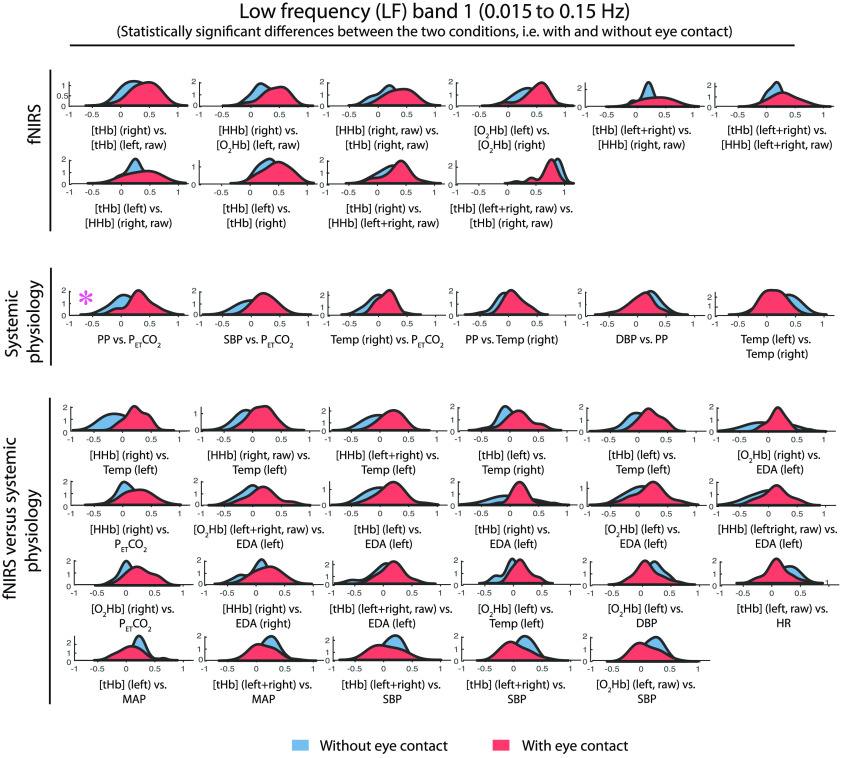
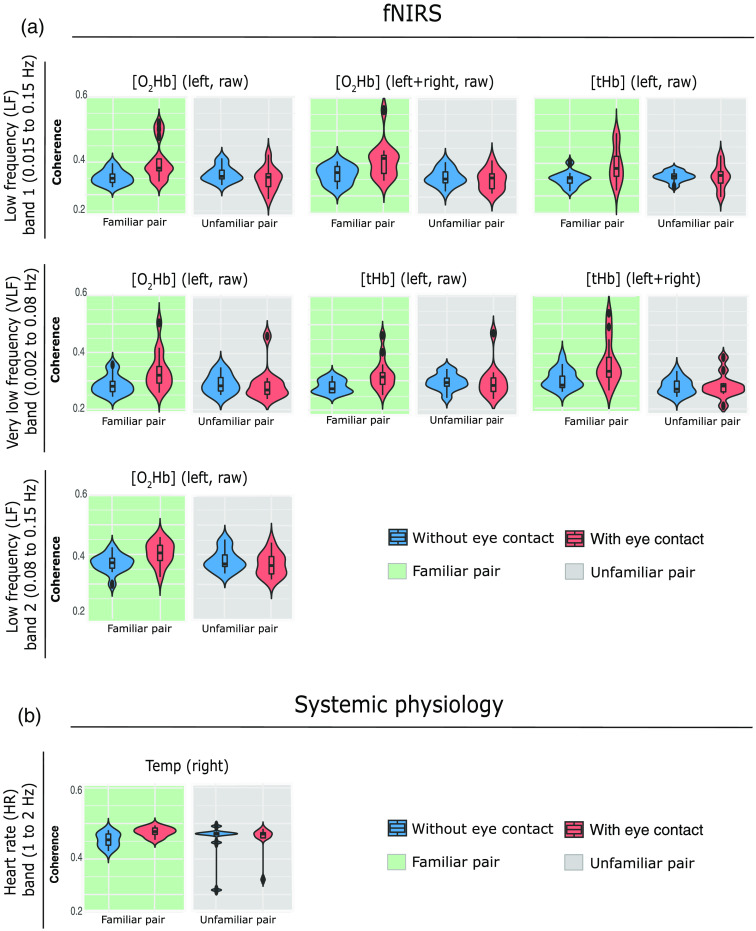
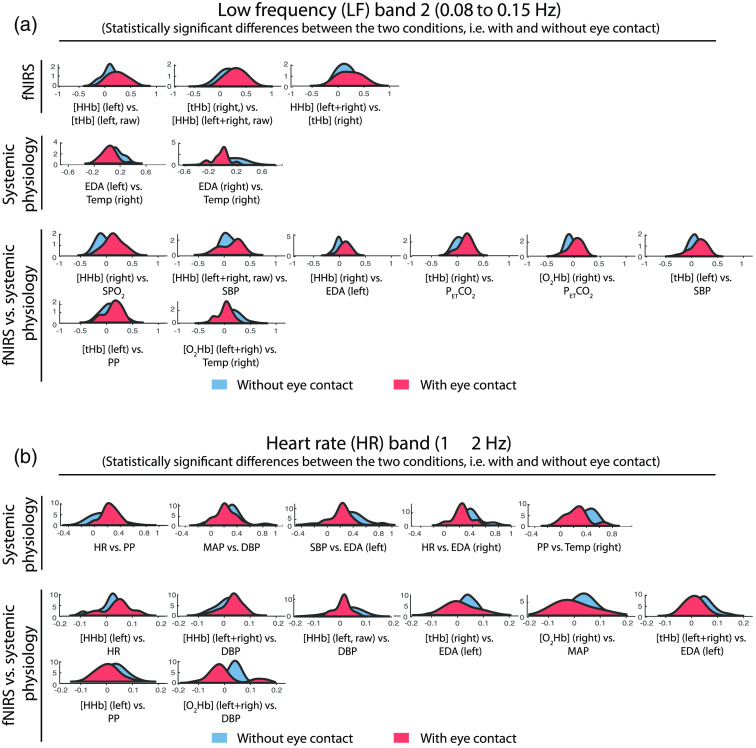
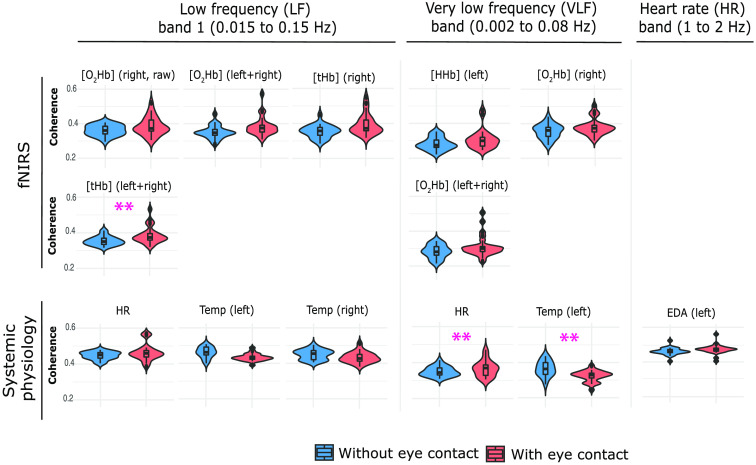
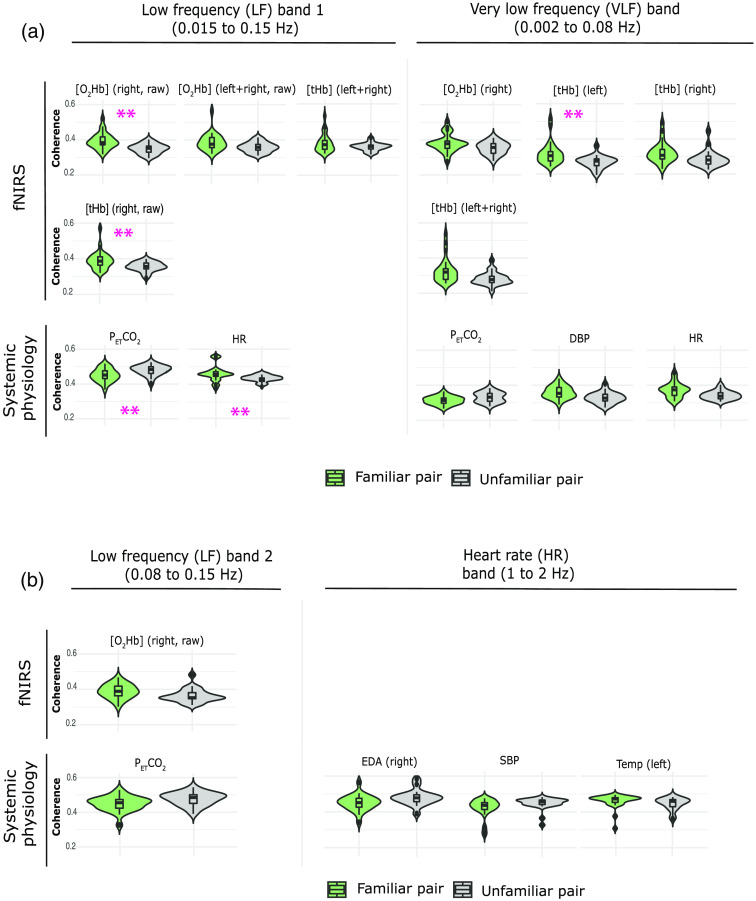
Functional near-infrared spectroscopy (fNIRS) enables measuring the brain activity of two subjects while they interact, i.e., the hyperscanning approach. In our exploratory study, we extended classical fNIRS hyperscanning by adding systemic physiological measures to obtain systemic physiology augmented fNIRS (SPA-fNIRS) hyperscanning while blocking and not blocking the visual communication between the subjects. This approach enables access brain-to-brain, brain-to-body, and body-to-body coupling between the subjects simultaneously. Twenty-four pairs of subjects participated in the experiment. The paradigm consisted of two subjects that sat in front of each other and had their eyes closed for 10 min, followed by a phase of 10 min where they made eye contact. Brain and body activity was measured continuously by SPA-fNIRS. Our study shows that making eye contact for a prolonged time causes significant changes in brain-to-brain, brain-to-body, and body-to-body coupling, indicating that eye contact is followed by entrainment of the physiology between subjects. Subjects that knew each other generally showed a larger trend to change between the two conditions. The main point of this study is to introduce a new framework to investigate brain-to-brain, body-to-body, and brain-to-body coupling through a simple social experimental paradigm. The study revealed that eye contact leads to significant synchronization of spontaneous activity of the brain and body physiology. Our study is the first that employed the SPA-fNIRS approach and showed its usefulness to investigate complex interpersonal physiological changes.
功能近红外光谱技术(fNIRS)能够在两名受试者互动时测量他们的大脑活动,即超扫描方法。在我们的探索性研究中,我们通过添加全身生理指标扩展了经典的fNIRS超扫描,以获得全身生理增强的fNIRS(SPA-fNIRS)超扫描,同时阻断和不阻断受试者之间的视觉交流。这种方法能够同时获取受试者之间脑对脑、脑对身和身对身的耦合情况。24对受试者参与了该实验。实验范式包括两名受试者面对面坐着,先闭眼10分钟,然后进行10分钟的眼神交流阶段。通过SPA-fNIRS持续测量大脑和身体活动。我们的研究表明,长时间眼神交流会导致脑对脑、脑对身和身对身耦合发生显著变化,这表明眼神交流后受试者之间的生理活动会出现同步。彼此认识的受试者在两种状态之间通常表现出更大的变化趋势。本研究的主要目的是引入一个新框架,通过一个简单的社会实验范式来研究脑对脑、身对身和脑对身的耦合。该研究揭示了眼神交流会导致大脑和身体生理自发活动的显著同步。我们的研究是首次采用SPA-fNIRS方法并展示其在研究复杂人际生理变化方面的有用性。