Ba-Alwi Nour Abdallah, Aremu John Ogooluwa, Ntim Michael, Takam Russel, Msuya Mwanaidi Amiri, Nassor Hamid, Ji Hong
Department of Pediatrics, First Affiliated Hospital of Dalian Medical University, Dalian, China.
Department of Anatomy, Harbin Medical University, Harbin, China.
Front Pediatr. 2022 Apr 5;10:797208. doi: 10.3389/fped.2022.797208. eCollection 2022.
Neonatal sepsis is still a major cause of death and morbidity in newborns all over the world. Despite substantial developments in diagnosis, treatments, and prevention strategies, sepsis remains a common problem in clinical practice, particularly in low-resource countries.
A retrospective cohort study of 238 neonates with positive blood culture-proven sepsis (in Muhimbili National Hospital) was conducted from January 2019 to December 2020. The outcomes of hospitalization were survival and death.
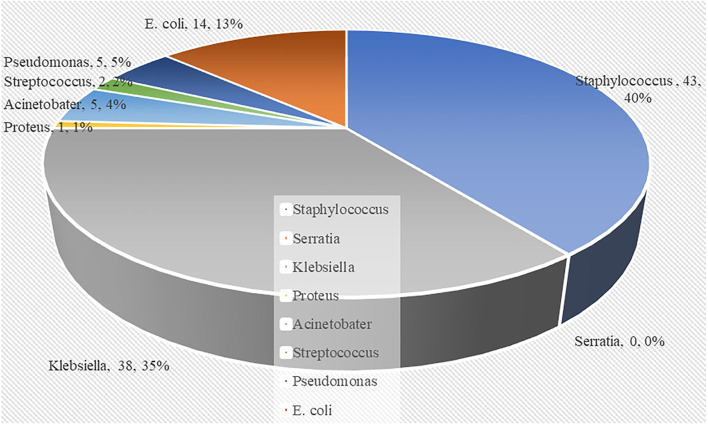
In total, 45.4% mortality resulted from 238 neonates who had sepsis exclusively based on blood culture positivity. A significant association was found between very low birth weight (VLBW), hyperglycemia, mechanical ventilation, and high neonatal mortality. Among the different clinical presentations of neonatal sepsis, lethargy, vomiting, and respiratory distress were found to be frequently associated with neonatal mortality. Furthermore, sepsis with Gram-negative bacteria and early-onset sepsis were also associated with high neonatal mortality. Of the 108 neonatal deaths, the largest proportion (40%) was observed with , and the remaining 38% was caused by , 14% by , 5% by , 4% by , and 2% by . No neonatal deaths from infection were observed. The overall resistance of isolated organisms to the recommended first-line antibiotics was 84% for ampicillin and 71.3% for gentamicin. The resistance pattern for the recommended second-line antibiotics was 76.2% for ceftriaxone, 35.9% for vancomycin, and 17.5% for amikacin.
VLBW, early-onset sepsis, clinical and laboratory parameters like lethargy, vomiting, and hyperglycemia, sepsis with Gram-negative bacteria, and being on mechanical ventilation are strong predictors of death in neonatal sepsis. In addition, this study discovered extraordinarily high resistance to conventional antibiotics. These findings give light on the crucial aspects to consider in preventing this disease and poor outcomes.
新生儿败血症仍是全球新生儿死亡和发病的主要原因。尽管在诊断、治疗和预防策略方面取得了重大进展,但败血症在临床实践中仍然是一个常见问题,尤其是在资源匮乏的国家。
对2019年1月至2020年12月在穆希姆比利国家医院进行血培养确诊为败血症的238例新生儿进行回顾性队列研究。住院结局为存活和死亡。
在仅根据血培养阳性确诊败血症的238例新生儿中,总死亡率为45.4%。极低出生体重(VLBW)、高血糖、机械通气与新生儿高死亡率之间存在显著关联。在新生儿败血症的不同临床表现中,嗜睡、呕吐和呼吸窘迫与新生儿死亡率密切相关。此外,革兰氏阴性菌败血症和早发型败血症也与新生儿高死亡率相关。在108例新生儿死亡中,最大比例(40%)为[此处原文缺失具体病因],其余38%由[此处原文缺失具体病因]引起,14%由[此处原文缺失具体病因]引起,5%由[此处原文缺失具体病因]引起,4%由[此处原文缺失具体病因]引起,2%由[此处原文缺失具体病因]引起。未观察到因[感染类型原文缺失]感染导致的新生儿死亡。分离出的病原体对推荐的一线抗生素的总体耐药率为:氨苄西林84%,庆大霉素71.3%。推荐的二线抗生素的耐药模式为:头孢曲松76.2%,万古霉素35.9%,阿米卡星17.5%。
极低出生体重、早发型败血症、嗜睡、呕吐和高血糖等临床和实验室参数、革兰氏阴性菌败血症以及机械通气是新生儿败血症死亡的有力预测因素。此外,本研究发现对传统抗生素的耐药性极高。这些发现揭示了预防该疾病和不良结局时需考虑的关键因素。