Carles-Fontana Roger, Heaton Nigel, Palma Elena, Khorsandi Shirin E
The Roger Williams Institute of Hepatology, Foundation for Liver Research, London SE5 9NT, UK.
Faculty of Life Sciences and Medicine, King's College London, London WC2R 2LS, UK.
Cancers (Basel). 2022 Apr 7;14(8):1865. doi: 10.3390/cancers14081865.
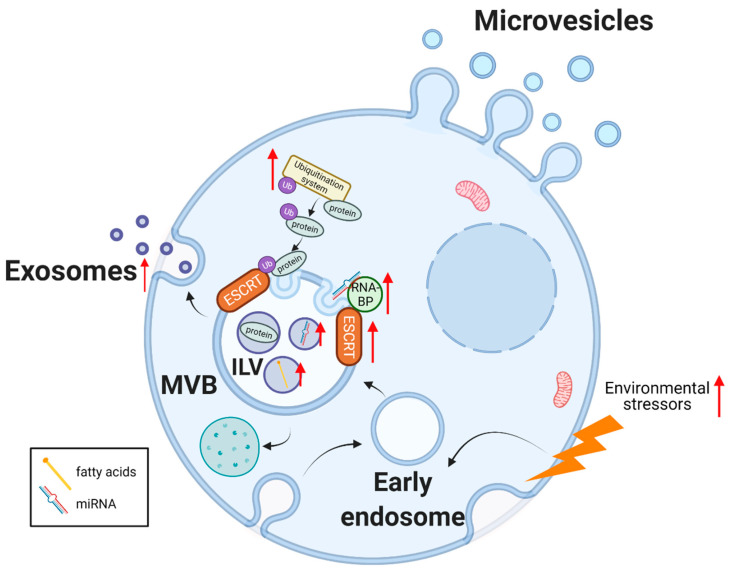
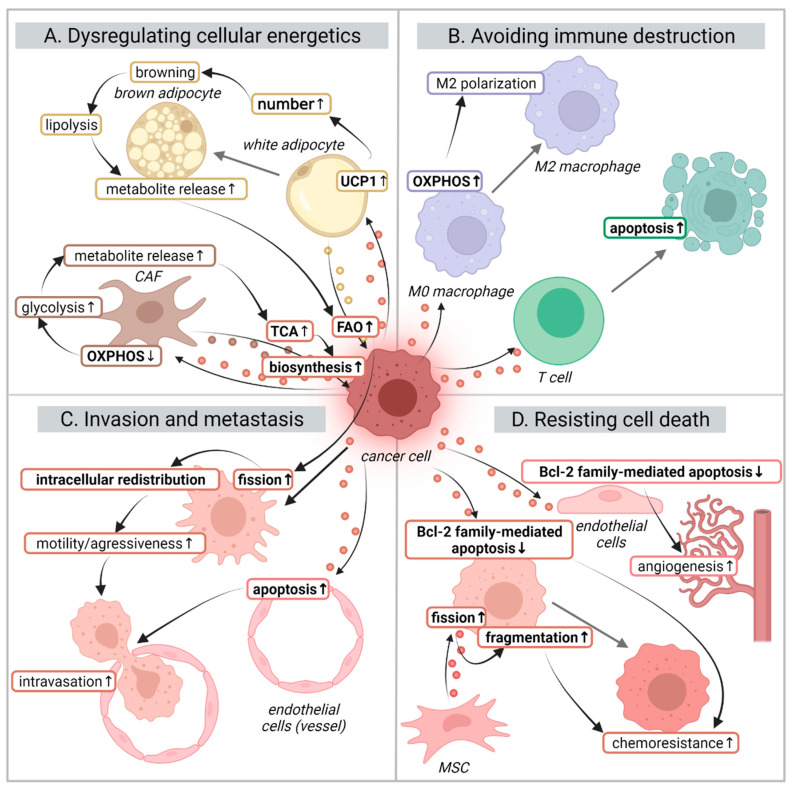
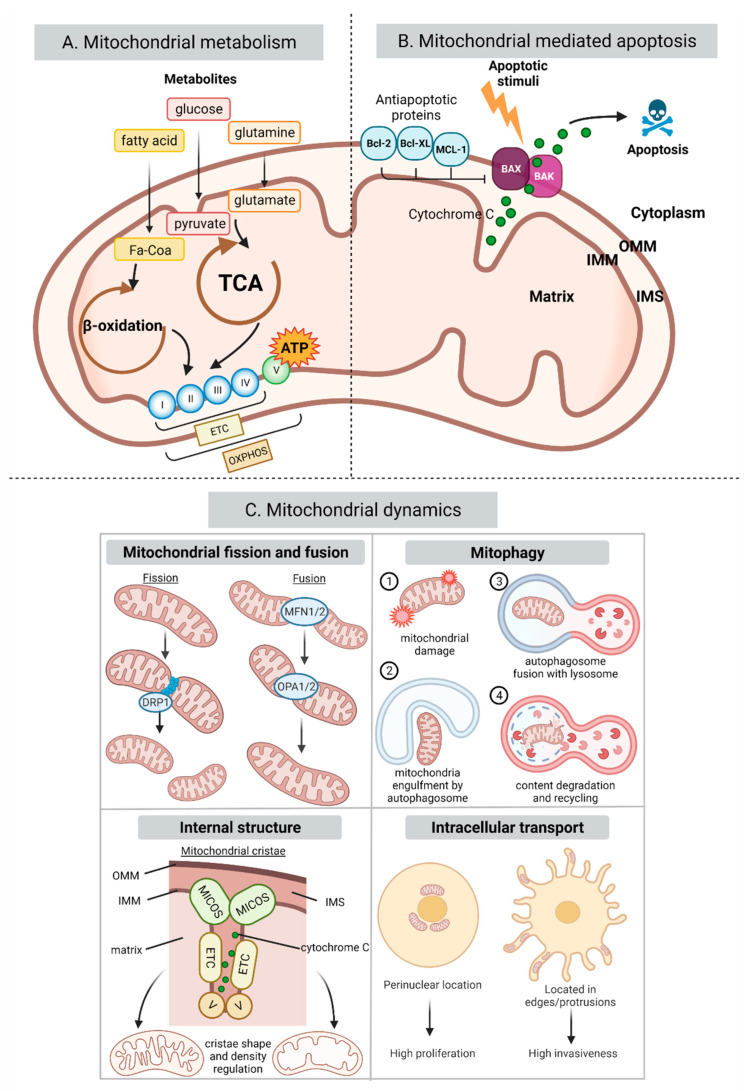
Altered metabolism is a defining hallmark of cancer. Metabolic adaptations are often linked to a reprogramming of the mitochondria due to the importance of these organelles in energy production and biosynthesis. Cancer cells present heterogeneous metabolic phenotypes that can be modulated by signals originating from the tumor microenvironment. Extracellular vesicles (EVs) are recognized as key players in intercellular communications and mediate many of the hallmarks of cancer via the delivery of their diverse biological cargo molecules. Firstly, this review introduces the most characteristic changes that the EV-biogenesis machinery and mitochondria undergo in the context of cancer. Then, it focuses on the EV-driven processes which alter mitochondrial structure, composition, and function to provide a survival advantage to cancer cells in the context of the hallmarks of cancers, such as altered metabolic strategies, migration and invasiveness, immune surveillance escape, and evasion of apoptosis. Finally, it explores the as yet untapped potential of targeting mitochondria using EVs as delivery vectors as a promising cancer therapeutic strategy.
代谢改变是癌症的一个决定性标志。由于线粒体在能量产生和生物合成中的重要性,代谢适应通常与线粒体的重编程有关。癌细胞呈现出异质性的代谢表型,这些表型可由肿瘤微环境产生的信号调节。细胞外囊泡(EVs)被认为是细胞间通讯的关键参与者,并通过传递其多样的生物 cargo 分子介导癌症的许多标志。首先,本综述介绍了 EV 生物发生机制和线粒体在癌症背景下所经历的最具特征性的变化。然后,重点关注 EV 驱动的过程,这些过程改变线粒体的结构、组成和功能,以便在癌症标志(如改变的代谢策略、迁移和侵袭性、免疫监视逃逸以及凋亡逃避)的背景下为癌细胞提供生存优势。最后,探讨了将 EVs 作为递送载体靶向线粒体这一尚未开发的潜力,作为一种有前景的癌症治疗策略。