Marzi Julia, Stope Matthias B, Henes Melanie, Koch André, Wenzel Thomas, Holl Myriam, Layland Shannon L, Neis Felix, Bösmüller Hans, Ruoff Felix, Templin Markus, Krämer Bernhard, Staebler Annette, Barz Jakob, Carvajal Berrio Daniel A, Enderle Markus, Loskill Peter M, Brucker Sara Y, Schenke-Layland Katja, Weiss Martin
Institute of Biomedical Engineering, Eberhard Karls University, 72076 Tübingen, Germany.
NMI Natural and Medical Sciences Institute, 72770 Reutlingen, Germany.
Cancers (Basel). 2022 Apr 12;14(8):1933. doi: 10.3390/cancers14081933.
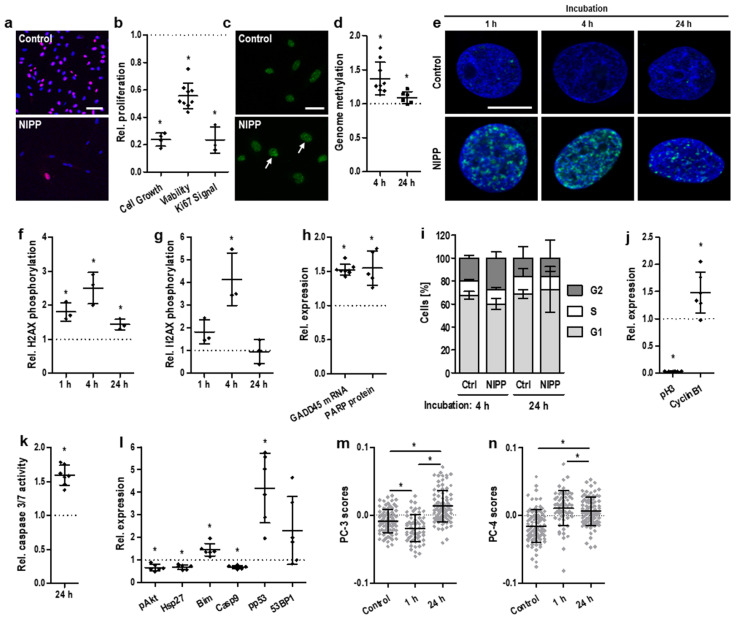
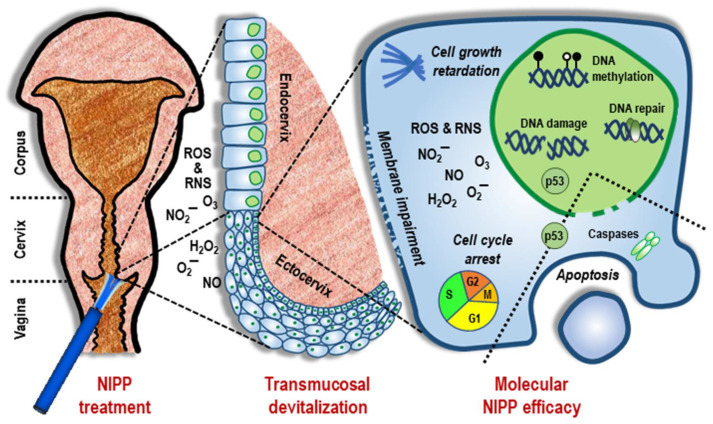
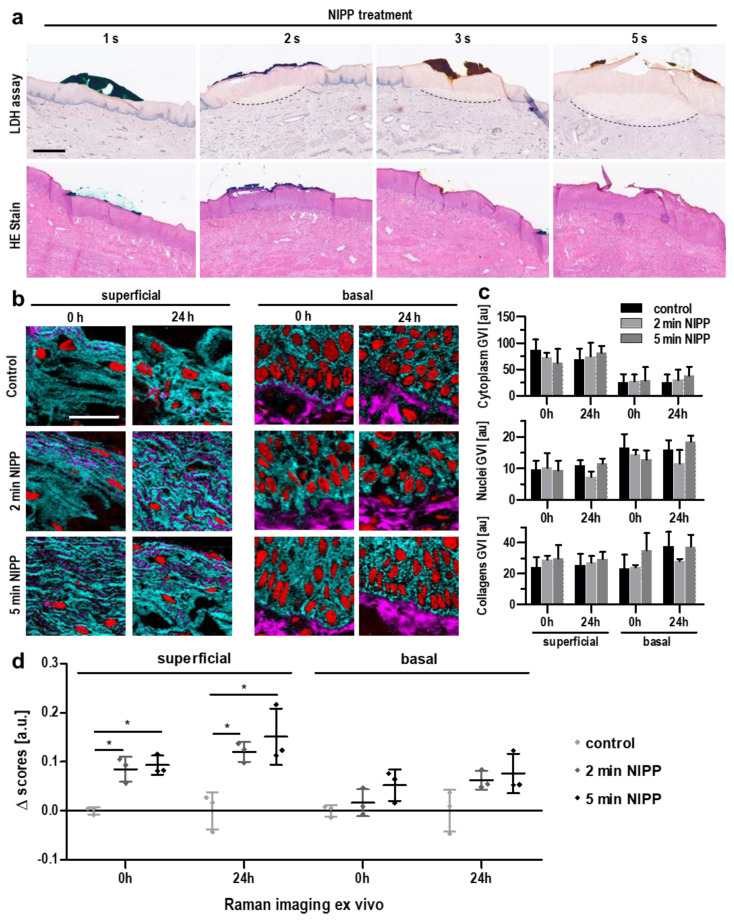
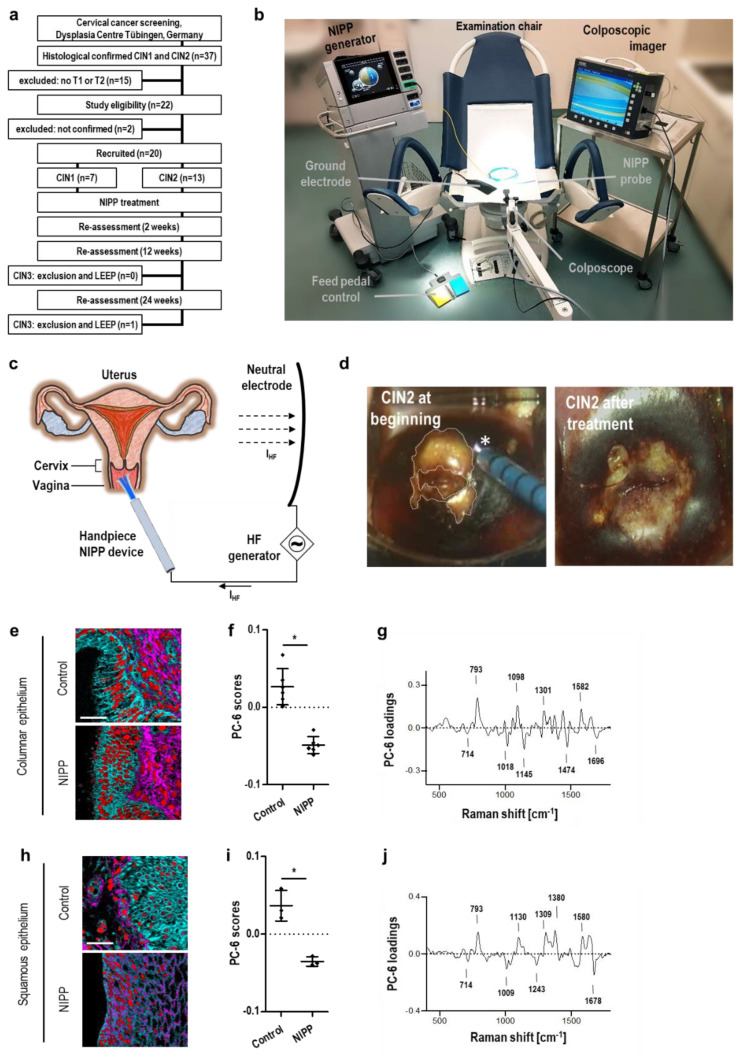
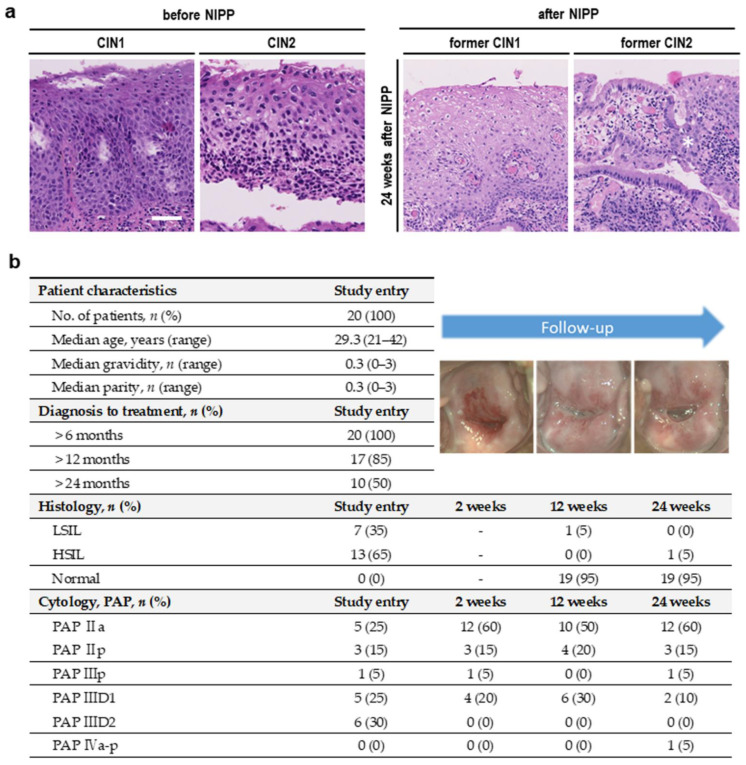
(1) Background: Cervical intraepithelial neoplasia (CIN) of long-term persistence or associated with individual treatment indications often requires highly invasive treatments. These are associated with risks of bleeding, infertility, and pregnancy complications. For low- and middle-income countries (LMICs), standard treatment procedures are difficult to implement and manage. We characterized the application of the highly energized gas "noninvasive physical plasma" (NIPP) for tissue devitalization and the treatment of CIN. (2) Methods: We report the establishment of a promising tissue devitalization procedure by NIPP application. The procedure was characterized at the in vitro, ex vivo and in vivo levels. We performed the first prospective, single-armed phase-IIb trial in 20 CIN1/2 patients (NCT03218436). (3) Results: NIPP-treated cervical cancer cells used as dysplastic in vitro model exhibited significant cell growth retardation due to DNA damage, cell cycle arrest and apoptosis. Ex vivo and in vivo tissue assessments showed a highly noninvasive and tissue-preserving treatment procedure which induces transmucosal tissue devitalization. Twenty participants were treated with NIPP and attended a 24-week follow-up. Treatment success was achieved in 19 (95%) participants without postinterventional complications other than mild to moderate discomfort during application. (4) Conclusions: The results from this study preliminarily suggest that NIPP could be used for an effective and tissue-preserving treatment for CIN without the disadvantages of standard treatments. However, randomized controlled trials must confirm the efficacy and noninferiority of NIPP compared to standard treatments.
(1) 背景:长期持续存在或伴有个体治疗指征的宫颈上皮内瘤变(CIN)通常需要进行高侵入性治疗。这些治疗伴随着出血、不孕和妊娠并发症的风险。对于低收入和中等收入国家(LMICs)而言,标准治疗程序难以实施和管理。我们对高能量气体“非侵入性物理等离子体”(NIPP)用于组织灭活及CIN治疗的应用进行了表征。(2) 方法:我们报告了通过应用NIPP建立的一种有前景的组织灭活程序。该程序在体外、离体和体内水平进行了表征。我们对20例CIN1/2患者进行了首例前瞻性、单臂IIb期试验(NCT03218436)。(3) 结果:用作发育异常体外模型的经NIPP处理的宫颈癌细胞,由于DNA损伤、细胞周期停滞和凋亡,表现出显著的细胞生长迟缓。离体和体内组织评估显示,这是一种高度非侵入性且能保留组织的治疗程序,可诱导经黏膜组织灭活。20名参与者接受了NIPP治疗,并进行了24周的随访。19名(95%)参与者治疗成功,除了应用过程中出现的轻度至中度不适外,无介入后并发症。(4) 结论:本研究结果初步表明,NIPP可用于CIN的有效且保留组织的治疗,而无标准治疗的缺点。然而,随机对照试验必须证实NIPP与标准治疗相比的疗效和非劣效性。