Institute of Molecular and Industrial Biotechnology, Lodz University of Technology, Stefanowskiego 2/22, 90-537 Lodz, Poland.
Cells. 2022 Apr 12;11(8):1312. doi: 10.3390/cells11081312.
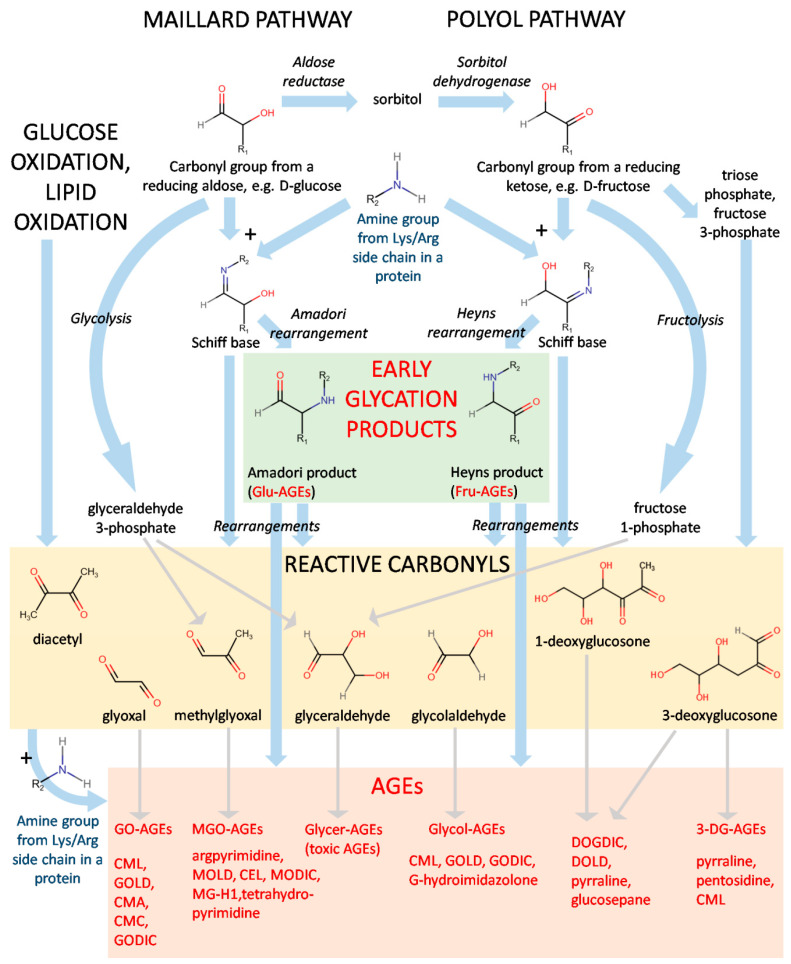
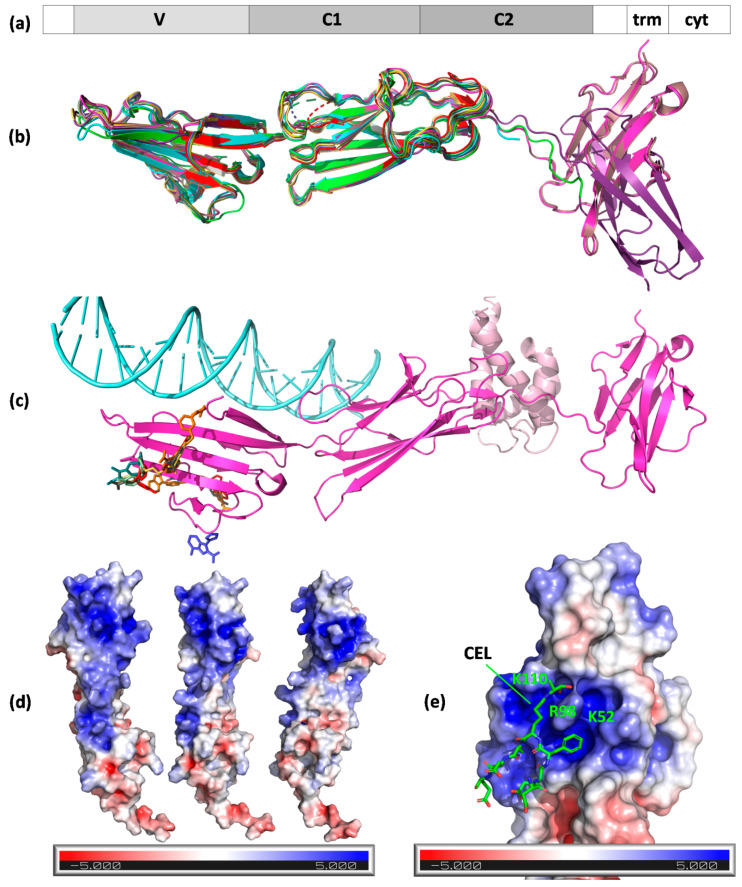
Advanced glycation end-products (AGEs) constitute a non-homogenous, chemically diverse group of compounds formed either exogeneously or endogeneously on the course of various pathways in the human body. In general, they are formed non-enzymatically by condensation between carbonyl groups of reducing sugars and free amine groups of nucleic acids, proteins, or lipids, followed by further rearrangements yielding stable, irreversible end-products. In the last decades, AGEs have aroused the interest of the scientific community due to the increasing evidence of their involvement in many pathophysiological processes and diseases, such as diabetes, cancer, cardiovascular, neurodegenerative diseases, and even infection with the SARS-CoV-2 virus. They are recognized by several cellular receptors and trigger many signaling pathways related to inflammation and oxidative stress. Despite many experimental research outcomes published recently, the complexity of their engagement in human physiology and pathophysiological states requires further elucidation. This review focuses on the receptors of AGEs, especially on the structural aspects of receptor-ligand interaction, and the diseases in which AGEs are involved. It also aims to present AGE classification in subgroups and to describe the basic processes leading to both exogeneous and endogeneous AGE formation.
糖基化终产物(AGEs)是由人体各种途径中形成的非均相、化学多样化的化合物组成的一组化合物。一般来说,它们是由还原糖的羰基与核酸、蛋白质或脂质的游离胺基之间非酶促缩合形成的,然后通过进一步重排生成稳定的、不可逆的终产物。在过去几十年中,由于越来越多的证据表明 AGEs 参与了许多病理生理过程和疾病,如糖尿病、癌症、心血管疾病、神经退行性疾病,甚至 SARS-CoV-2 病毒感染,它们引起了科学界的兴趣。它们被几种细胞受体识别,并触发与炎症和氧化应激相关的许多信号通路。尽管最近发表了许多实验研究结果,但它们在人类生理和病理状态中的参与的复杂性仍需要进一步阐明。本综述重点介绍 AGEs 的受体,特别是受体-配体相互作用的结构方面,以及 AGEs 参与的疾病。它还旨在介绍 AGE 的分组分类,并描述导致外源性和内源性 AGE 形成的基本过程。