Charó Nancy, Jerez Horacio, Tatti Silvio, Romero Eder Lilia, Schattner Mirta
Laboratory of Experimental Thrombosis and Immunobiology of Inflammation, Institute of Experimental Medicine, CONICET-National Academy of Medicine, Pacheco de Melo 3081, Buenos Aires 1425, Argentina.
Center for Research and Development in Nanomedicines (CIDEN), National University of Quilmes, Roque Saenz Peña, Bernal 1876, Argentina.
Pharmaceutics. 2022 Mar 29;14(4):736. doi: 10.3390/pharmaceutics14040736.
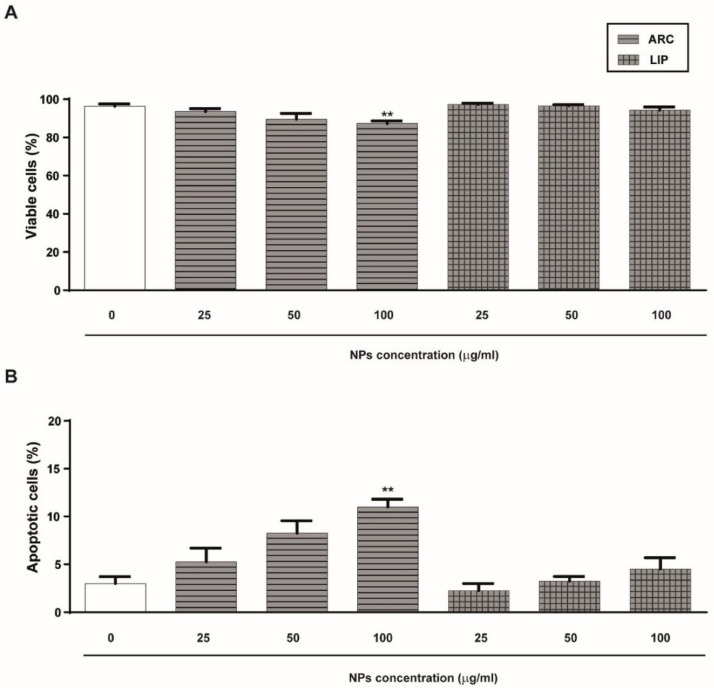
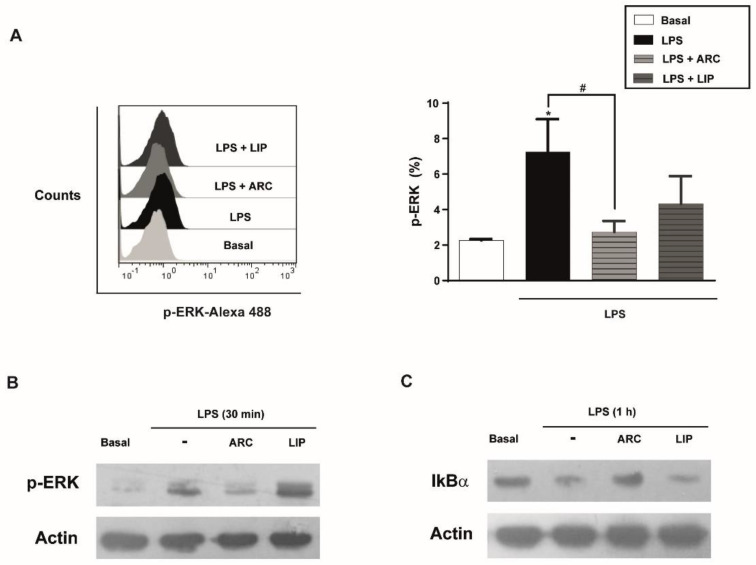
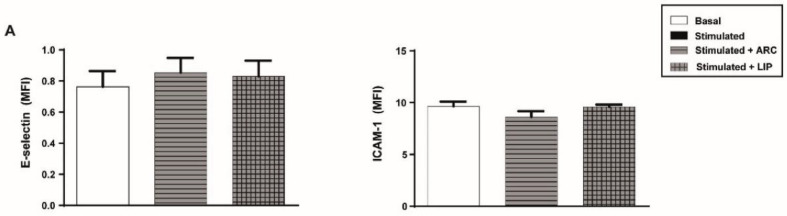
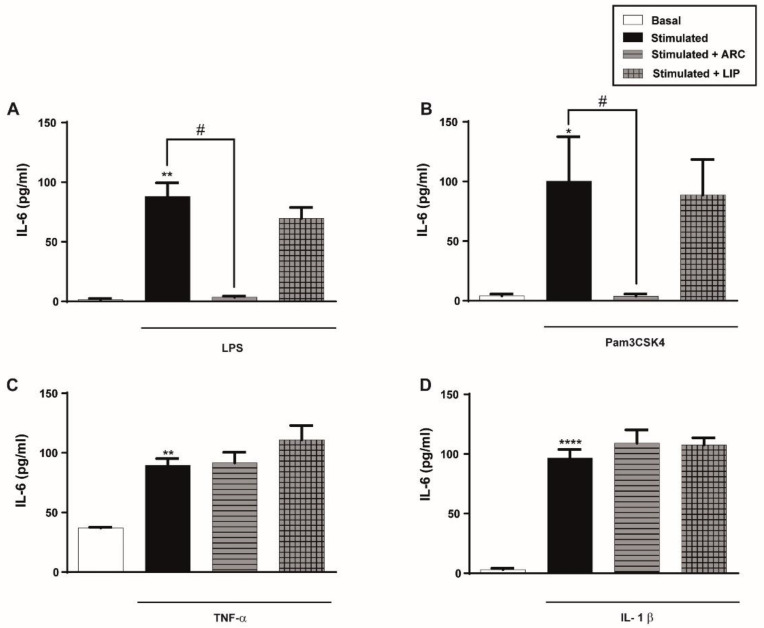
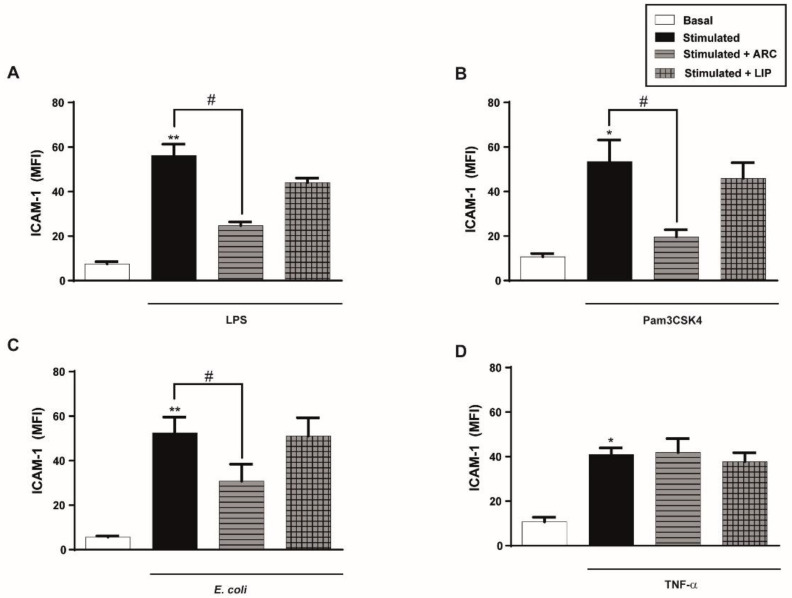
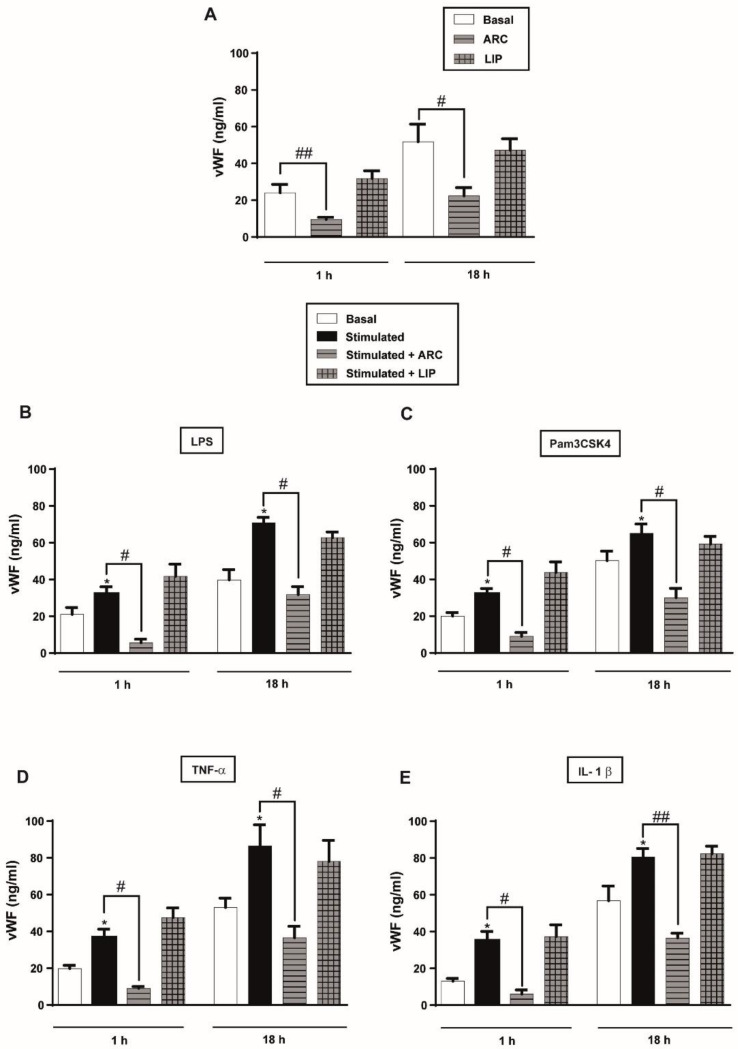
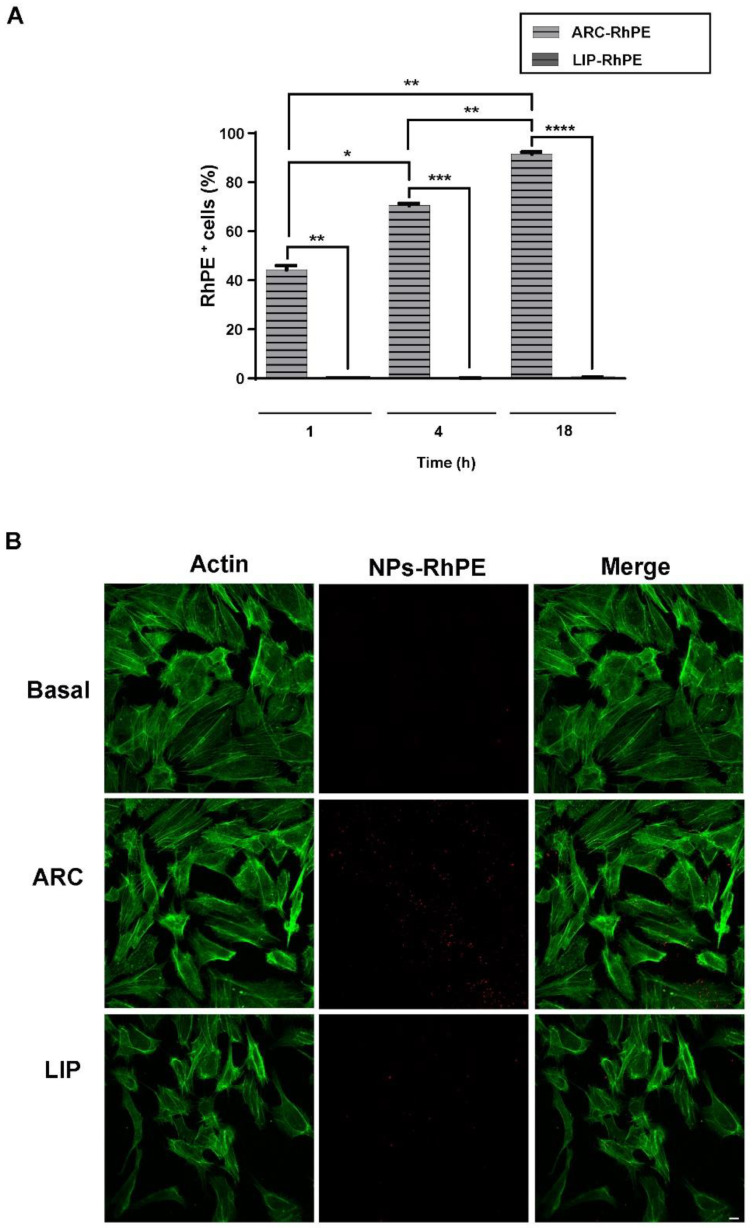
Archaebacterias are considered a unique source of novel biomaterials of interest for nanomedicine. In this perspective, the effects of nanoarchaeosomes (ARC), which are nanovesicles prepared from polar lipids extracted from the extreme halophilic , on human umbilical vein endothelial cells (HUVEC) were investigated in physiological and under inflammatory static conditions. Upon incubation, ARC (170 nm mean size, -41 mV ζ) did not affect viability, cell proliferation, and expression of intercellular adhesion molecule-1 (ICAM-1) and E-selectin under basal conditions, but reduced expression of both molecules and secretion of IL-6 induced by lypopolysaccharide (LPS), Pam3CSK4 or . Such effects were not observed with TNF-α or IL-1β stimulation. Interestingly, ARC significantly decreased basal levels of von Willebrand factor (vWF) and levels induced by all stimuli. None of these parameters was altered by liposomes of hydrogenated phosphatidylcholine and cholesterol of comparable size and concentration. Only ARC were endocytosed by HUVEC and reduced mRNA expression of ICAM-1 and vWF via NF-ĸB and ERK1/2 in LPS-stimulated cells. This is the first report of the anti-inflammatory effect of ARC on endothelial cells and our data suggest that its future use in vascular disease may hopefully be of particular interest.
古细菌被认为是纳米医学中新型生物材料的独特来源。从这个角度来看,研究了纳米古脂质体(ARC),即由从极端嗜盐菌中提取的极性脂质制备的纳米囊泡,在生理和炎症静态条件下对人脐静脉内皮细胞(HUVEC)的影响。孵育后,ARC(平均大小170nm,ζ电位-41mV)在基础条件下不影响细胞活力、细胞增殖以及细胞间粘附分子-1(ICAM-1)和E-选择素的表达,但能降低脂多糖(LPS)、Pam3CSK4或诱导的这两种分子的表达以及IL-6的分泌。在TNF-α或IL-1β刺激下未观察到这种效应。有趣的是,ARC显著降低了血管性血友病因子(vWF)的基础水平以及所有刺激诱导的水平。氢化磷脂酰胆碱和胆固醇组成的大小和浓度相当的脂质体未改变这些参数中的任何一个。只有ARC被HUVEC内吞,并通过NF-κB和ERK1/2降低LPS刺激细胞中ICAM-1和vWF的mRNA表达。这是关于ARC对内皮细胞抗炎作用的首次报道,我们的数据表明其未来在血管疾病中的应用可能会特别受关注。