Altube Maria Julia, Caimi Lilen Ivonne, Huck-Iriart Cristian, Morilla Maria Jose, Romero Eder Lilia
Nanomedicines Research and Development Centre (NARD), Science and Technology Department, National University of Quilmes, Roque Sáenz Peña 352, Bernal B1876, Argentina.
Cell Cycle and Genomic Stability Laboratory, Fundación Instituto Leloir, Av. Patricias Argentinas 435, Buenos Aires C1405, Argentina.
Pharmaceutics. 2021 Aug 25;13(9):1331. doi: 10.3390/pharmaceutics13091331.
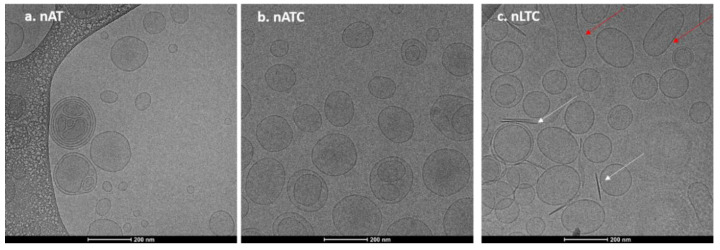
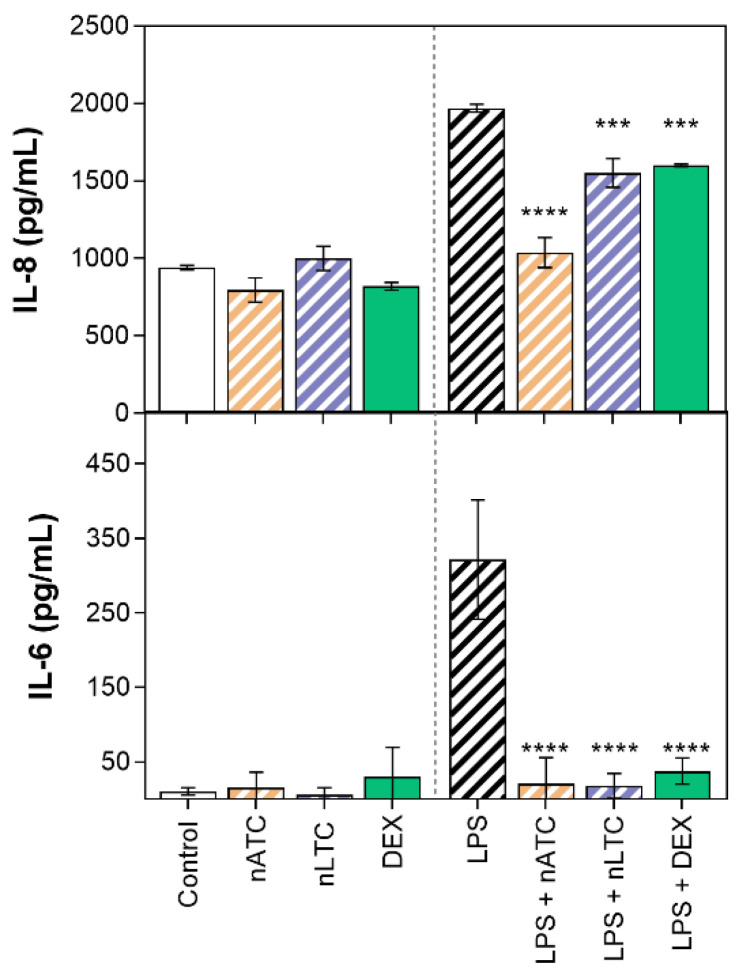
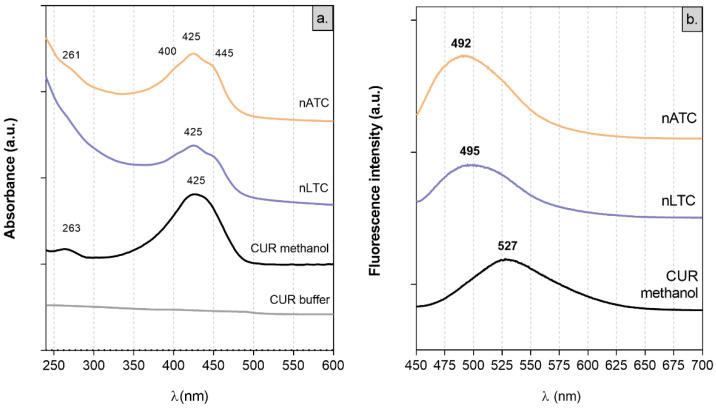
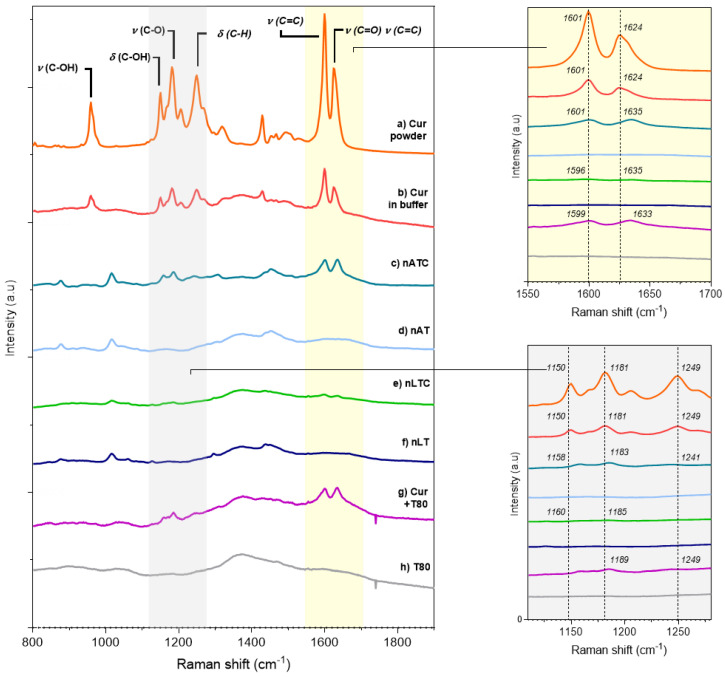
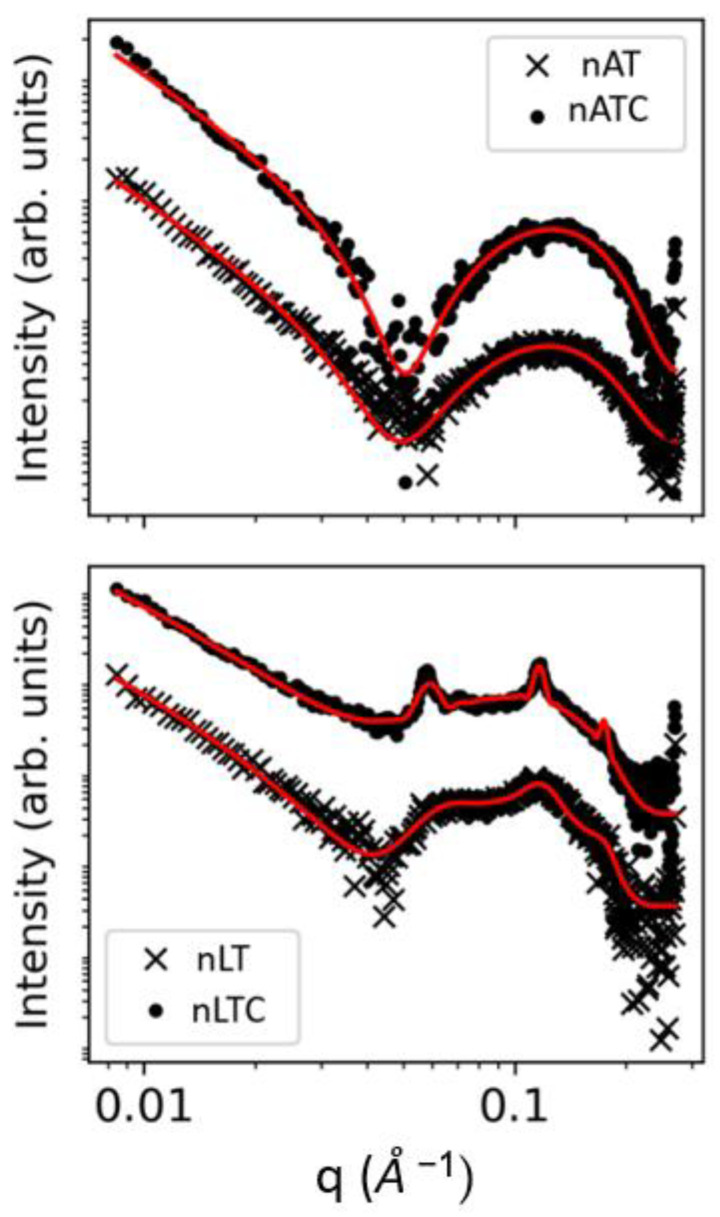
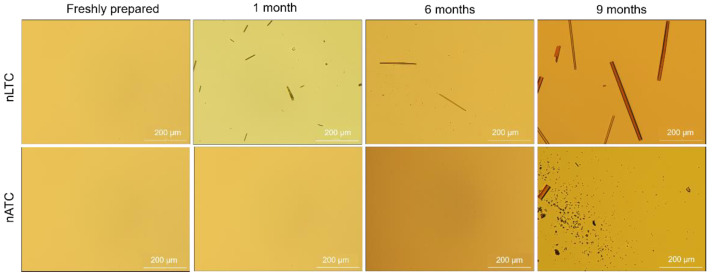
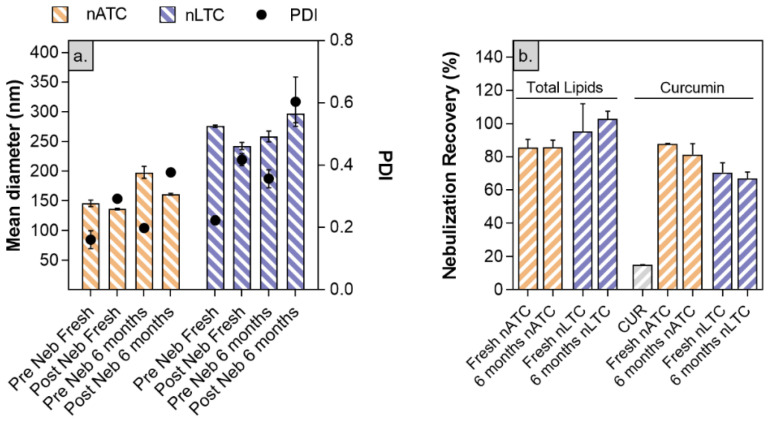
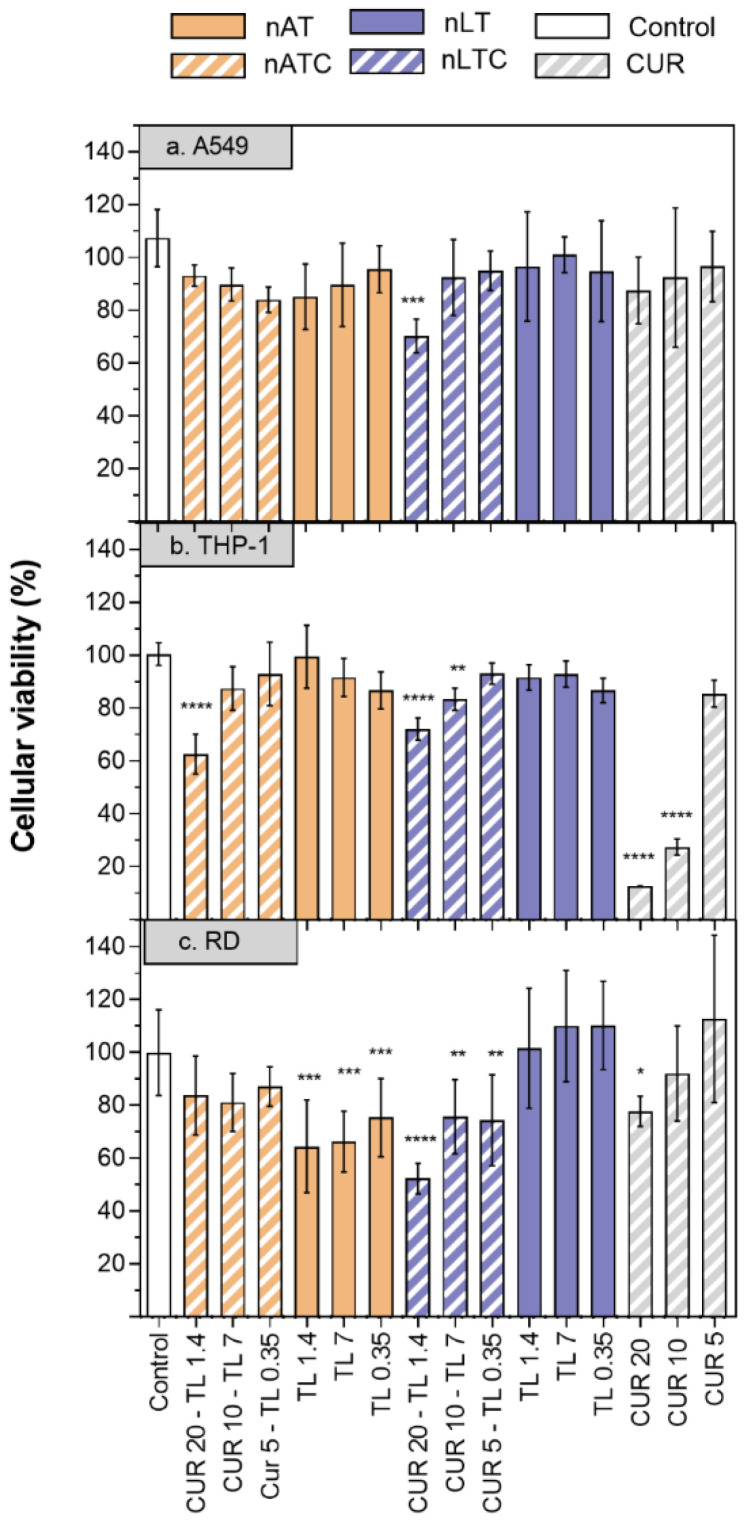
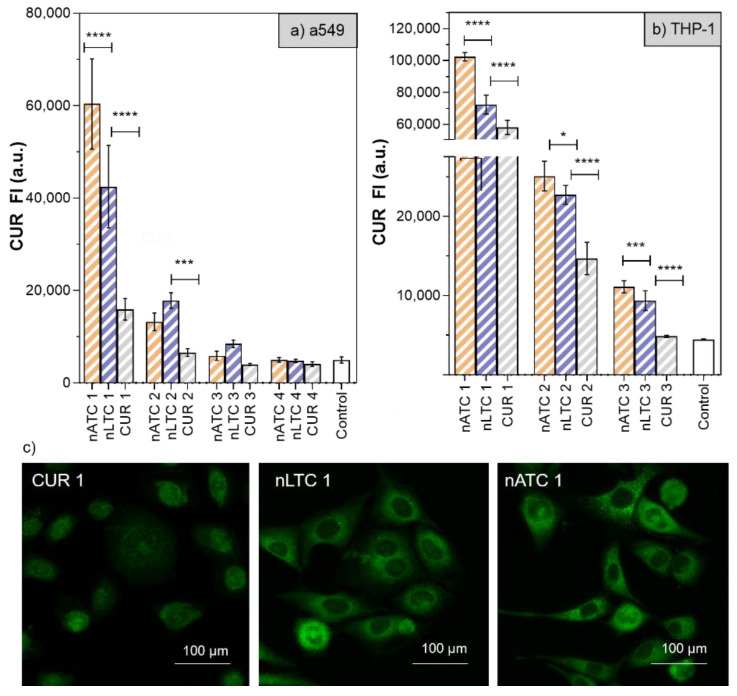
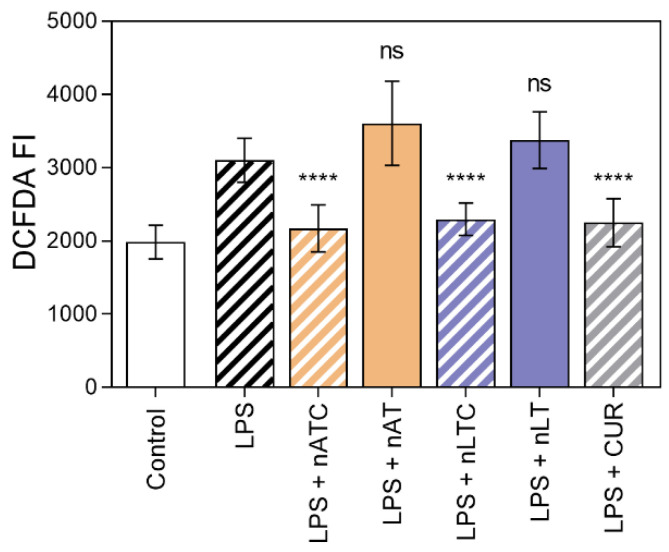
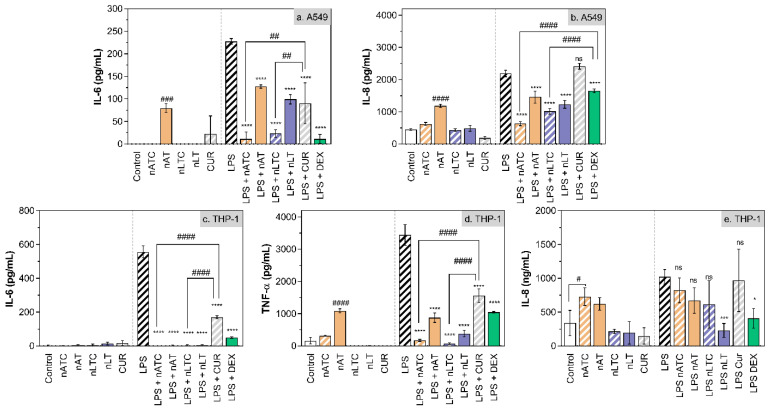
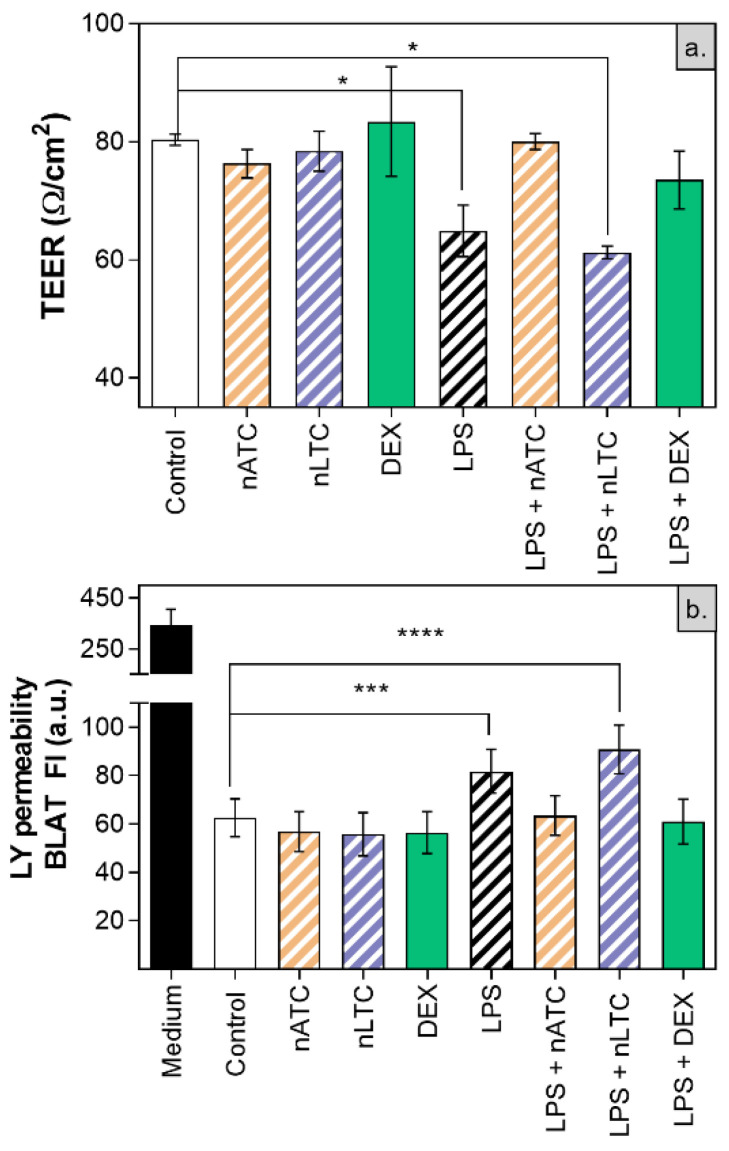
The anti-inflammatory, antifibrotic and antimicrobial activities of curcumin (CUR) are missed because of its low solubility in aqueous media, low bioavailability, and structural lability upon oral intake. Soft nanoparticles such as nanoliposomes are not efficient as CUR carriers, since crystalline CUR is expelled from them to physiological media. Nanostructures to efficiently trap and increase the aqueous solubility of CUR are needed to improve both oral or nebulized delivery of CUR. Here we showed that SRA1 targeted nanoarchaeosomes (nATC) [1:0.4 w:w:0.04] archaeolipids, tween 80 and CUR, 155 ± 16 nm sized of -20.7 ± 3.3 z potential, retained 0.22 mg CUR ± 0.09 per 12.9 mg lipids ± 4.0 (~600 μM CUR) in front to dilution, storage, and nebulization. Raman and fluorescence spectra and SAXS patterns were compatible with a mixture of enol and keto CUR tautomers trapped within the depths of nATC bilayer. Between 20 and 5 µg CUR/mL, nATC was endocytosed by THP1 and A549 liquid-liquid monolayers without noticeable cytotoxicity. Five micrograms of CUR/mL nATC nebulized on an inflamed air-liquid interface of A549 cells increased TEER, normalized the permeation of LY, and decreased il6, tnfα, and il8 levels. Overall, these results suggest the modified pharmacodynamics of CUR in nATC is useful for epithelia repair upon inflammatory damage, deserving further deeper exploration, particularly related to its targeting ability.
姜黄素(CUR)的抗炎、抗纤维化和抗菌活性未得到充分发挥,原因在于其在水性介质中的低溶解度、低生物利用度以及口服时的结构不稳定性。诸如纳米脂质体之类的软纳米颗粒作为CUR载体效率不高,因为结晶态的CUR会从其中释放到生理介质中。需要能够有效捕获并提高CUR水溶性的纳米结构,以改善CUR的口服或雾化给药效果。在此我们表明,SRA1靶向纳米古脂质体(nATC)[1:0.4 w:w:0.04](由古脂质、吐温80和CUR组成),尺寸为155±16 nm,ζ电位为-20.7±3.3,在稀释、储存和雾化过程中,每12.9 mg脂质±4.0(约600 μM CUR)能保留0.22 mg CUR±0.09。拉曼光谱、荧光光谱和小角X射线散射图谱与捕获在nATC双层深处的烯醇式和酮式CUR互变异构体混合物相符。在20至5 μg CUR/mL之间,nATC可被THP1和A549液-液单层细胞内吞,且无明显细胞毒性。在A549细胞的炎症气-液界面上雾化5 μg CUR/mL的nATC可提高跨上皮电阻(TEER),使LY的渗透正常化,并降低白细胞介素6(il6)、肿瘤坏死因子α(TNFα)和白细胞介素8(il8)的水平。总体而言,这些结果表明nATC中CUR的药效学改变对炎症损伤后的上皮修复有益,值得进一步深入探索,特别是与其靶向能力相关的方面。