Ajnai Giimel, Cheng Chun-Chia, Kan Tzu-Chun, Lu Jeng-Wei, Rahayu Sri, Chiu Amy, Chang Jungshan
Graduate Institute of Medical Sciences, College of Medicine, Taipei Medical University, Taipei 11031, Taiwan.
Department of Immunology, Mongolian National University of Medical Sciences, Ulaanbaatar 14210, Mongolia.
Pharmaceutics. 2022 Apr 12;14(4):847. doi: 10.3390/pharmaceutics14040847.
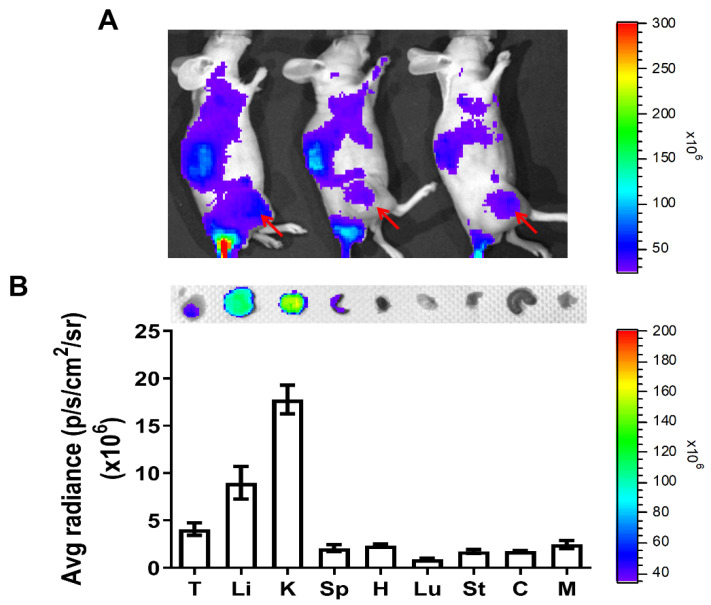
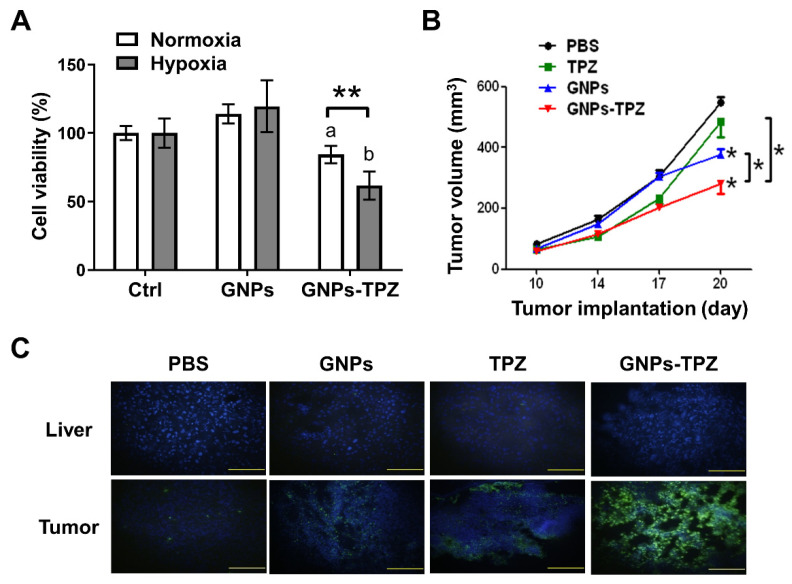
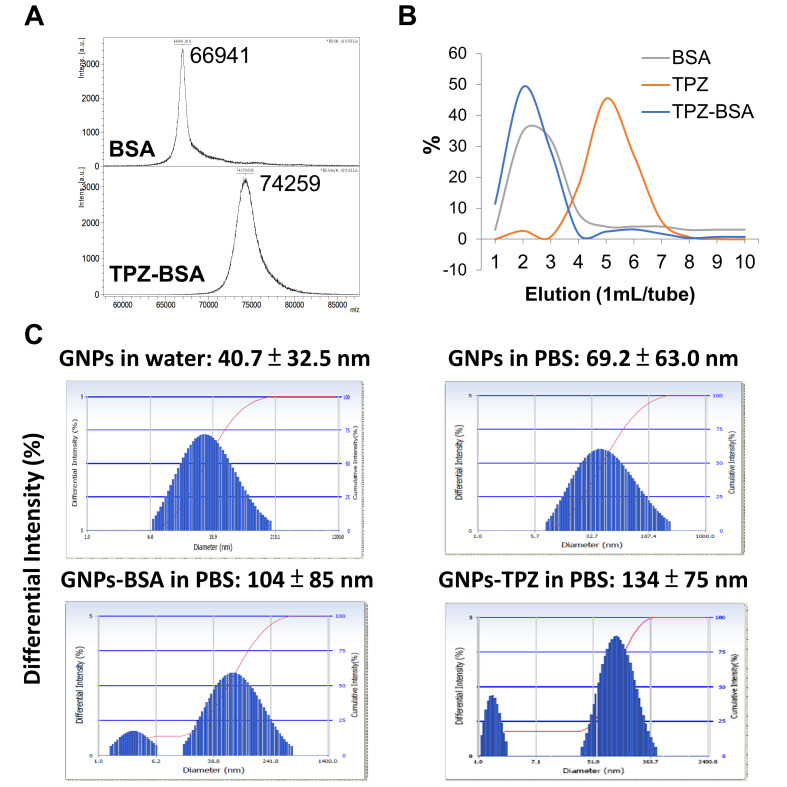
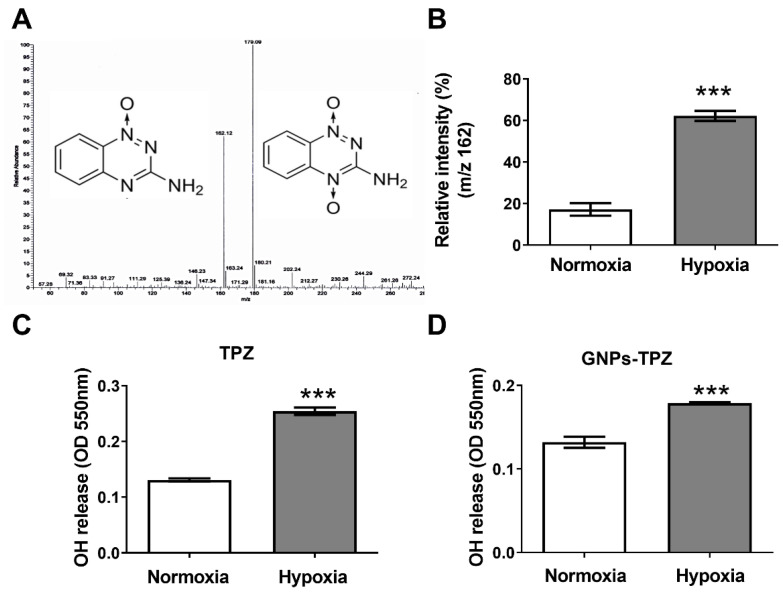
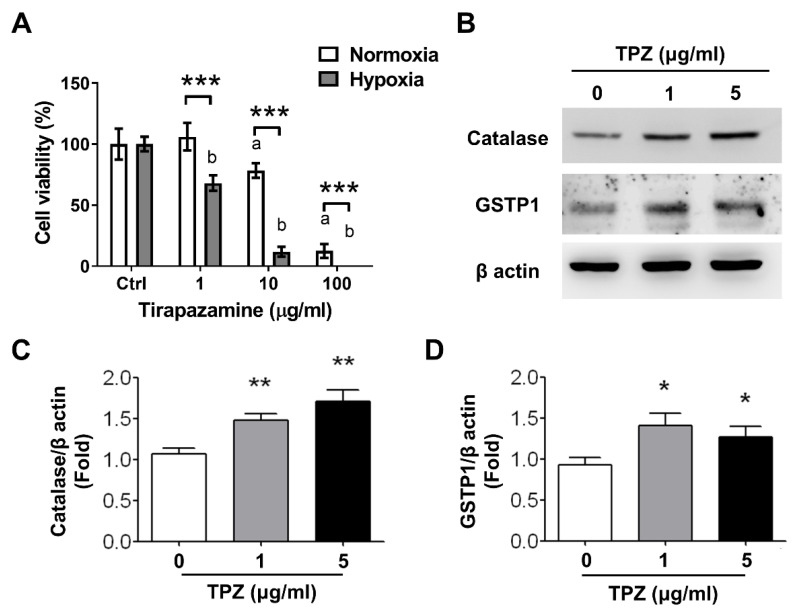
Tumor hypoxia is a hallmark of solid tumors and emerged as the therapeutic target for cancer treatments, such as a prodrug Tirapazamine (TPZ) activated in hypoxia. To increase tumor accumulation, gold nanoparticles (GNPs) were selected to conjugate with TPZ. In this study, we successfully formulated and assessed the biochemical and therapeutic roles of the conjugated gold nanoparticles-Tirapazamine (GNPs-TPZ) on therapeutic assessments of MKN45-induced xenograft animal model. The results indicated that GNPs-TPZ was a potential nanomedicine for selectively targeting hypoxia tumors coupled with decreased side effects on healthy tissue or organs. TPZ significantly reduced cell viability of hypoxic gastric cancer MKN45 cells, but not in cells incubated in normoxia condition. For improving tumor targeting efficiency, furthermore, the GNPs drug carrier was conjugated to TPZ via biding mediator bovine serum albumin (BSA), and we demonstrated that this conjugated GNPs-TPZ retained the unique characteristics of hypoxic toxin and possessed the adequate feature of systemic bio-distributions in animals. GNPs-TPZ nanoparticles revealed their superior affinity to hypoxia tumors in the MKN45 xenograft. Moreover, GNPs-TPZ treatments did not significantly alter the biochemical parameters of blood samples acquired from animals. Taken together, TPZ, a prodrug activated by hypoxia, was conjugated with GNPs, whereas BSA severed as an excellent binding agent for preparing the conjugated GNPs-TPZ nanomedicines. We demonstrated that GNPs-TPZ enhanced tumor targeting, resulting in higher therapeutic efficacy compared to TPZ. We suggest that it may sever as an adjuvant treatment or combined therapy with other chemotherapeutics for the treatment of cancer patients in the future.
肿瘤缺氧是实体瘤的一个标志,并已成为癌症治疗的靶点,例如在缺氧条件下被激活的前药替拉扎明(TPZ)。为了增加肿瘤蓄积,选择了金纳米颗粒(GNPs)与TPZ偶联。在本研究中,我们成功制备并评估了偶联金纳米颗粒-替拉扎明(GNPs-TPZ)在MKN45诱导的异种移植动物模型治疗评估中的生化和治疗作用。结果表明,GNPs-TPZ是一种潜在的纳米药物,可选择性靶向缺氧肿瘤,同时降低对健康组织或器官的副作用。TPZ显著降低了缺氧胃癌MKN45细胞的细胞活力,但对在常氧条件下培养的细胞没有影响。此外,为了提高肿瘤靶向效率,通过结合介质牛血清白蛋白(BSA)将GNPs药物载体与TPZ偶联,我们证明这种偶联的GNPs-TPZ保留了缺氧毒素的独特特性,并具有在动物体内系统生物分布的适当特征。GNPs-TPZ纳米颗粒在MKN45异种移植中显示出对缺氧肿瘤的卓越亲和力。此外,GNPs-TPZ治疗并未显著改变从动物采集的血液样本的生化参数。综上所述,缺氧激活的前药TPZ与GNPs偶联,而BSA作为制备偶联GNPs-TPZ纳米药物的优良结合剂。我们证明GNPs-TPZ增强了肿瘤靶向性,与TPZ相比具有更高的治疗效果。我们建议它未来可能作为辅助治疗或与其他化疗药物联合治疗癌症患者。