Mills Anna M, Strzalka Joseph, Bernat Andrea, Rao Qinchun, Hallinan Daniel T
Chemical and Biomedical Engineering Department, Florida A&M University-Florida State University College of Engineering, Tallahassee, FL 32310, USA.
Aero-Propulsion, Mechatronics, and Energy Center, Florida State University, Tallahassee, FL 32310, USA.
Nanomaterials (Basel). 2022 Apr 7;12(8):1253. doi: 10.3390/nano12081253.
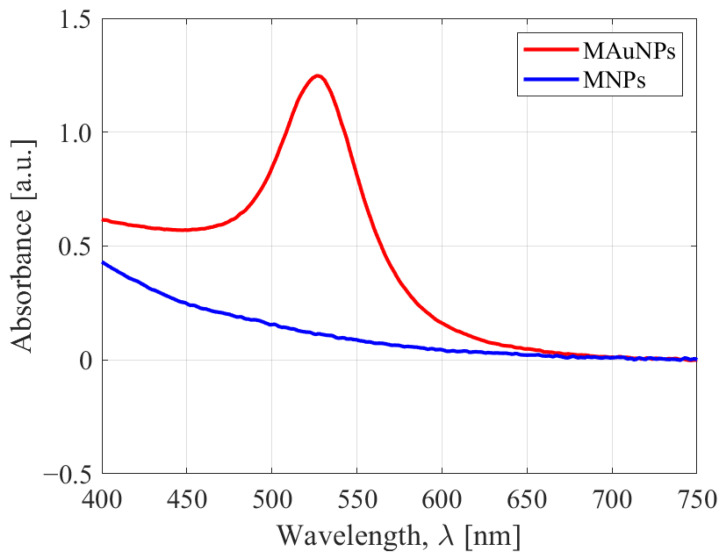
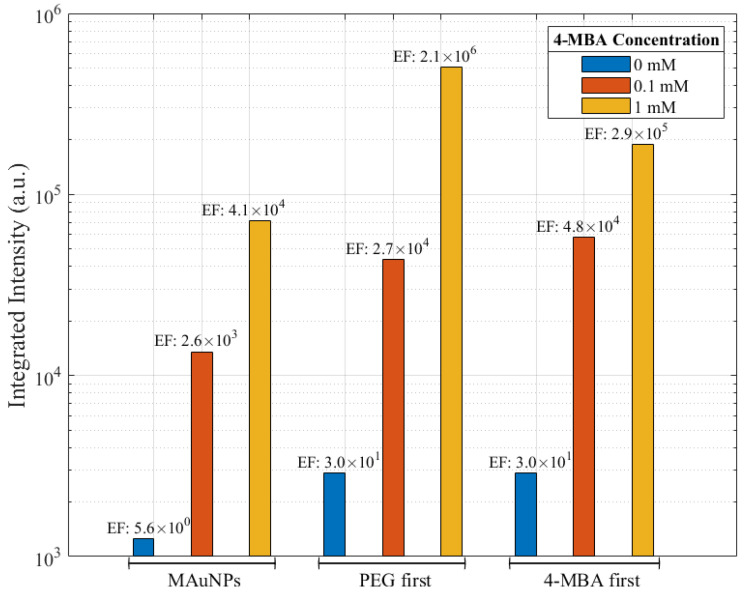
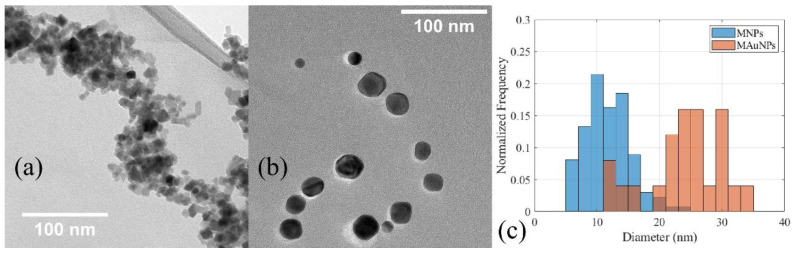
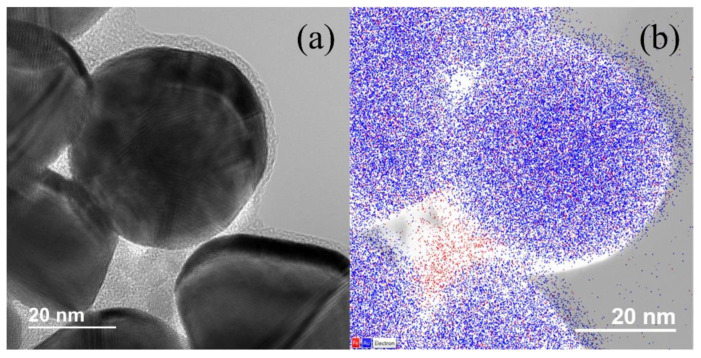
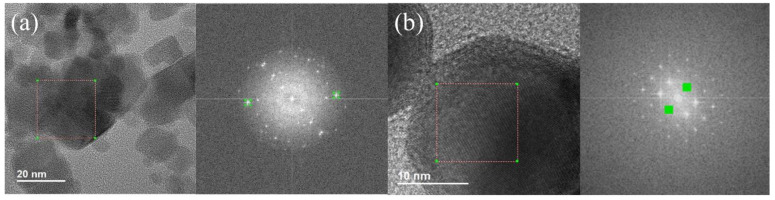
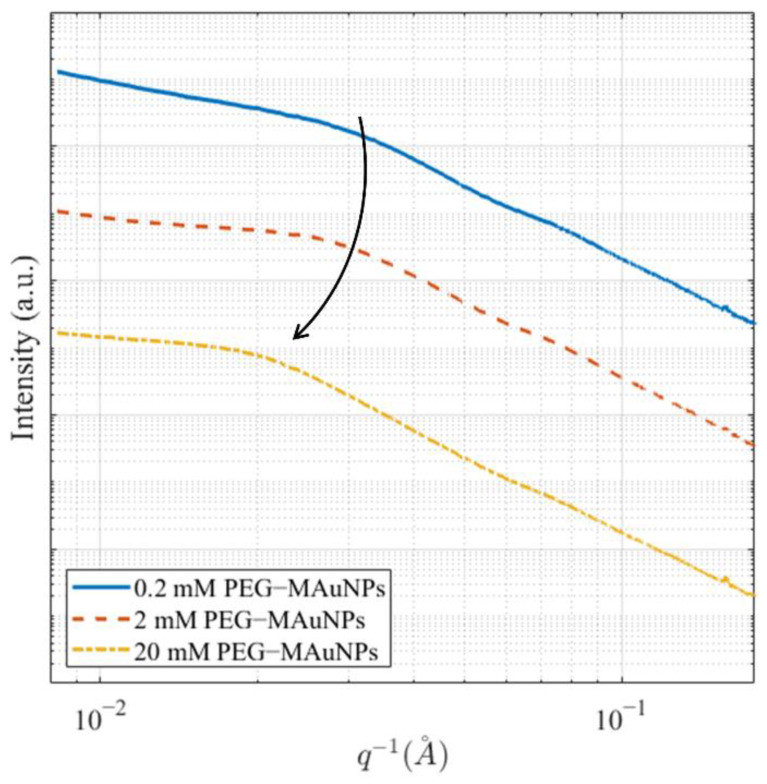
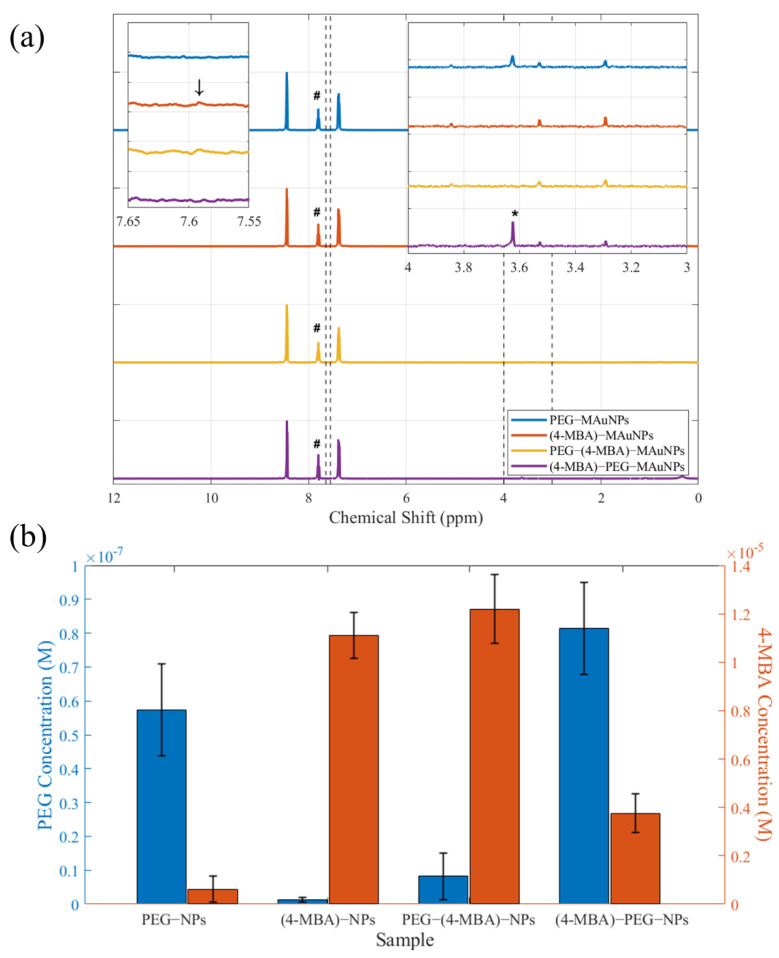
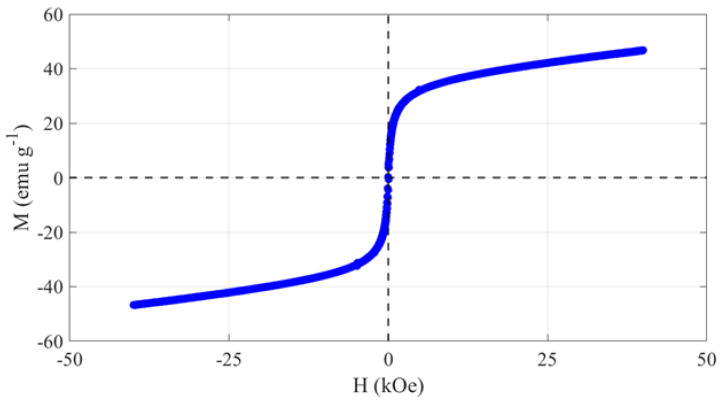
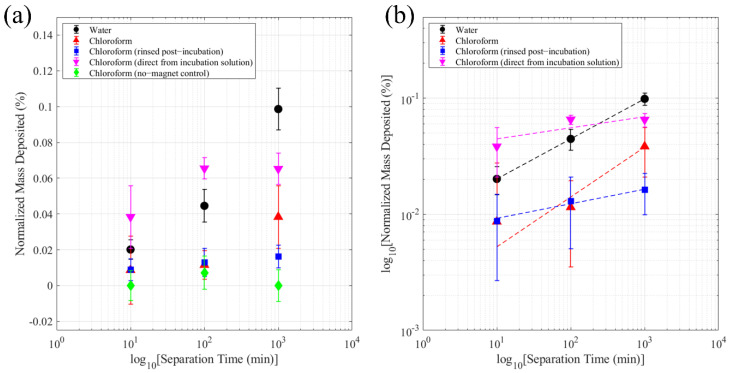
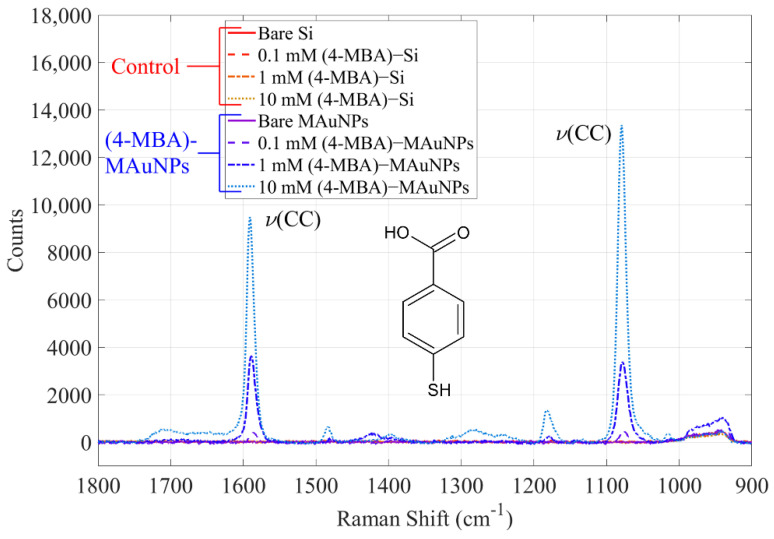
Magnetic-core/gold-shell nanoparticles (MAuNPs) are of interest for enabling rapid and portable detection of trace adulterants in complex media. Gold coating provides biocompatibility and facile functionalization, and a magnetic core affords analyte concentration and controlled deposition onto substrates for surface-enhanced Raman spectroscopy. Iron oxide cores were synthesized and coated with gold by reduction of HAuCl by NHOH. MAuNPs were grafted with polyethylene glycol (PEG) and/or functionalized with 4-mercaptobenzoic acid (4-MBA) and examined using a variety of microscopic, spectroscopic, magnetometric, and scattering techniques. For MAuNPs grafted with both PEG and 4-MBA, the order in which they were grafted impacted not only the graft density of the individual ligands, but also the overall graft density. Significant Raman signal enhancement of the model analyte, 4-MBA, was observed. This enhancement demonstrates the functionality of MAuNPs in direct detection of trace contaminants. The magnetic deposition rate of MAuNPs in chloroform and water was explored. The presence of 4-MBA slowed the mass deposition rate, and it was postulated that the rate disparity originated from differing NP-substrate surface interactions. These findings emphasize the importance of ligand choice in reference to the medium, target analyte, and substrate material, as well as functionalization procedure in the design of similar sensing platforms.
磁芯/金壳纳米颗粒(MAuNPs)对于在复杂介质中实现痕量掺假物的快速便携检测具有重要意义。金涂层提供生物相容性和易于功能化的特性,而磁芯则可实现分析物浓缩并可控地沉积到用于表面增强拉曼光谱的基底上。通过用NHOH还原HAuCl合成了氧化铁磁芯并包覆金。MAuNPs接枝了聚乙二醇(PEG)和/或用4-巯基苯甲酸(4-MBA)进行功能化,并使用各种显微镜、光谱、磁力测量和散射技术进行了研究。对于同时接枝了PEG和4-MBA的MAuNPs,接枝顺序不仅影响单个配体的接枝密度,还影响整体接枝密度。观察到模型分析物4-MBA的拉曼信号有显著增强。这种增强证明了MAuNPs在直接检测痕量污染物方面的功能。研究了MAuNPs在氯仿和水中的磁沉积速率。4-MBA的存在减缓了质量沉积速率,据推测速率差异源于不同的纳米颗粒-基底表面相互作用。这些发现强调了在设计类似传感平台时,根据介质、目标分析物和基底材料选择配体的重要性,以及功能化过程的重要性。