Department of Orthopedics, The Second Affiliated Hospital, The Fourth Military Medical University, Xi'an, China.
State Key Laboratory of Cancer Biology, Biotechnology Center, School of Pharmacy, The Fourth Military Medical University, Xi'an, China.
J Exp Clin Cancer Res. 2022 Apr 23;41(1):154. doi: 10.1186/s13046-022-02344-y.
Osteosarcoma (OS) is a malignant bone tumor mostly occurring in children and adolescents, while chemotherapy resistance often develops and the mechanisms involved remain challenging to be fully investigated.
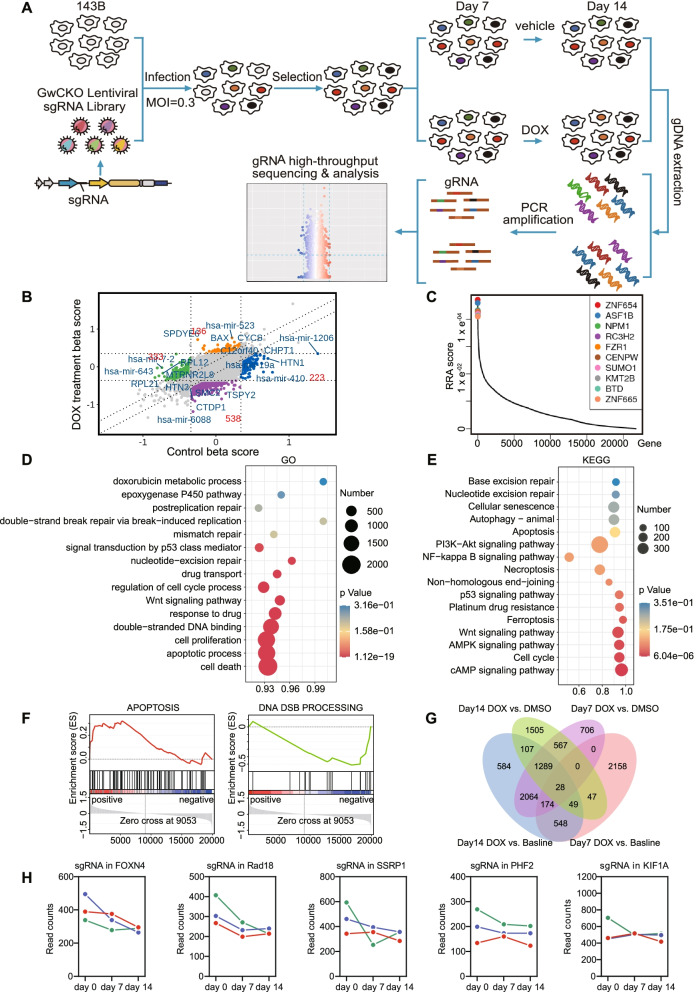
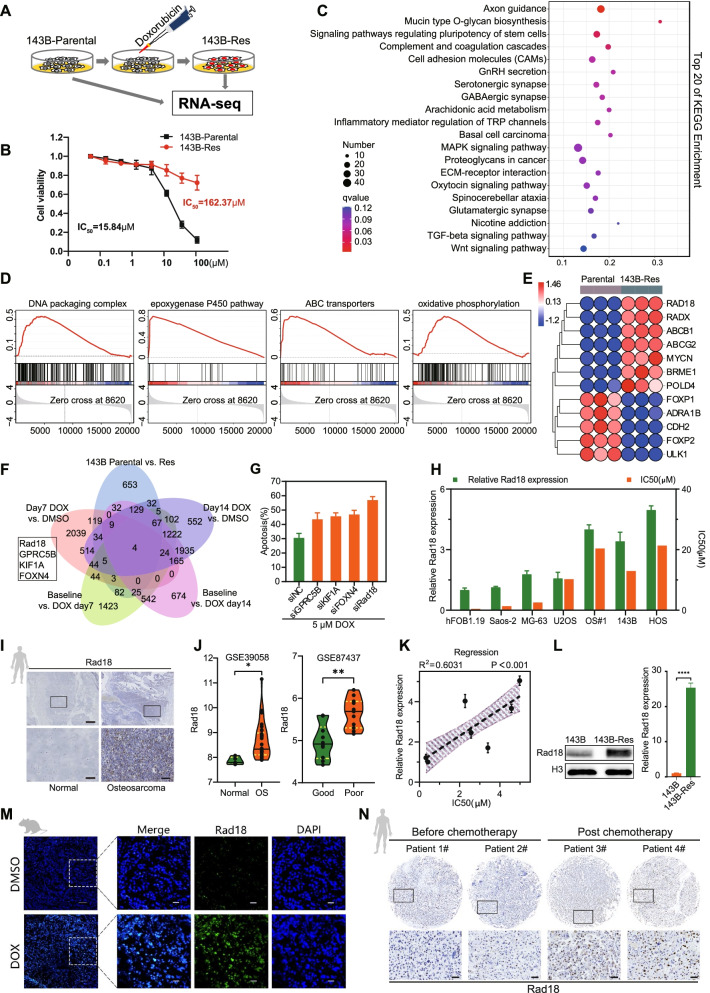
Genome-wide CRISPR screening combined with transcriptomic sequencing were used to identify the critical genes of doxorubicin resistance. Analysis of clinical samples and datasets, and in vitro and in vivo experiments (including CCK-8, apoptosis, western blot, qRT-PCR and mouse models) were applied to confirm the function of these genes. The bioinformatics and IP-MS assays were utilized to further verify the downstream pathway. RGD peptide-directed and exosome-delivered siRNA were developed for the novel therapy strategy.
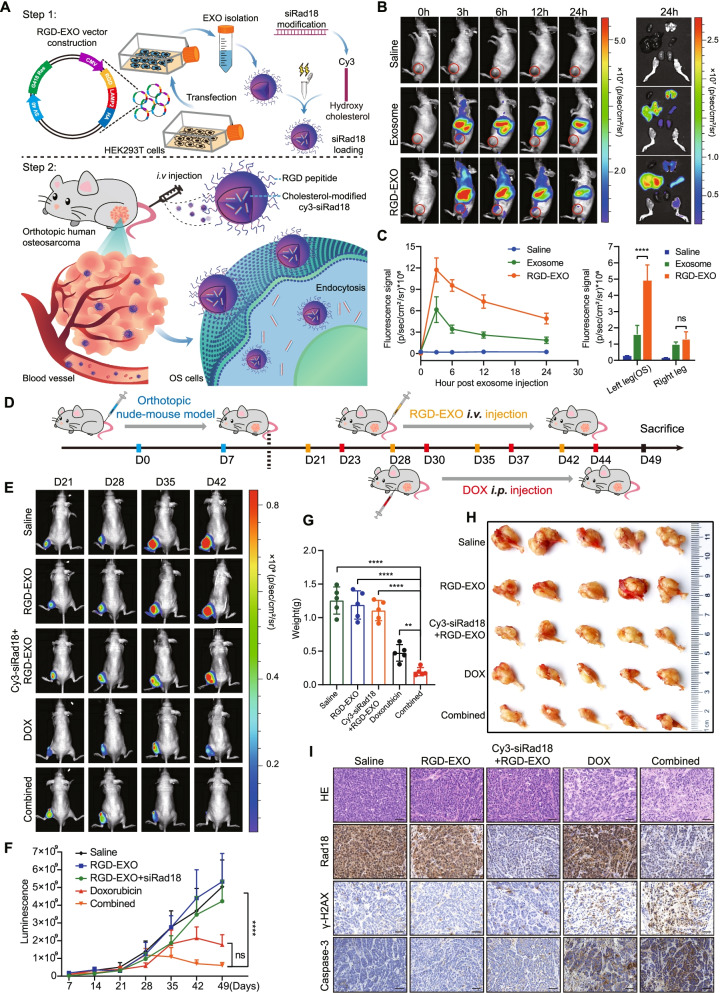
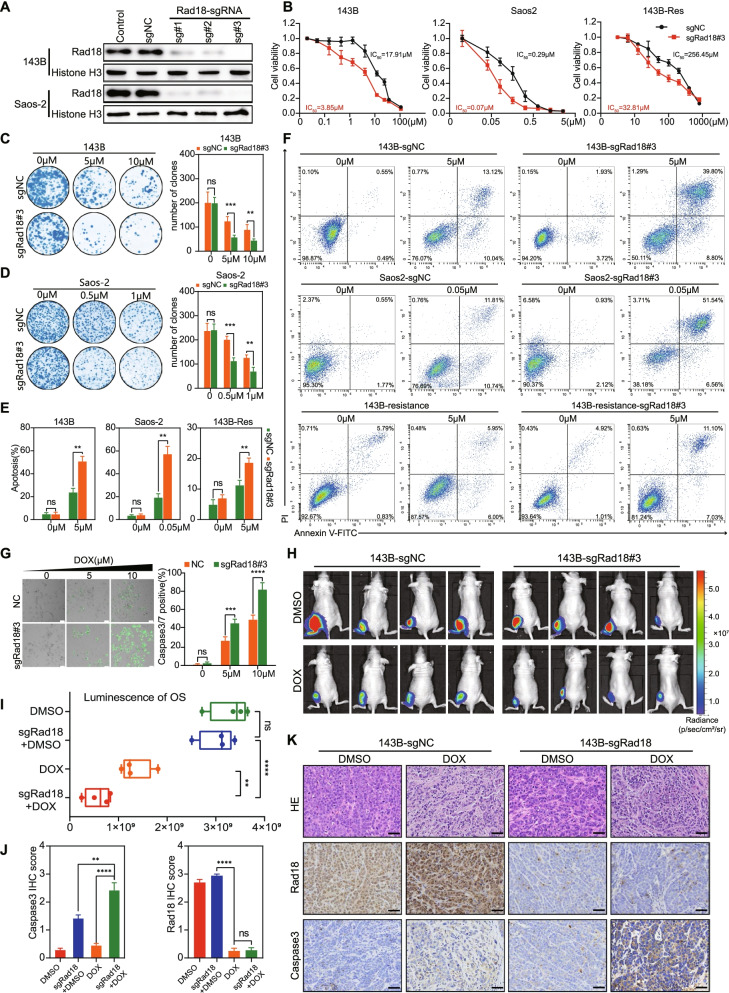
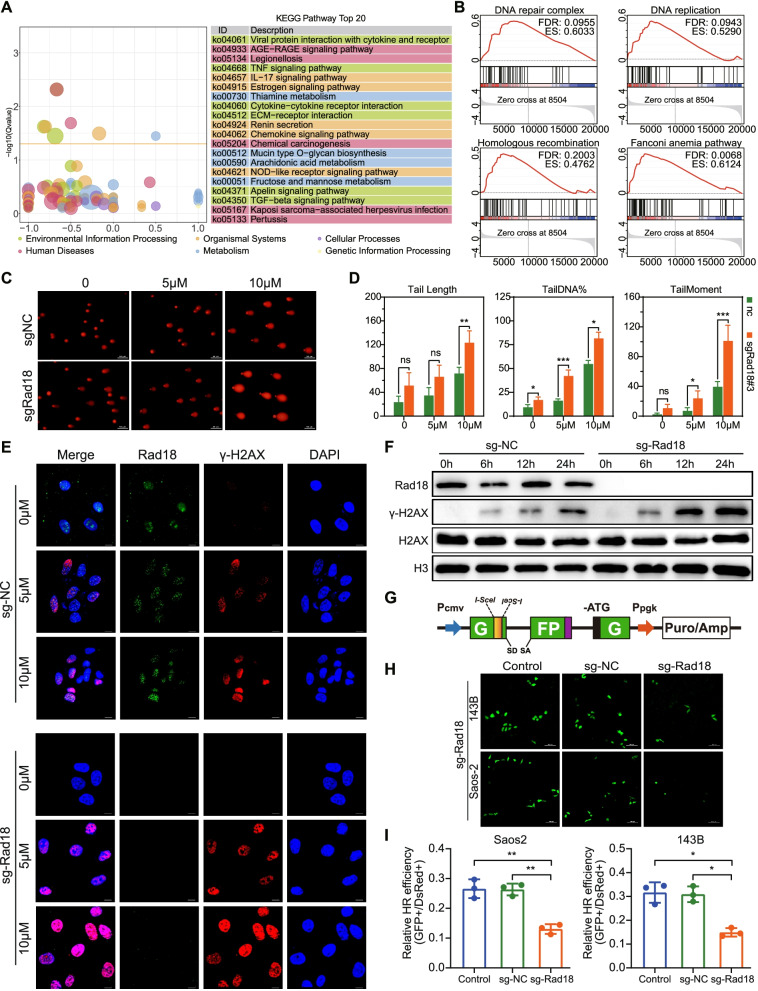
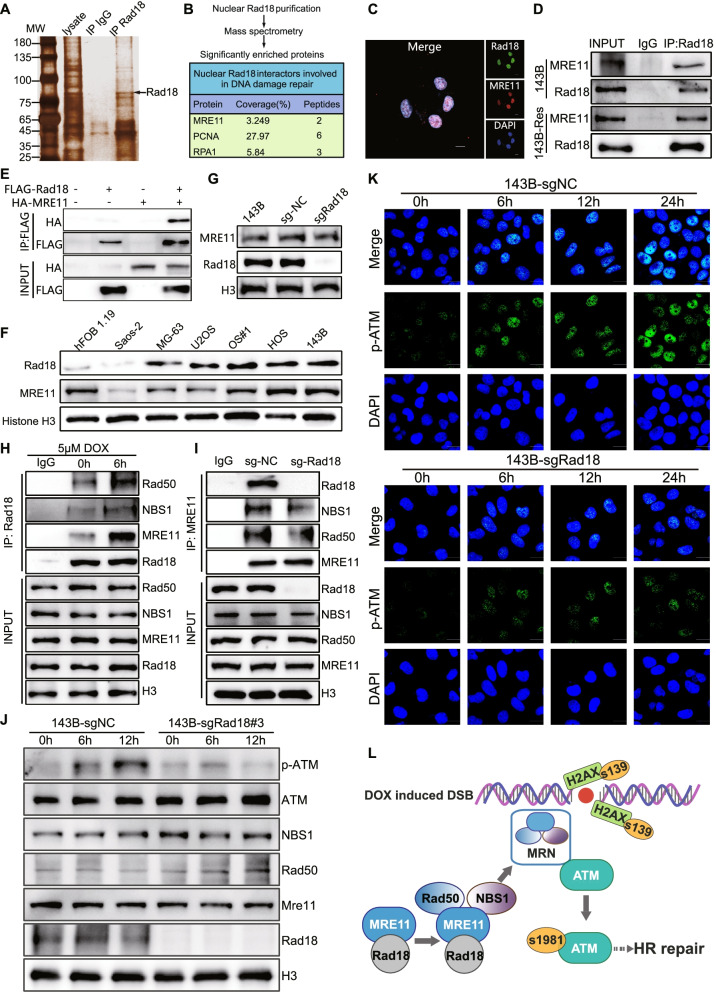
We identified that E3 ubiquitin-protein ligase Rad18 (Rad18) contributed to doxorubicin-resistance in OS. Further exploration revealed that Rad18 interact with meiotic recombination 11 (MRE11) to promote the formation of the MRE11-RAD50-NBS1 (MRN) complex, facilitating the activation of the homologous recombination (HR) pathway, which ultimately mediated DNA damage tolerance and leaded to a poor prognosis and chemotherapy response in patients with OS. Rad18-knockout effectively restored the chemotherapy response in vitro and in vivo. Also, RGD-exosome loading chemically modified siRad18 combined with doxorubicin, where exosome and chemical modification guaranteed the stability of siRad18 and the RGD peptide provided prominent targetability, had significantly improved antitumor activity of doxorubicin.
Collectively, our study identifies Rad18 as a driver of OS doxorubicin resistance that promotes the HR pathway and indicates that targeting Rad18 is an effective approach to overcome chemotherapy resistance in OS.
骨肉瘤(OS)是一种主要发生在儿童和青少年的恶性骨肿瘤,而化疗耐药性常常发生,其涉及的机制仍难以被充分研究。
使用全基因组 CRISPR 筛选结合转录组测序来鉴定多柔比星耐药的关键基因。对临床样本和数据集进行分析,以及进行体外和体内实验(包括 CCK-8、凋亡、western blot、qRT-PCR 和小鼠模型)来验证这些基因的功能。生物信息学和 IP-MS 测定被用来进一步验证下游通路。开发了 RGD 肽导向和外泌体递送的 siRNA 用于新的治疗策略。
我们发现 E3 泛素蛋白连接酶 Rad18(Rad18)促进了骨肉瘤中的多柔比星耐药性。进一步的探索揭示了 Rad18 与减数分裂重组 11(MRE11)相互作用,以促进 MRE11-RAD50-NBS1(MRN)复合物的形成,促进同源重组(HR)途径的激活,最终介导 DNA 损伤耐受,导致骨肉瘤患者的预后不良和化疗反应不佳。Rad18 敲除在体外和体内有效地恢复了化疗反应。此外,RGD-外泌体装载化学修饰的 siRad18 联合多柔比星,其中外泌体和化学修饰保证了 siRad18 的稳定性,而 RGD 肽提供了显著的靶向性,显著提高了多柔比星的抗肿瘤活性。
总的来说,我们的研究确定 Rad18 是骨肉瘤多柔比星耐药的驱动因素,它促进了 HR 途径,并表明靶向 Rad18 是克服骨肉瘤化疗耐药的有效方法。