Institute of Brain Science, Shanxi Key Laboratory of Inflammatory Neurodegenerative Diseases, Medical School of Shanxi Datong University, Datong, 037009, China.
The Key Research Laboratory of Benefiting Qi for Acting Blood Circulation, Research Center of Neurobiology, Shanxi University of Chinese Medicine, Jinzhong, 030619, China.
Sci Rep. 2022 Apr 22;12(1):6625. doi: 10.1038/s41598-022-10554-9.
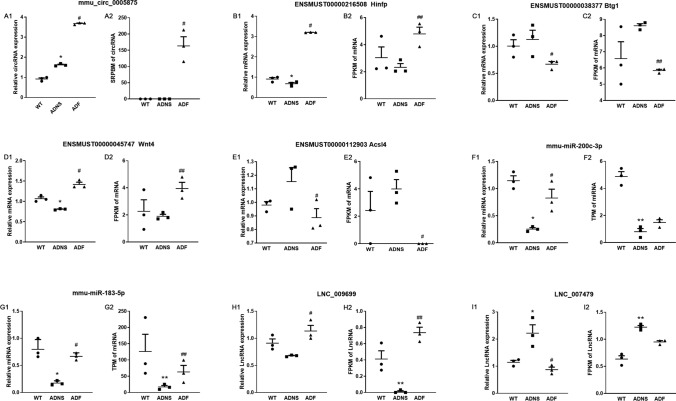
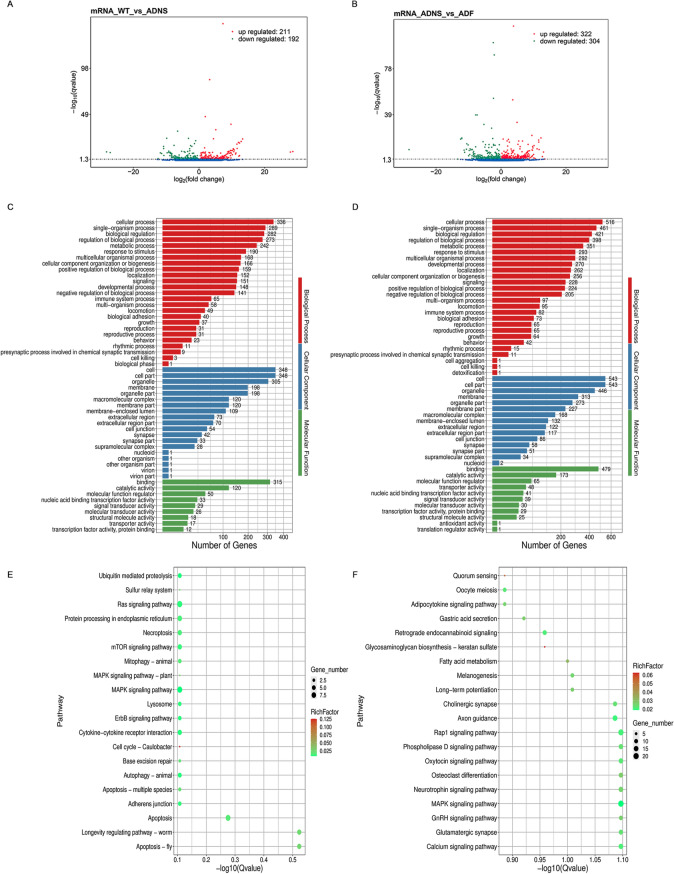
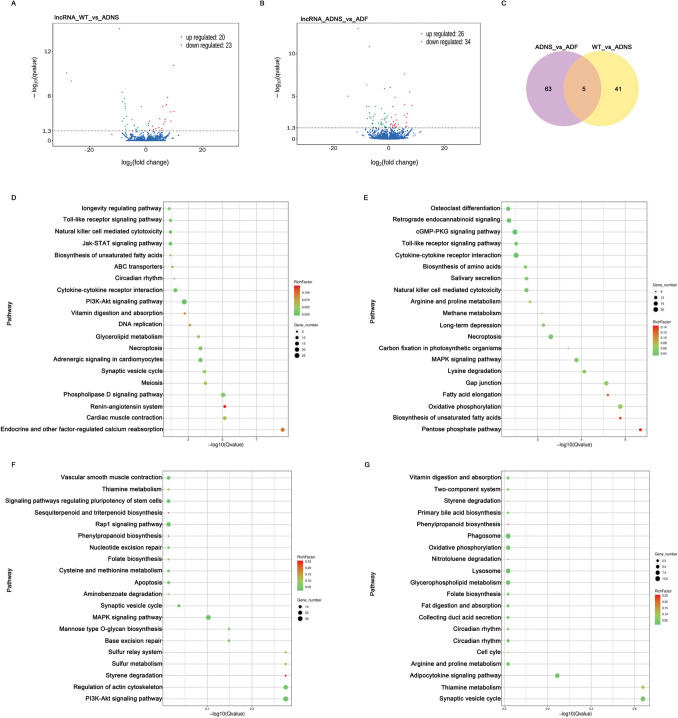
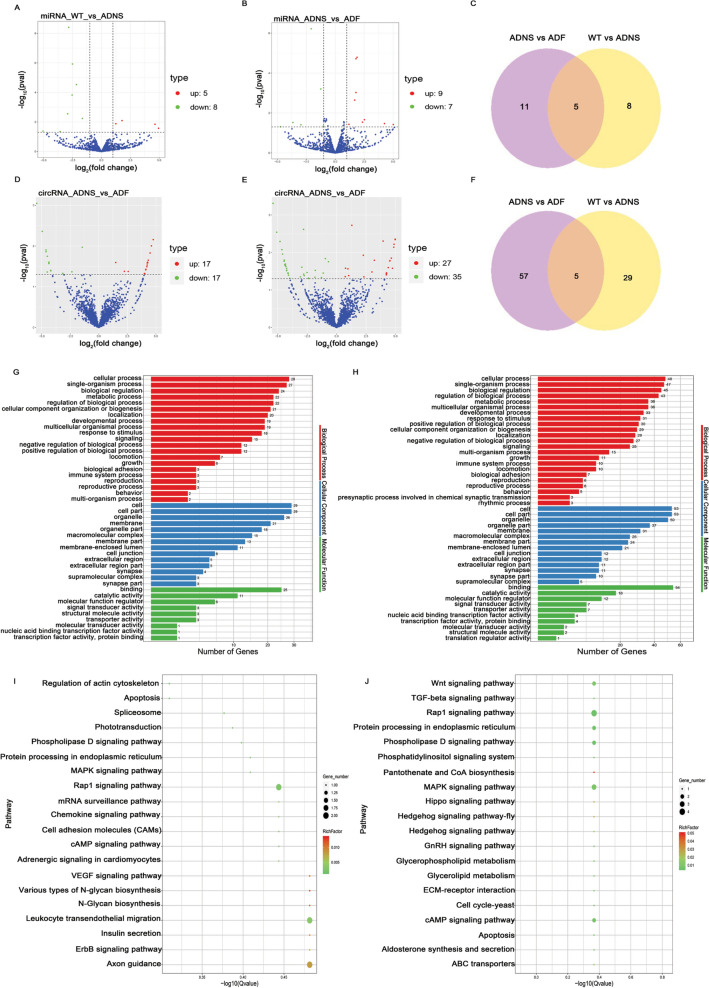
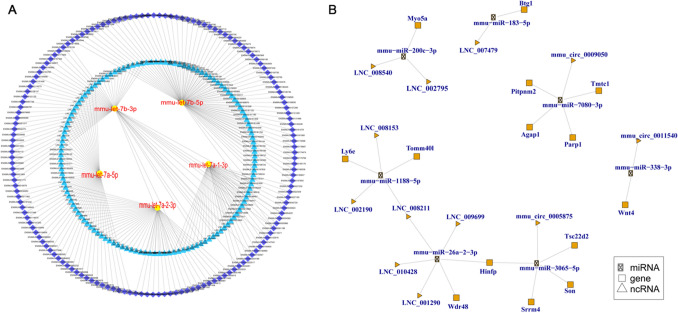
Alzheimer's disease (AD) is the most common cause of progressive dementia. In the present study, we showed hippocampal tissue transcriptome analysis in APPswe/PSEN1dE9 (APP/PS1, AD model) mice treated with fasudil (ADF) and compared with AD mice treated with saline (ADNS) and wild type mice (WT). The competing endogenous RNA (ceRNA) network was constructed and validated the differential expression of mRNA, lncRNA, miRNA, and circRNA. Our study showed differentially expressed mRNAs (DEMs) between WT and ADNS, while enriched in cell growth and death and nervous system pathways. DEMs between ADNS-ADF were enriched in the nervous system, glycosaminoglycan biosynthesis-keratan sulfate (KS) and Quorum sensing pathways. We validated four genes with RT-PCR, whereas enrichment of Acyl-CoA Synthetase Long Chain Family Member 4 (Acsl4, ENSMUST00000112903) in Quorum sensing pathways, and BTG anti-proliferation factor 1 (Btg1, ENSMUST00000038377) in RNA degradation pathways were conducted. Expression of these two genes were higher in ADNS, but were significantly reduced in ADF. Histone H4 transcription factor (Hinfp, ENSMUST00000216508) orchestrate G1/S transition of mitotic cell cycle and co-expressed with mmu-miR-26a-2-3p-mediated ceRNA and mmu-miR-3065-5p-mediated ceRNA; Wnt family member 4 (Wnt4, ENSMUST00000045747) was enriched in mTOR, Hippo and Wnt signaling pathway. Expression of these two genes were significantly lower in ADNS, and fasudil treatment reverse it. The present studies demonstrated four genes: Acsl4, Btg1, Hinfp, Wnt4 could be potential biomarkers of AD and the targets of fasudil treatment. These results will pave a novel direction for future clinic studies for AD and fasudil treatment.
阿尔茨海默病(AD)是进行性痴呆的最常见原因。在本研究中,我们展示了 APPswe/PSEN1dE9(APP/PS1,AD 模型)小鼠海马组织转录组分析,并用 fasudil(ADF)治疗,并与 AD 小鼠用生理盐水(ADNS)治疗和野生型小鼠(WT)进行比较。构建了竞争性内源性 RNA(ceRNA)网络,并验证了 mRNA、lncRNA、miRNA 和 circRNA 的差异表达。我们的研究表明 WT 和 ADNS 之间存在差异表达的 mRNAs(DEMs),而富集在细胞生长和死亡以及神经系统途径中。ADNS-ADF 之间的 DEMs 富集在神经系统、糖胺聚糖生物合成-角鲨胺(KS)和群体感应途径中。我们用 RT-PCR 验证了四个基因,而在群体感应途径中酰基辅酶 A 合成酶长链家族成员 4(Acsl4,ENSMUST00000112903)的富集和 RNA 降解途径中的 BTG 抗增殖因子 1(Btg1,ENSMUST00000038377)是进行的。这些基因的表达在 ADNS 中较高,但在 ADF 中显著降低。组蛋白 H4 转录因子(Hinfp,ENSMUST00000216508)协调有丝分裂细胞周期的 G1/S 过渡,并与 mmu-miR-26a-2-3p 介导的 ceRNA 和 mmu-miR-3065-5p 介导的 ceRNA 共表达;Wnt 家族成员 4(Wnt4,ENSMUST00000045747)富集在 mTOR、Hippo 和 Wnt 信号通路中。这两个基因的表达在 ADNS 中显著降低,fasudil 治疗可逆转这一现象。本研究鉴定了 4 个基因:Acsl4、Btg1、Hinfp、Wnt4,它们可能是 AD 的潜在生物标志物和 fasudil 治疗的靶点。这些结果为 AD 和 fasudil 治疗的未来临床研究开辟了新的方向。