Graduate Institute of Social Work, National Taiwan Normal University, Taipei, Taiwan.
Department of Family and Community Medicine, E-Da Hospital, Kaohsiung, Taiwan.
Front Public Health. 2022 Apr 8;10:858482. doi: 10.3389/fpubh.2022.858482. eCollection 2022.
The causal relationships between two specific types of problematic use in internet-related activities [i.e., problematic social media use (PSMU) and problematic gaming (PG)] and psychological distress remain controversial. The present study investigated the temporal relationships between PSMU, PG, and psychological distress (i.e., anxiety, depression) in university students.
Hong Kong and Taiwan university students [ = 645; n = 266; mean = 20.95 years (SD = 5.63)] were recruited for a survey study, with follow-ups at 3, 6, and 9 months after baseline assessment. The Bergen Social Media Addiction Scale, Internet Gaming Disorder Scale-Short Form, and the Hospital Anxiety and Depression Scale were used to assess studied variables. Demographics including age, physical characteristics (i.e., height, weight, and body mass index), and cigarette use were compared between participants who completed all the follow-ups and those who dropped out. Random intercept cross-lagged models were constructed to understand the reciprocal relationships between PSMU, PG, and psychological distress.
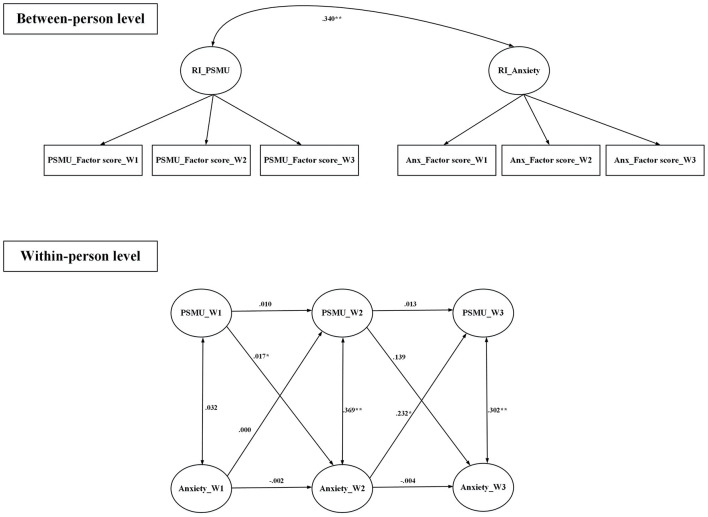
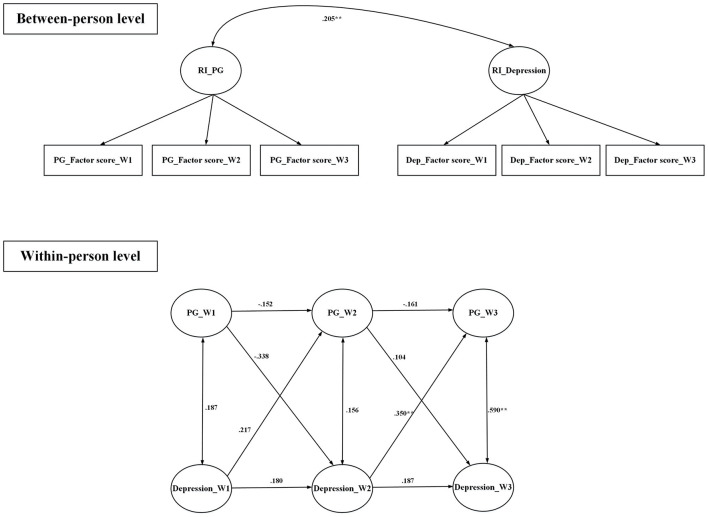
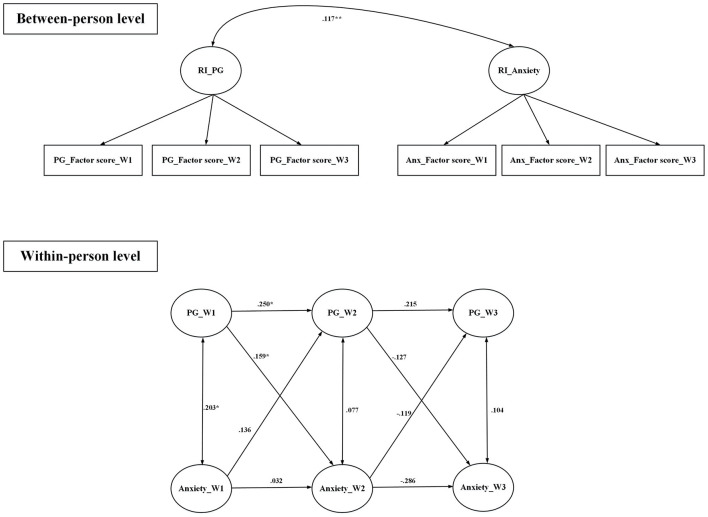
No significant differences were found in age, physical characteristics, and cigarette use between participants who completed all the follow-ups and those who dropped out. Findings indicated that a high level of PSMU significantly increased the level of anxiety and a high level of anxiety significantly increased the level of PSMU. A high level of PSMU significantly increased the level of depression but the level of depression did not significantly affect the level of PSMU. A high level of PG significantly increased the level of anxiety, but the level of anxiety did not significantly affect the level of PG. A high level of depression significantly increased the level of PG, but the level of depression did not significantly affect the level of PG.
The patterns of the causal relationship between PIU and psychological distress variables differ. A reciprocal relationship was only found between the level of PSMU and the level of anxiety. Moreover, the longitudinal design found no differences in the waves in terms of gaming by the participants.
互联网相关活动中两种特定类型的问题使用(即,社交媒体使用问题和游戏问题)与心理困扰之间的因果关系仍存在争议。本研究调查了大学生中社交媒体使用问题、游戏问题和心理困扰(即焦虑、抑郁)之间的时间关系。
本研究对来自香港和台湾的大学生(n=645,n=266,平均年龄为 20.95 岁,标准差为 5.63 岁)进行了一项调查研究,在基线评估后 3、6 和 9 个月进行了随访。使用 Bergen 社交媒体成瘾量表、互联网游戏障碍量表-短式和医院焦虑抑郁量表评估研究变量。将完成所有随访和中途退出的参与者的人口统计学特征(年龄、身体特征(身高、体重和体重指数)和吸烟情况)进行比较。构建随机截距交叉滞后模型以了解社交媒体使用问题、游戏问题和心理困扰之间的相互关系。
完成所有随访和中途退出的参与者在年龄、身体特征和吸烟情况方面无显著差异。研究结果表明,较高的社交媒体使用问题水平显著增加了焦虑水平,较高的焦虑水平显著增加了社交媒体使用问题水平。较高的社交媒体使用问题水平显著增加了抑郁水平,但抑郁水平对社交媒体使用问题水平没有显著影响。较高的游戏水平显著增加了焦虑水平,但焦虑水平对游戏水平没有显著影响。较高的抑郁水平显著增加了游戏水平,但抑郁水平对游戏水平没有显著影响。
病理性互联网使用和心理困扰变量之间的因果关系模式不同。仅在社交媒体使用问题水平和焦虑水平之间发现了一种相互关系。此外,纵向设计发现参与者在不同的波次中游戏没有差异。