Ding Lingli, Gu Song, Zhou Bingyu, Wang Min, Zhang Yage, Wu Siluo, Zou Hong, Zhao Guoping, Gao Zhao, Xu Liangliang
Key Laboratory of Orthopaedics and Traumatology, Lingnan Medical Research Center, The First Affiliated Hospital of Guangzhou University of Chinese Medicine, Guangzhou University of Chinese Medicine, Guangzhou, China.
The First Affiliated Hospital, Guizhou University of Traditional Chinese Medicine, Guiyang, China.
Front Pharmacol. 2022 Apr 1;13:855393. doi: 10.3389/fphar.2022.855393. eCollection 2022.
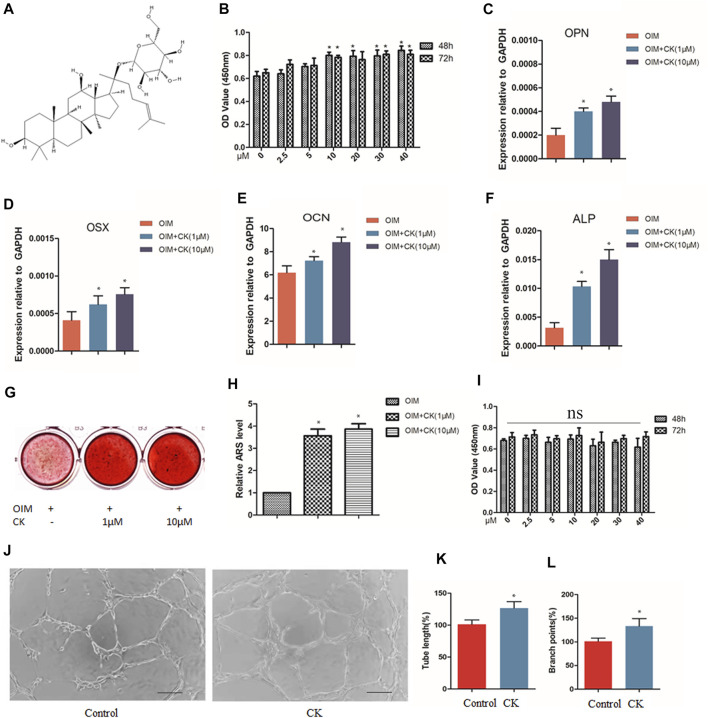
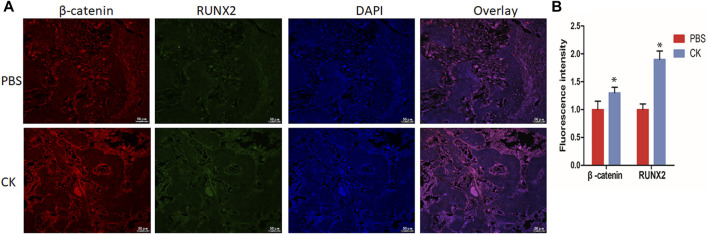
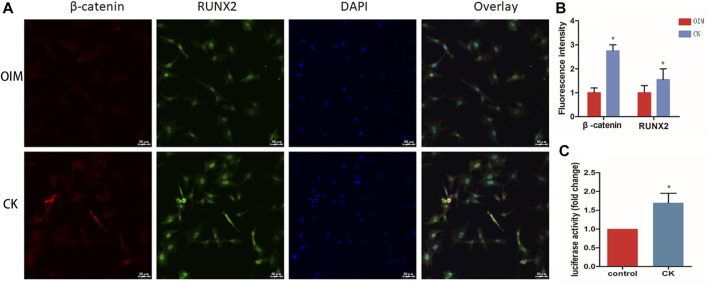
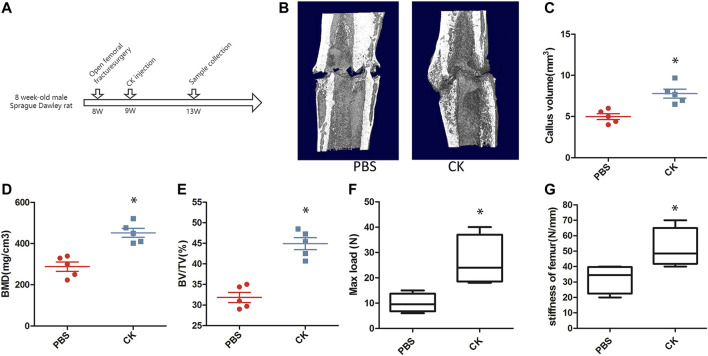
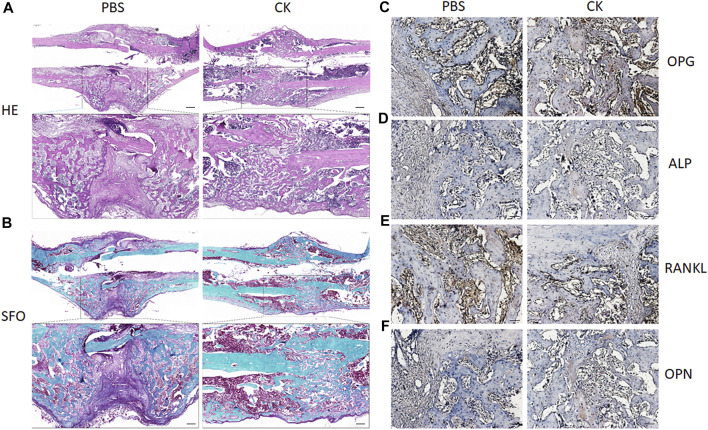
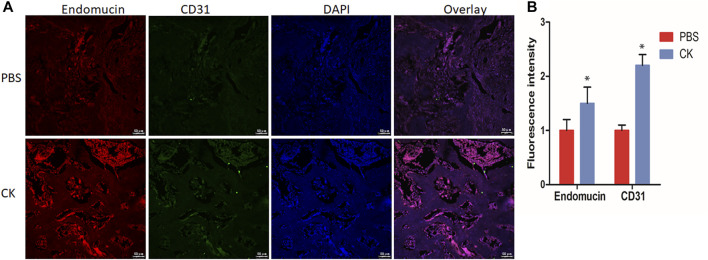
Fractures have an extraordinarily negative impact on an individual's quality of life and functional status, particularly delayed or non-union fractures. Osteogenesis and angiogenesis are closely related to bone growth and regeneration, and bone modeling and remodeling. Recently Chinese medicine has been extensively studied to promote osteogenic differentiation in MSCs. Studies have found that Ginseng can be used as an alternative for tissue regeneration and engineering. Ginseng is a commonly used herbal medicine in clinical practice, and one of its components, Ginsenoside Compound K (CK), has received much attention. Evidence indicates that CK has health-promoting effects in inflammation, atherosclerosis, diabetics, aging, etc. But relatively little is known about its effect on bone regeneration and the underlying cellular and molecular mechanisms. In this study, CK was found to promote osteogenic differentiation of rat bone marrow mesenchymal stem cells (rBMSCs) by RT-PCR and Alizarin Red S staining . Mechanistically, we found CK could promote osteogenesis through activating Wnt/β-catenin signaling pathway by immunofluorescence staining and luciferase reporter assay. And we also showed that the tube formation capacity of human umbilical vein endothelial cells (HUVECs) was increased by CK. Furthermore, using the rat open femoral fracture model, we found that CK could improve fracture repair as demonstrated by Micro-CT, biomechanical and histology staining analysis. The formation of H type vessel in the fracture callus was also increased by CK. These findings provide a scientific basis for treating fractures with CK, which may expand its application in clinical practice.
骨折对个人的生活质量和功能状态有着极其负面的影响,尤其是延迟愈合或不愈合的骨折。成骨作用和血管生成与骨骼生长、再生以及骨塑形和重塑密切相关。近年来,中医药在促进间充质干细胞(MSCs)成骨分化方面得到了广泛研究。研究发现人参可作为组织再生和工程的替代物。人参是临床实践中常用的草药,其成分之一人参皂苷Compound K(CK)受到了广泛关注。有证据表明CK在炎症、动脉粥样硬化、糖尿病、衰老等方面具有促进健康的作用。但关于其对骨再生的影响以及潜在的细胞和分子机制却知之甚少。在本研究中,通过逆转录聚合酶链反应(RT-PCR)和茜素红S染色发现CK可促进大鼠骨髓间充质干细胞(rBMSCs)的成骨分化。从机制上讲,我们通过免疫荧光染色和荧光素酶报告基因检测发现CK可通过激活Wnt/β-连环蛋白信号通路促进成骨作用。并且我们还表明CK可增加人脐静脉内皮细胞(HUVECs)的管腔形成能力。此外,使用大鼠开放性股骨骨折模型,通过显微计算机断层扫描(Micro-CT)、生物力学和组织学染色分析表明CK可改善骨折修复。CK还可增加骨折痂中H型血管的形成。这些发现为CK治疗骨折提供了科学依据,可能会扩大其在临床实践中的应用。