School of Pharmaceutical Sciences, MVN University, Haryana 121105, India.
Uttar Pradesh University of Medical Sciences, Etawah, Uttar Pradesh 206001, India.
Biomed Res Int. 2022 Apr 14;2022:4109874. doi: 10.1155/2022/4109874. eCollection 2022.
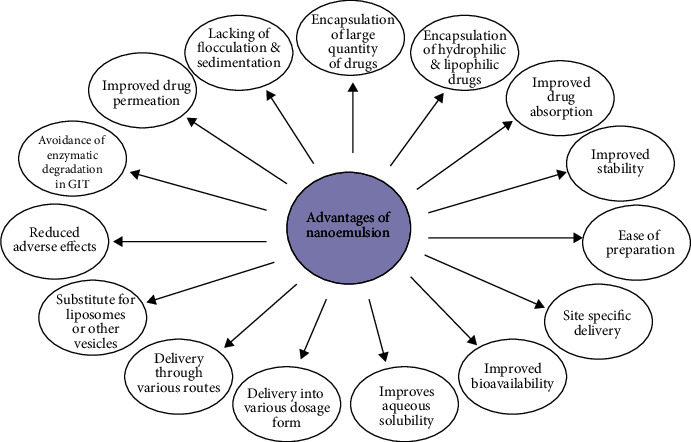
Hypertension is one of the most important causes of mortality, affecting the health status of the patient. At the same time, hypertension causes a huge health and economic burden on the whole world. The incidence and prevalence of hypertension are rising even among young people in both urban as well as rural communities. Although various conventional therapeutic moieties are available for the management of hypertension, they have serious flaws such as hepatic metabolism, reduced dose frequency, poor aqueous solubility, reduced bioavailability, and increased adverse effects, making the drug therapy ineffective. Therefore, it is required to design a novel drug delivery system having the capability to solve the constraints associated with conventional treatment of hypertension. Nanotechnology is a new way of using and manipulating the matter at the molecular level, whose functional organization is measured in nanometers. The applications of nanotechnology in the field of medicine provide an alternative and novel direction for the treatment of cardiovascular diseases and show excellent performance in the field of targeted drug therapy. Various nanotechnologies based drug delivery systems, such as solid lipid nanoparticles, nanosuspension, nanoemulsion, liposome, self-emulsifying systems, and polymeric nanoparticles, are available. Among them, nanoemulsion has provided a niche to supplement currently available therapeutic choices due to numerous benefits like stability, ease of preparation, enhanced drug absorption, reduced hepatic metabolism, increased dose frequency, enhanced bioavailability, and encapsulation of hydrophilic as well as hydrophobic drugs. This present review provides an in-depth idea about progression in treatment of hypertension, constraints for antihypertensive drug therapy, need of nanoemulsions to overcome these constraints, comparative analysis of nanoemulsions over other nanostructure drug delivery systems, pharmacodynamics studies of nanoemulsions for treatment of hypertension, recent patents for drug-loaded nanoemulsions meant for hypertension, and marketed formulations of nanoemulsions for hypertension.
高血压是最重要的死亡原因之一,影响着患者的健康状况。同时,高血压给全世界带来了巨大的健康和经济负担。高血压的发病率和患病率在城市和农村社区的年轻人中都在上升。尽管有各种常规的治疗药物可用于高血压的治疗,但它们存在严重的缺陷,如肝脏代谢、减少剂量频率、低水溶性、生物利用度降低和不良反应增加,使得药物治疗无效。因此,需要设计一种新的药物传递系统,具有解决与高血压常规治疗相关的限制的能力。纳米技术是一种在分子水平上使用和操纵物质的新方法,其功能组织的测量单位是纳米。纳米技术在医学领域的应用为心血管疾病的治疗提供了一种替代和新颖的方向,并在靶向药物治疗领域表现出优异的性能。各种基于纳米技术的药物传递系统,如固体脂质纳米粒、纳米混悬剂、纳米乳、脂质体、自乳化系统和聚合物纳米粒,已经存在。其中,纳米乳因其稳定性、易于制备、增强药物吸收、减少肝脏代谢、增加剂量频率、增强生物利用度以及包封亲水性和疏水性药物等诸多优点,为补充现有治疗选择提供了一个利基。本综述深入探讨了高血压治疗的进展、降压药物治疗的限制、克服这些限制对纳米乳的需求、纳米乳与其他纳米结构药物传递系统的比较分析、纳米乳治疗高血压的药效学研究、用于高血压的载药纳米乳的最新专利以及用于高血压的市售纳米乳制剂。