Mayar Sultan, Memarpoor-Yazdi Mina, Makky Ahmad, Eslami Sarokhalil Romina, D'Avanzo Nazzareno
Département de Pharmacologie et Physiologie, Université de Montréal, Montréal, QC, Canada.
Front Mol Neurosci. 2022 Apr 6;15:848540. doi: 10.3389/fnmol.2022.848540. eCollection 2022.
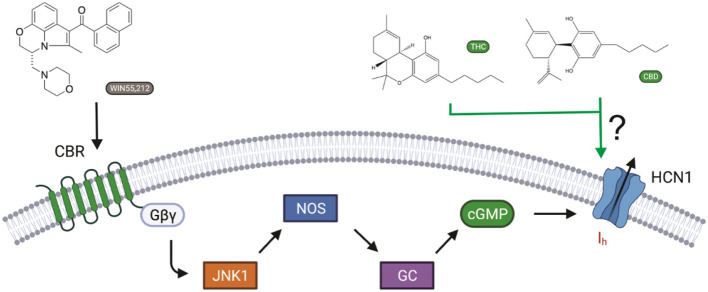
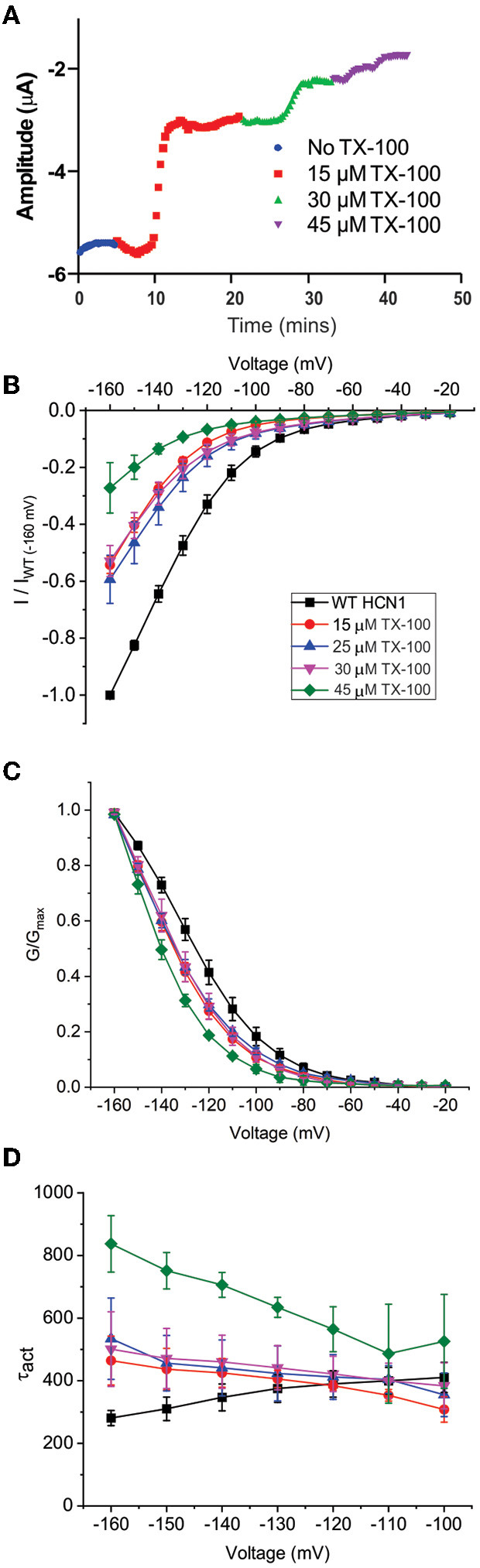
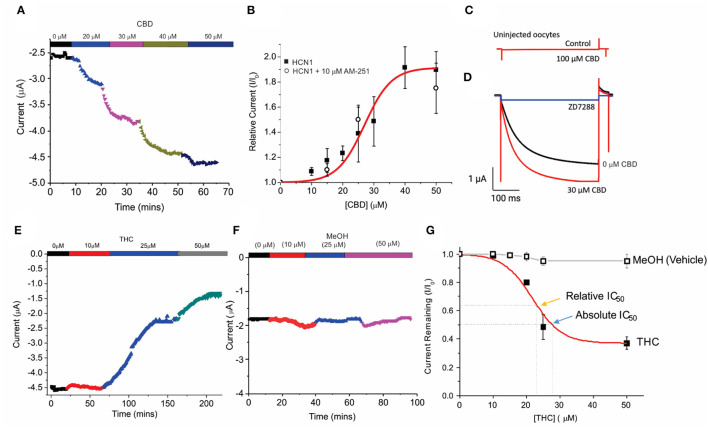
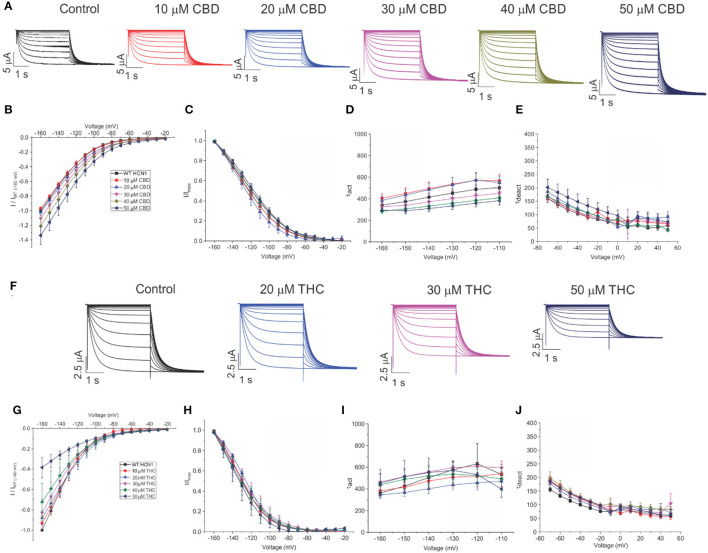
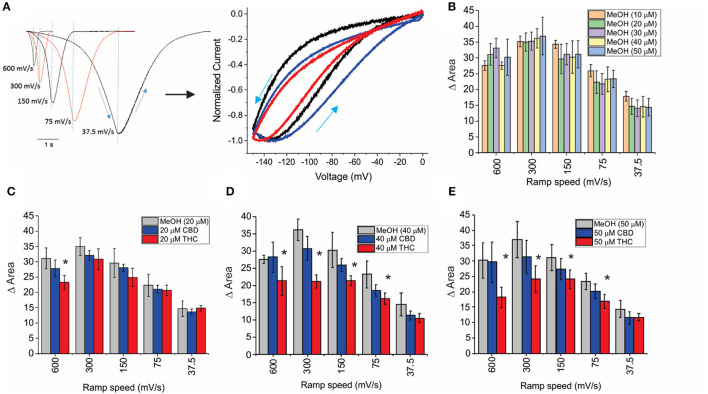
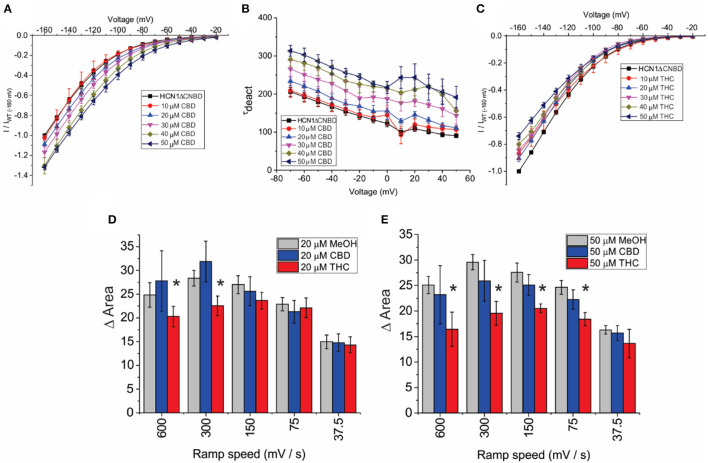
Cannabinoids are a broad class of molecules that act primarily on neurons, affecting pain sensation, appetite, mood, learning, and memory. In addition to interacting with specific cannabinoid receptors (CBRs), cannabinoids can directly modulate the function of various ion channels. Here, we examine whether cannabidiol (CBD) and Δ9-tetrahydrocannabinol (THC), the most prevalent phytocannabinoids in , can regulate the function of hyperpolarization-activated cyclic-nucleotide-gated (HCN1) channels independently of CBRs. HCN1 channels were expressed in oocytes since they do not express CBRs, and the effects of cannabinoid treatment on HCN1 currents were examined by a two-electrode voltage clamp. We observe opposing effects of CBD and THC on HCN1 current, with CBD acting to stimulate HCN1 function, while THC inhibited current. These effects persist in HCN1 channels lacking the cyclic-nucleotide binding domain (HCN1ΔCNBD). However, changes to membrane fluidity, examined by treating cells with TX-100, inhibited HCN1 current had more pronounced effects on the voltage-dependence and kinetics of activation than THC, suggesting this is not the primary mechanism of HCN1 regulation by cannabinoids. Our findings may contribute to the overall understanding of how cannabinoids may act as promising therapeutic molecules for the treatment of several neurological disorders in which HCN function is disturbed.
大麻素是一类主要作用于神经元的分子,会影响痛觉、食欲、情绪、学习和记忆。除了与特定的大麻素受体(CBRs)相互作用外,大麻素还可以直接调节各种离子通道的功能。在此,我们研究了大麻二酚(CBD)和Δ9-四氢大麻酚(THC)这两种 中最普遍的植物大麻素是否能够独立于CBRs调节超极化激活的环核苷酸门控(HCN1)通道的功能。由于卵母细胞不表达CBRs,因此在其中表达HCN1通道,并通过双电极电压钳检测大麻素处理对HCN1电流的影响。我们观察到CBD和THC对HCN1电流有相反的作用,CBD起到刺激HCN1功能的作用,而THC则抑制电流。这些作用在缺乏环核苷酸结合结构域的HCN1通道(HCN1ΔCNBD)中持续存在。然而,用TX-100处理细胞来检测膜流动性的变化,抑制HCN1电流对激活的电压依赖性和动力学的影响比THC更明显,这表明这不是大麻素调节HCN1的主要机制。我们的研究结果可能有助于全面理解大麻素如何作为有前景的治疗分子用于治疗几种HCN功能受到干扰的神经疾病。