• 文献检索
  • 文档翻译
  • 深度研究
  • 学术资讯
  • Suppr Zotero 插件Zotero 插件
  • 邀请有礼
  • 套餐&价格
  • 历史记录
应用&插件
Suppr Zotero 插件Zotero 插件浏览器插件Mac 客户端Windows 客户端微信小程序
定价
高级版会员购买积分包购买API积分包
服务
文献检索文档翻译深度研究API 文档MCP 服务
关于我们
关于 Suppr公司介绍联系我们用户协议隐私条款
关注我们

Suppr 超能文献

核心技术专利:CN118964589B侵权必究
粤ICP备2023148730 号-1Suppr @ 2026

文献检索

告别复杂PubMed语法,用中文像聊天一样搜索,搜遍4000万医学文献。AI智能推荐,让科研检索更轻松。

立即免费搜索

文件翻译

保留排版,准确专业,支持PDF/Word/PPT等文件格式,支持 12+语言互译。

免费翻译文档

深度研究

AI帮你快速写综述,25分钟生成高质量综述,智能提取关键信息,辅助科研写作。

立即免费体验

社会性蜜蜂肠道局限细菌的物种分化。

Species divergence in gut-restricted bacteria of social bees.

机构信息

Department of Integrative Biology, The University of Texas at Austin, Austin, TX 78712.

出版信息

Proc Natl Acad Sci U S A. 2022 May 3;119(18):e2115013119. doi: 10.1073/pnas.2115013119. Epub 2022 Apr 25.

DOI:10.1073/pnas.2115013119
PMID:35467987
原文链接:https://pmc.ncbi.nlm.nih.gov/articles/PMC9170019/
Abstract

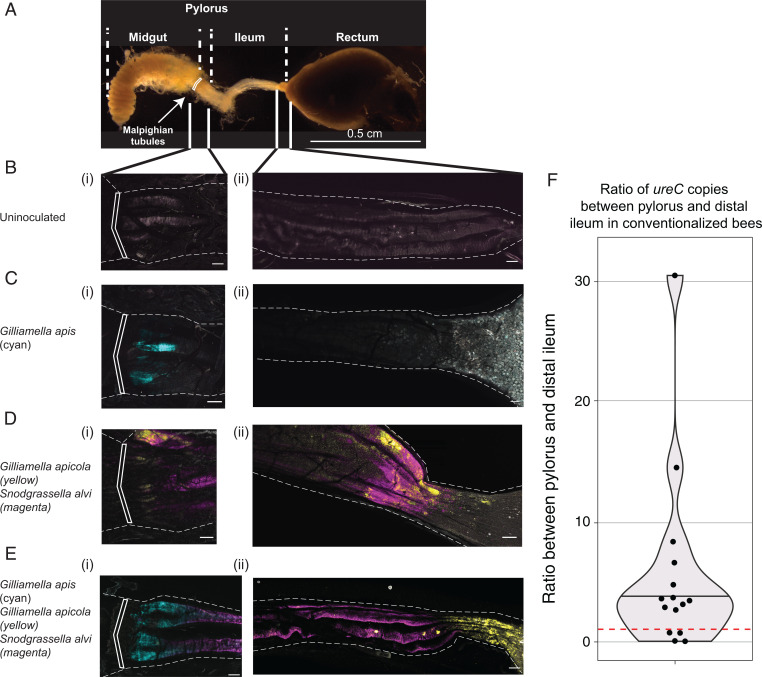
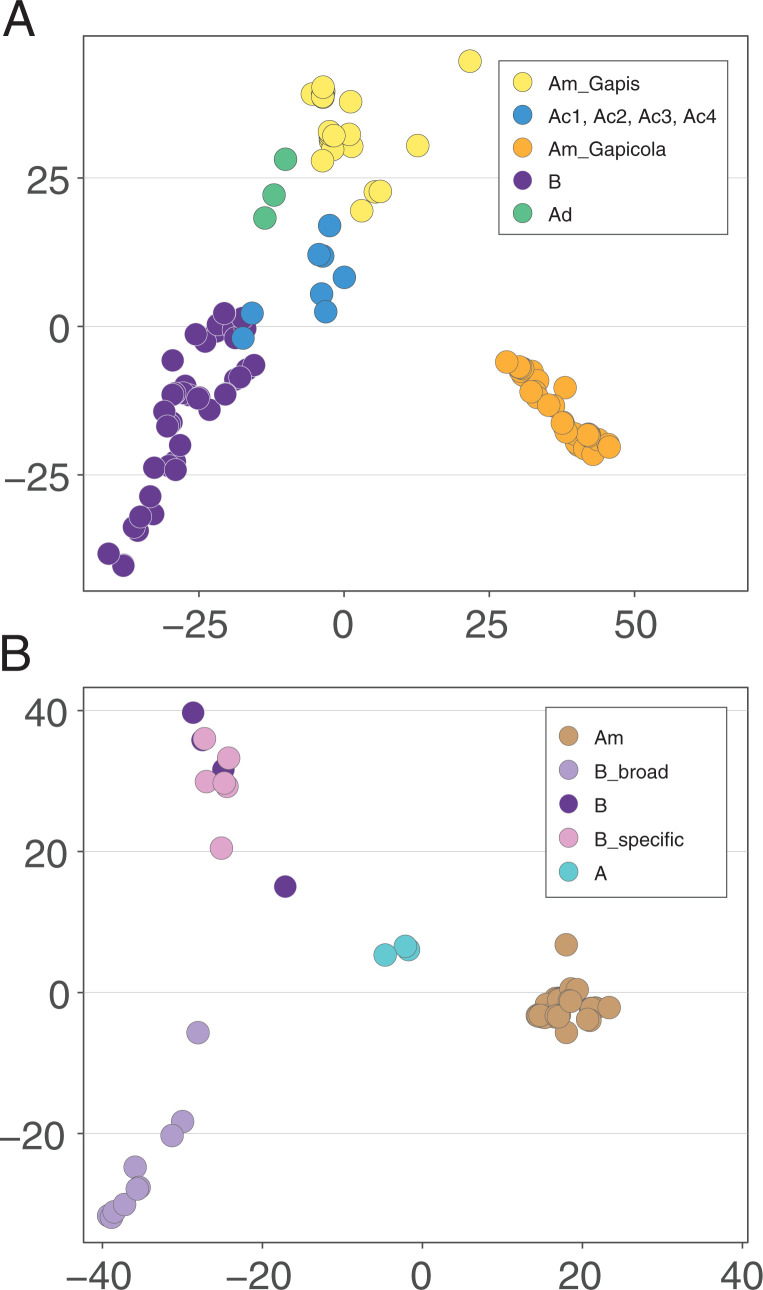
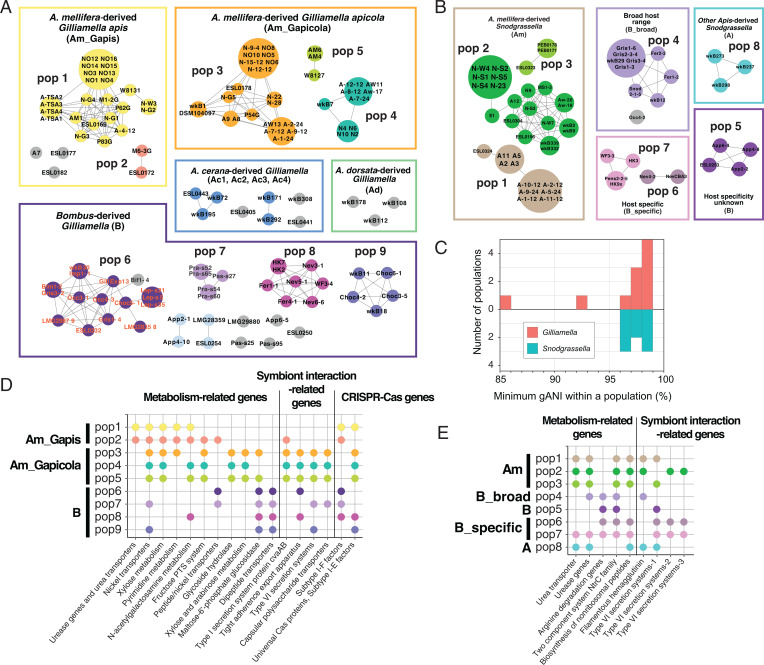
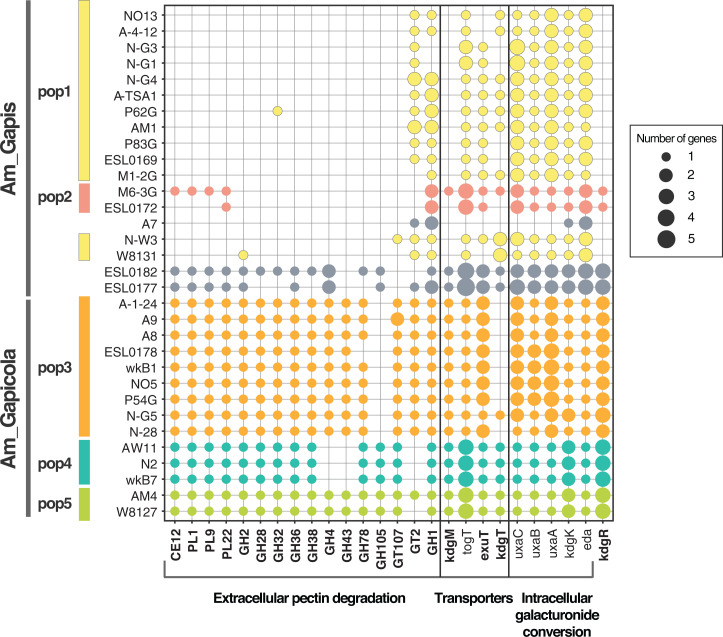
Host-associated microbiomes, particularly gut microbiomes, often harbor related but distinct microbial lineages, but how this diversity arises and is maintained is not well understood. A prerequisite for lineage diversification is reproductive isolation imposed by barriers to gene flow. In host-associated microbes, genetic recombination can be disrupted by confinement to different hosts, for example following host speciation, or by niche partitioning within the same host. Taking advantage of the simple gut microbiome of social bees, we explore the diversification of two groups of gut-associated bacteria, Gilliamella and Snodgrassella, which have evolved for 80 million y with honey bees and bumble bees. Our analyses of sequenced genomes show that these lineages have diversified into discrete populations with limited gene flow. Divergence has occurred between symbionts of different host species and, in some cases, between symbiont lineages within a single host individual. Populations have acquired genes to adapt to specific hosts and ecological niches; for example, Gilliamella lineages differ markedly in abilities to degrade dietary polysaccharides and to use the resulting sugar components. Using engineered fluorescent bacteria in vivo, we show that Gilliamella lineages localize to different hindgut regions, corresponding to differences in their abilities to use spatially concentrated nitrogenous wastes of hosts. Our findings show that bee gut bacteria can diversify due to isolation in different host species and also due to spatial niche partitioning within individual hosts, leading to barriers to gene flow.

摘要

宿主相关的微生物组,特别是肠道微生物组,通常包含相关但不同的微生物谱系,但这种多样性是如何产生和维持的还不是很清楚。谱系多样化的一个前提是由基因流动障碍引起的生殖隔离。在宿主相关的微生物中,遗传重组可以通过限制在不同的宿主中而被破坏,例如在宿主物种形成之后,或者通过在同一宿主内的生态位分隔。利用社会性蜜蜂简单的肠道微生物组,我们探索了两种肠道相关细菌 Gilliamella 和 Snodgrassella 的多样化,这两种细菌已经与蜜蜂和大黄蜂进化了 8000 万年。我们对测序基因组的分析表明,这些谱系已经多样化成具有有限基因流动的离散种群。在不同宿主物种的共生体之间,以及在某些情况下,在单个宿主个体内的共生体谱系之间,已经发生了分歧。种群获得了适应特定宿主和生态位的基因;例如,Gilliamella 谱系在降解饮食多糖和利用产生的糖成分的能力上有显著差异。我们使用体内工程化的荧光细菌表明,Gilliamella 谱系定位于不同的后肠区域,这与它们利用宿主空间集中的含氮废物的能力的差异相对应。我们的研究结果表明,蜜蜂肠道细菌可以通过在不同宿主物种中的隔离以及在单个宿主内的空间生态位分隔而多样化,从而导致基因流动的障碍。
https://cdn.ncbi.nlm.nih.gov/pmc/blobs/d05e/9170019/eb278fb62c7d/pnas.2115013119fig06.jpg
https://cdn.ncbi.nlm.nih.gov/pmc/blobs/d05e/9170019/fca558825f4e/pnas.2115013119fig01.jpg
https://cdn.ncbi.nlm.nih.gov/pmc/blobs/d05e/9170019/1adbdce5c7df/pnas.2115013119fig02.jpg
https://cdn.ncbi.nlm.nih.gov/pmc/blobs/d05e/9170019/369f17449353/pnas.2115013119fig03.jpg
https://cdn.ncbi.nlm.nih.gov/pmc/blobs/d05e/9170019/7cb021d38274/pnas.2115013119fig04.jpg
https://cdn.ncbi.nlm.nih.gov/pmc/blobs/d05e/9170019/8096e4169747/pnas.2115013119fig05.jpg
https://cdn.ncbi.nlm.nih.gov/pmc/blobs/d05e/9170019/eb278fb62c7d/pnas.2115013119fig06.jpg
https://cdn.ncbi.nlm.nih.gov/pmc/blobs/d05e/9170019/fca558825f4e/pnas.2115013119fig01.jpg
https://cdn.ncbi.nlm.nih.gov/pmc/blobs/d05e/9170019/1adbdce5c7df/pnas.2115013119fig02.jpg
https://cdn.ncbi.nlm.nih.gov/pmc/blobs/d05e/9170019/369f17449353/pnas.2115013119fig03.jpg
https://cdn.ncbi.nlm.nih.gov/pmc/blobs/d05e/9170019/7cb021d38274/pnas.2115013119fig04.jpg
https://cdn.ncbi.nlm.nih.gov/pmc/blobs/d05e/9170019/8096e4169747/pnas.2115013119fig05.jpg
https://cdn.ncbi.nlm.nih.gov/pmc/blobs/d05e/9170019/eb278fb62c7d/pnas.2115013119fig06.jpg

相似文献

1
Species divergence in gut-restricted bacteria of social bees.社会性蜜蜂肠道局限细菌的物种分化。
Proc Natl Acad Sci U S A. 2022 May 3;119(18):e2115013119. doi: 10.1073/pnas.2115013119. Epub 2022 Apr 25.
2
Deep Divergence and Genomic Diversification of Gut Symbionts of Neotropical Stingless Bees.肠共生菌的深度分歧与基因多样化:新热带无刺蜂研究
mBio. 2023 Apr 25;14(2):e0353822. doi: 10.1128/mbio.03538-22. Epub 2023 Mar 20.
3
Carpenter Bees () Harbor a Distinctive Gut Microbiome Related to That of Honey Bees and Bumble Bees.熊蜂拥有独特的肠道微生物组,与蜜蜂和熊蜂的肠道微生物组有关。
Appl Environ Microbiol. 2022 Jul 12;88(13):e0020322. doi: 10.1128/aem.00203-22. Epub 2022 Jun 27.
4
Evolution of Interbacterial Antagonism in Bee Gut Microbiota Reflects Host and Symbiont Diversification.蜜蜂肠道微生物群中细菌间拮抗作用的演变反映了宿主和共生体的多样化。
mSystems. 2021 May 11;6(3):e00063-21. doi: 10.1128/mSystems.00063-21.
5
Division of labor in honey bee gut microbiota for plant polysaccharide digestion.蜜蜂肠道微生物群的分工用于植物多糖消化。
Proc Natl Acad Sci U S A. 2019 Dec 17;116(51):25909-25916. doi: 10.1073/pnas.1916224116. Epub 2019 Nov 27.
6
Diversification of Type VI Secretion System Toxins Reveals Ancient Antagonism among Bee Gut Microbes.蜂肠道微生物之间的古老拮抗作用揭示了 VI 型分泌系统毒素的多样化。
mBio. 2017 Dec 12;8(6):e01630-17. doi: 10.1128/mBio.01630-17.
7
Extinction of anciently associated gut bacterial symbionts in a clade of stingless bees.绝灭的古生伴生肠道细菌共生体在无刺蜜蜂的一个分支中。
ISME J. 2021 Sep;15(9):2813-2816. doi: 10.1038/s41396-021-01000-1. Epub 2021 May 18.
8
Honey bees and bumble bees occupying the same landscape have distinct gut microbiomes and amplicon sequence variant-level responses to infections.在同一景观中占据的蜜蜂蜜蜂和熊蜂具有明显不同的肠道微生物组,并且对感染的扩增子序列变异水平的反应也不同。
PeerJ. 2023 Jun 9;11:e15501. doi: 10.7717/peerj.15501. eCollection 2023.
9
Divergence and convergence of gut microbiomes of wild insect pollinators.野生传粉昆虫肠道微生物组的趋同与趋异。
mBio. 2023 Aug 31;14(4):e0127023. doi: 10.1128/mbio.01270-23. Epub 2023 Jul 28.
10
Functional and evolutionary insights into the simple yet specific gut microbiota of the honey bee from metagenomic analysis.基于宏基因组分析的研究揭示了简单而独特的蜜蜂肠道微生物群的功能和进化意义。
Gut Microbes. 2013 Jan-Feb;4(1):60-5. doi: 10.4161/gmic.22517. Epub 2012 Oct 12.

引用本文的文献

1
Antibiotic treatment of honey bee colonies alters early gut microbiome assembly and induces persistent dysbiosis in newly emerged workers.对蜂群进行抗生素治疗会改变早期肠道微生物群的组装,并在新羽化的工蜂中引发持续的生态失调。
Sci Rep. 2025 Aug 8;15(1):29031. doi: 10.1038/s41598-025-12823-9.
2
Effects of priority on strain-level composition of the honey bee gut community.优先级对蜜蜂肠道群落菌株水平组成的影响。
Appl Environ Microbiol. 2025 Aug 20;91(8):e0082825. doi: 10.1128/aem.00828-25. Epub 2025 Jul 31.
3
Host Specificity of in Eastern and Western Honeybees and Its Effects on Naturally Occurring Deformed Wing Virus Titers.

本文引用的文献

1
Niche partitioning facilitates coexistence of closely related honey bee gut bacteria.小生境分隔促进了密切相关的蜜蜂肠道细菌的共存。
Elife. 2021 Jul 19;10:e68583. doi: 10.7554/eLife.68583.
2
Extinction of anciently associated gut bacterial symbionts in a clade of stingless bees.绝灭的古生伴生肠道细菌共生体在无刺蜜蜂的一个分支中。
ISME J. 2021 Sep;15(9):2813-2816. doi: 10.1038/s41396-021-01000-1. Epub 2021 May 18.
3
Discriminating arboviral species.鉴别虫媒病毒的种属。
东方蜜蜂和西方蜜蜂中(某种物质)的宿主特异性及其对自然发生的残翅病毒滴度的影响。
Insects. 2025 May 1;16(5):478. doi: 10.3390/insects16050478.
4
Host specificity of gut microbiota associated with social bees: patterns and processes.与群居蜜蜂相关的肠道微生物群的宿主特异性:模式与过程
Microbiol Mol Biol Rev. 2025 Jun 25;89(2):e0008023. doi: 10.1128/mmbr.00080-23. Epub 2025 Mar 20.
5
Genomic divergence across the tree of life.生命之树上的基因组差异。
Proc Natl Acad Sci U S A. 2025 Mar 11;122(10):e2319389122. doi: 10.1073/pnas.2319389122. Epub 2025 Feb 27.
6
Co-evolution and Gene Transfers Drive Speciation Patterns in Host-Associated Bacteria.协同进化和基因转移驱动宿主相关细菌的物种形成模式。
Mol Biol Evol. 2024 Dec 6;41(12). doi: 10.1093/molbev/msae256.
7
Removal of sequencing adapter contamination improves microbial genome databases.去除测序接头污染可改善微生物基因组数据库。
BMC Genomics. 2024 Nov 4;25(1):1033. doi: 10.1186/s12864-024-10956-1.
8
Type VI secretion systems promote intraspecific competition and host interactions in a bee gut symbiont.VI 型分泌系统促进了一种蜜蜂肠道共生菌的种内竞争和宿主相互作用。
Proc Natl Acad Sci U S A. 2024 Oct 29;121(44):e2414882121. doi: 10.1073/pnas.2414882121. Epub 2024 Oct 23.
9
Possible interactions between gut microbiome and division of labor in honey bees.蜜蜂肠道微生物群与分工之间可能存在的相互作用。
Ecol Evol. 2024 Aug 27;14(8):e11707. doi: 10.1002/ece3.11707. eCollection 2024 Aug.
10
One-step genome engineering in bee gut bacterial symbionts.一步法基因组工程在蜜蜂肠道共生菌中。
mBio. 2024 Sep 11;15(9):e0139224. doi: 10.1128/mbio.01392-24. Epub 2024 Aug 6.
J Gen Virol. 2021 Apr;102(4). doi: 10.1099/jgv.0.001572.
4
inStrain profiles population microdiversity from metagenomic data and sensitively detects shared microbial strains.inStrain 从宏基因组数据中分析种群微多样性,并灵敏地检测出共享的微生物菌株。
Nat Biotechnol. 2021 Jun;39(6):727-736. doi: 10.1038/s41587-020-00797-0. Epub 2021 Jan 18.
5
Functional and genetic markers of niche partitioning among enigmatic members of the human oral microbiome.人类口腔微生物组中神秘成员之间生态位分隔的功能和遗传标记。
Genome Biol. 2020 Dec 16;21(1):292. doi: 10.1186/s13059-020-02195-w.
6
Vast Differences in Strain-Level Diversity in the Gut Microbiota of Two Closely Related Honey Bee Species.两种密切相关的蜜蜂物种的肠道微生物菌群在菌株水平多样性方面存在巨大差异。
Curr Biol. 2020 Jul 6;30(13):2520-2531.e7. doi: 10.1016/j.cub.2020.04.070. Epub 2020 Jun 11.
7
Diversity within species: interpreting strains in microbiomes.物种内的多样性:解析微生物组中的菌株。
Nat Rev Microbiol. 2020 Sep;18(9):491-506. doi: 10.1038/s41579-020-0368-1. Epub 2020 Jun 4.
8
Spatial Ecology of the Human Tongue Dorsum Microbiome.人类舌背微生物组的空间生态学。
Cell Rep. 2020 Mar 24;30(12):4003-4015.e3. doi: 10.1016/j.celrep.2020.02.097.
9
IQ-TREE 2: New Models and Efficient Methods for Phylogenetic Inference in the Genomic Era.IQ-TREE 2:基因组时代系统发育推断的新模型和有效方法。
Mol Biol Evol. 2020 May 1;37(5):1530-1534. doi: 10.1093/molbev/msaa015.
10
Engineered symbionts activate honey bee immunity and limit pathogens.工程共生体激活蜜蜂免疫并限制病原体。
Science. 2020 Jan 31;367(6477):573-576. doi: 10.1126/science.aax9039. Epub 2020 Jan 30.