Cooperative Major in Advanced Biomedical Sciences, Joint Graduate School of Tokyo Women's Medical University and Waseda University, 2-2 Wakamatsucho, Shinjuku, Tokyo, 162-8480, Japan.
Department of Orthopaedic Surgery, Tokyo Women's Medical University, 8-1, Kawada-Cho, Shinjuku-ku, Tokyo, 162-8666, Japan.
Sci Rep. 2022 Apr 25;12(1):6751. doi: 10.1038/s41598-022-10713-y.
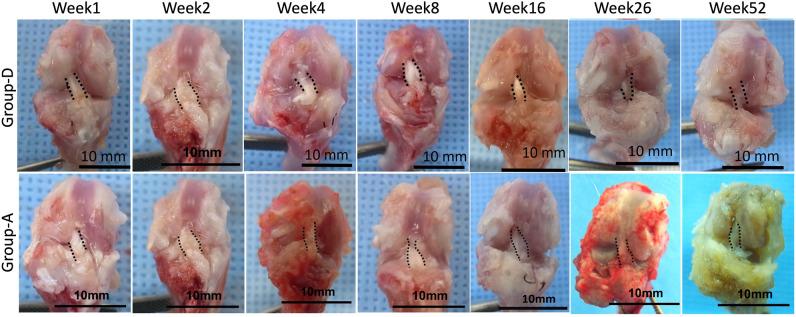
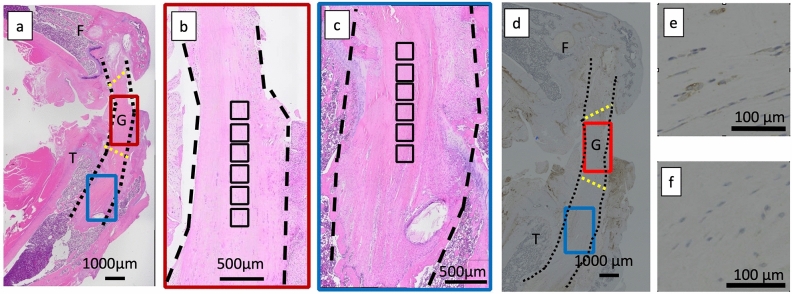
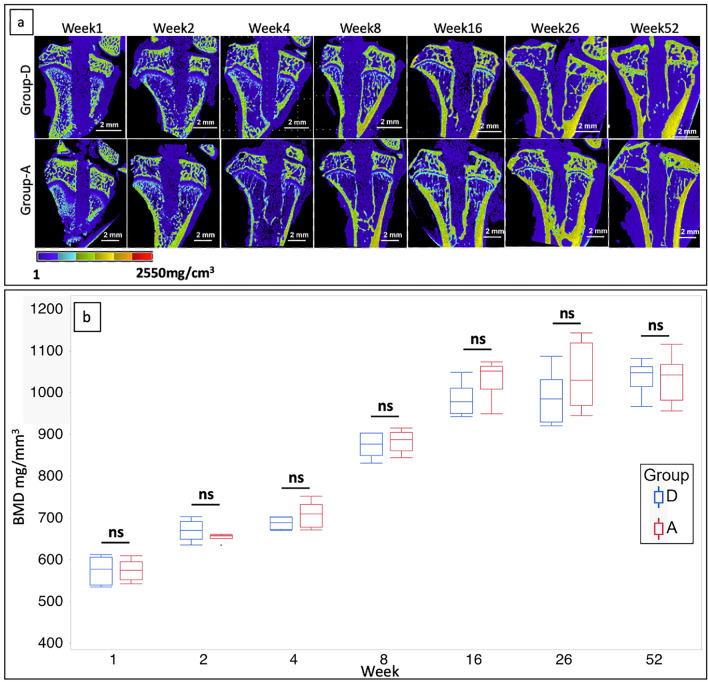
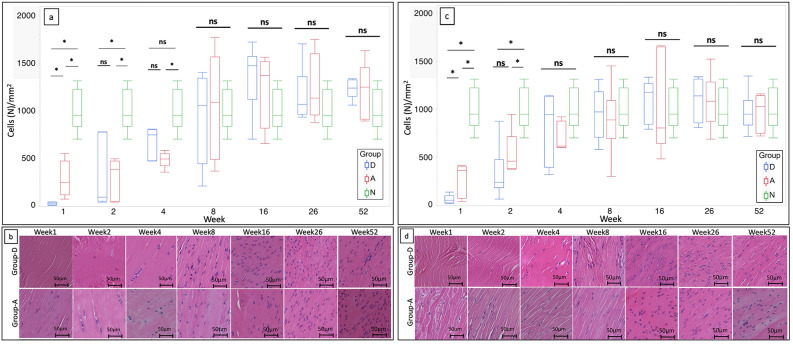
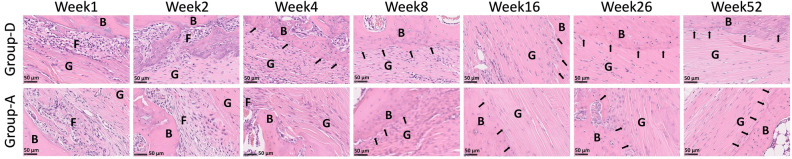
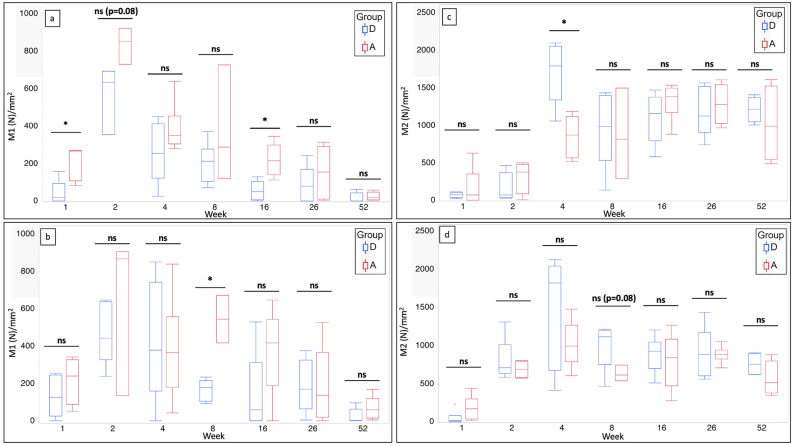
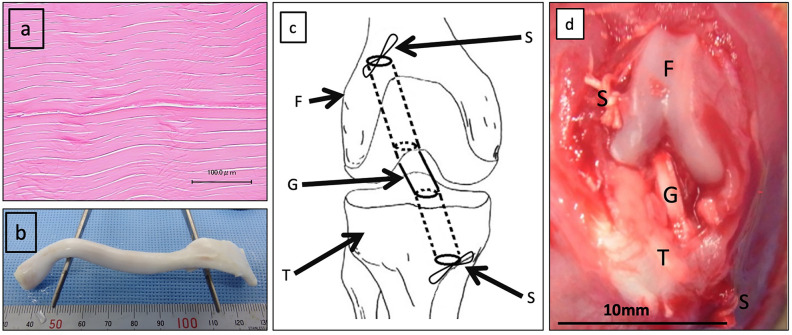
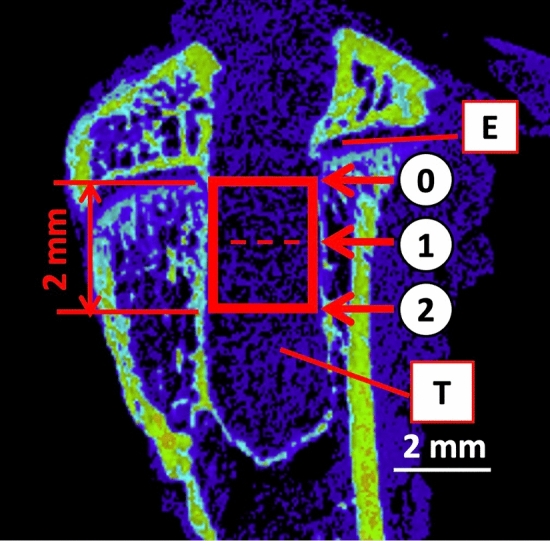
There is an essential demand for developing biocompatible grafts for knee anterior cruciate ligament reconstruction (ACLR). This study investigated cell infiltration into decellularized bovine tendon xenografts using a rat knee ACLR model. Twelve-week-old Sprague-Dawley rats were used. At weeks 1, 2, 4, 8, 16, 26, and 52 (each period, n = 6) after ACLR, rats receiving decellularized bovine tendon (group D, n = 42) or autologous tendon (group A, n = 42) as grafts underwent peritibial bone tunnel bone mineral density (BMD), histological, and immunohistological assessments. BMD increased over time in both the groups until week 16 and then remained unchanged without exhibiting significant differences between the groups. Initially, cellularity in group D was lower than that in group A; however, by weeks 4-8, both the groups were comparable to the native anterior cruciate ligament group and cellularity remained unchanged until week 52. Initially, group A had more M1 macrophages, indicating inflammation, whereas group D had more M2 macrophages, indicating tissue regeneration. Nonetheless, the M1 and M2 macrophage counts of both the groups were comparable at most times. This study revealed the excellent recellularization and tendon-bone integration abilities of decellularized tendons using a cross-species model.
对于膝关节前交叉韧带重建(ACLR),开发具有生物相容性的移植物存在重要需求。本研究使用大鼠膝关节 ACLR 模型,研究了脱细胞牛肌腱异种移植物中的细胞浸润情况。实验采用 12 周龄的 Sprague-Dawley 大鼠,在 ACLR 后第 1、2、4、8、16、26 和 52 周(每个周期,n=6),接受脱细胞牛肌腱(D 组,n=42)或自体肌腱(A 组,n=42)作为移植物的大鼠接受胫骨周围骨隧道骨密度(BMD)、组织学和免疫组织化学评估。两组的 BMD 均随时间增加,直到第 16 周后保持不变,且两组间无显著差异。最初,D 组的细胞数量低于 A 组,但在第 4-8 周时,两组均与天然前交叉韧带组相当,且细胞数量直到第 52 周保持不变。最初,A 组有更多的 M1 巨噬细胞,表明有炎症反应,而 D 组有更多的 M2 巨噬细胞,表明组织再生。然而,大多数时候,两组的 M1 和 M2 巨噬细胞计数相当。本研究通过异种模型证实了脱细胞肌腱具有良好的再细胞化和肌腱-骨整合能力。