Harvard Affiliated Emergency Medicine Residency (HAEMR) Program, Mass General Brigham, Boston, MA, USA.
Department of Emergency Medicine, Division of Medical Toxicology, Mass General Brigham, Vining St. Neville House Boston, Boston, MA, 02115, USA.
J Med Toxicol. 2022 Oct;18(4):321-333. doi: 10.1007/s13181-022-00891-6. Epub 2022 Apr 26.
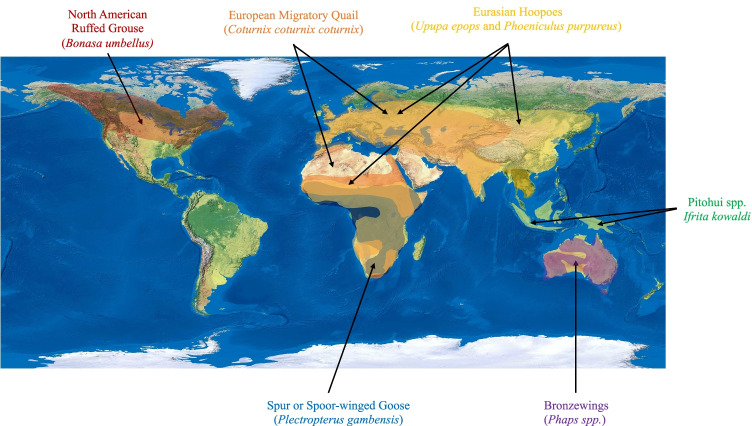
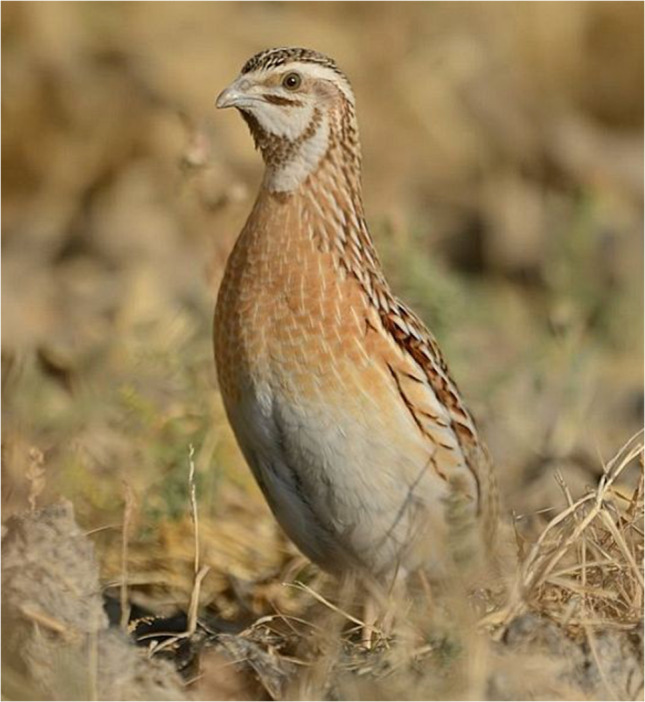
All around the world, there are species of birds that have developed the ability to acquire toxic chemicals in their bodies making them less palatable or even lethal when consumed or contacted. Exposure to poisonous bird species is rare among humans, yet their poisons can produce serious clinical outcomes. In this study, we conducted a literature search focusing on seven avian species: the pitohuis (Pitohui spp.), blue-capped ifrita (Ifrita kowaldi), European quail (Cortunix corturnix coturnix), spur or spoor-winged goose (Plectropterus gambensis), North American ruffed grouse (Bonasa umbellus), Brush bronzewings (Phaps elegans), and European hoopoes and woodhoopoes (Upupa epops and Phoeniculus purpureus, respectively). We present the geographic distribution of each poisonous bird, toxin physiology and origin, clinical signs and symptoms of poisoning, cases of human toxicity if available and discuss the birds' ability to prevent self-intoxication. Our results suggest that most cases of contact with toxic birds produce mild symptoms as most of these birds apart from the European quail (C. c. corturnix) and North American ruffed grouse (B. umbellus) are not commonly consumed by humans. Furthermore, we discuss several methods of toxin acquisition in these bird species, which are mostly diet acquired apart from the hoopoes and woodhoopoes (Upupa and Phoeniculus spp.) who have a symbiotic relationship with chemical-producing bacteria in their uropygial glands. In summary, our study provides a comprehensive review of the toxic physiology, clinical manifestations, and evolutionary insight to avian toxins.
在世界各地,有一些鸟类已经发展出了在体内获取有毒化学物质的能力,这使得它们在被食用或接触时变得不那么可口,甚至是致命的。人类接触有毒鸟类的情况很少见,但它们的毒素会产生严重的临床后果。在这项研究中,我们进行了文献检索,重点关注七种鸟类:蓝颊啄花鸟(Pitohui spp.)、蓝顶蓝矶鸫(Ifrita kowaldi)、欧洲鹌鹑(Cortunix corturnix coturnix)、 spur 或 spoor-winged 鹅(Plectropterus gambensis)、北美松鸡(Bonasa umbellus)、刷翅凤头鹦鹉(Phaps elegans)和欧洲戴胜和伍德戴胜(Upupa epops 和 Phoeniculus purpureus)。我们介绍了每一种有毒鸟类的地理分布、毒素的生理和起源、中毒的临床症状和体征、如果有人类中毒的案例,并讨论了鸟类防止自我中毒的能力。我们的结果表明,大多数接触有毒鸟类的案例产生的是轻微的症状,因为除了欧洲鹌鹑(C. c. corturnix)和北美松鸡(B. umbellus)外,这些鸟类中的大多数并不常被人类食用。此外,我们还讨论了这些鸟类中几种毒素的获取方法,这些方法主要是通过饮食获得的,除了戴胜和伍德戴胜(Upupa 和 Phoeniculus spp.)外,它们与尾脂腺中产生化学物质的细菌有共生关系。总之,我们的研究提供了对鸟类毒素的毒理学、临床表现和进化见解的全面综述。