Cell Science Research Center, Department of Stem Cells and Developmental Biology, Royan Institute for Stem Cell Biology and Technology, ACECR, Tehran, Iran.
Center for Bioinformatics, Saarland University, Saarbrücken, Germany.
PLoS One. 2022 Apr 27;17(4):e0267291. doi: 10.1371/journal.pone.0267291. eCollection 2022.
MicroRNAs (miRNAs) are frequently deregulated in various types of cancer. While antisense oligonucleotides are used to block oncomiRs, delivery of tumour-suppressive miRNAs holds great potential as a potent anti-cancer strategy. Here, we aim to determine, and functionally analyse, miRNAs that are lowly expressed in various types of tumour but abundantly expressed in multiple normal tissues.
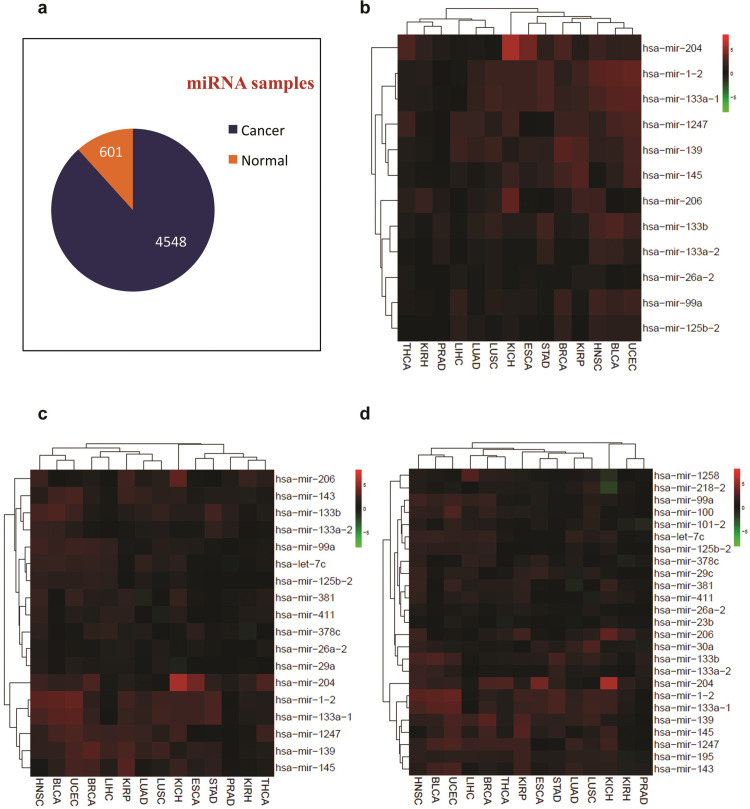
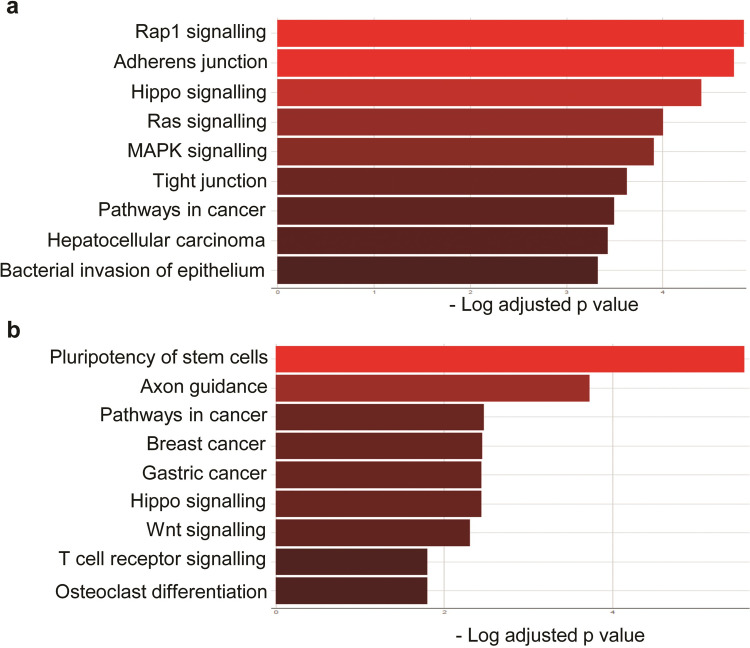
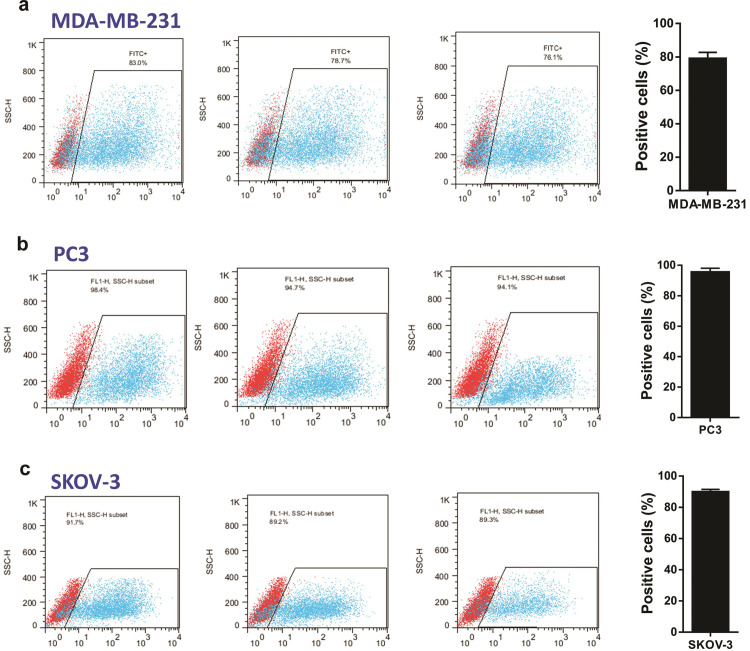
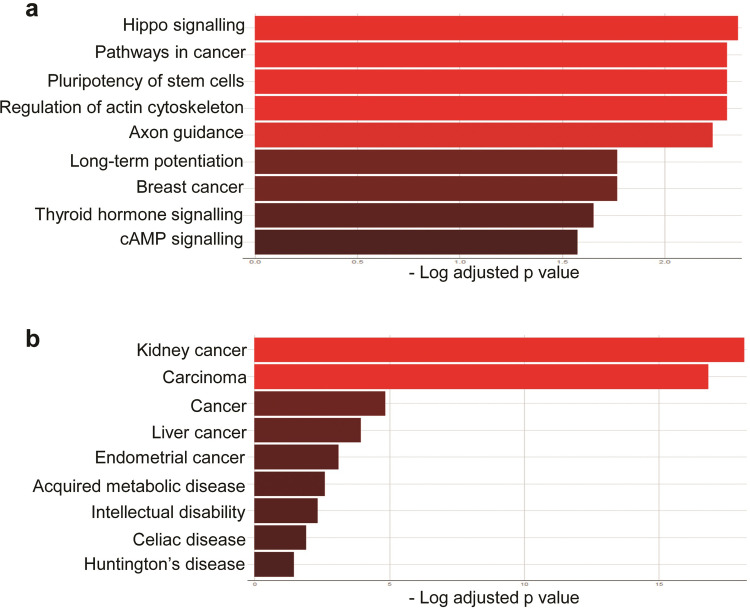
The miRNA sequencing data of 14 cancer types were downloaded from the TCGA dataset. Significant differences in miRNA expression between tumor and normal samples were calculated using limma package (R programming). An adjusted p value < 0.05 was used to compare normal versus tumor miRNA expression profiles. The predicted gene targets were obtained using TargetScan, miRanda, and miRDB and then subjected to gene ontology analysis using Enrichr. Only GO terms with an adjusted p < 0.05 were considered statistically significant. All data from wet-lab experiments (cell viability assays and flow cytometry) were expressed as means ± SEM, and their differences were analyzed using GraphPad Prism software (Student's t test, p < 0.05).
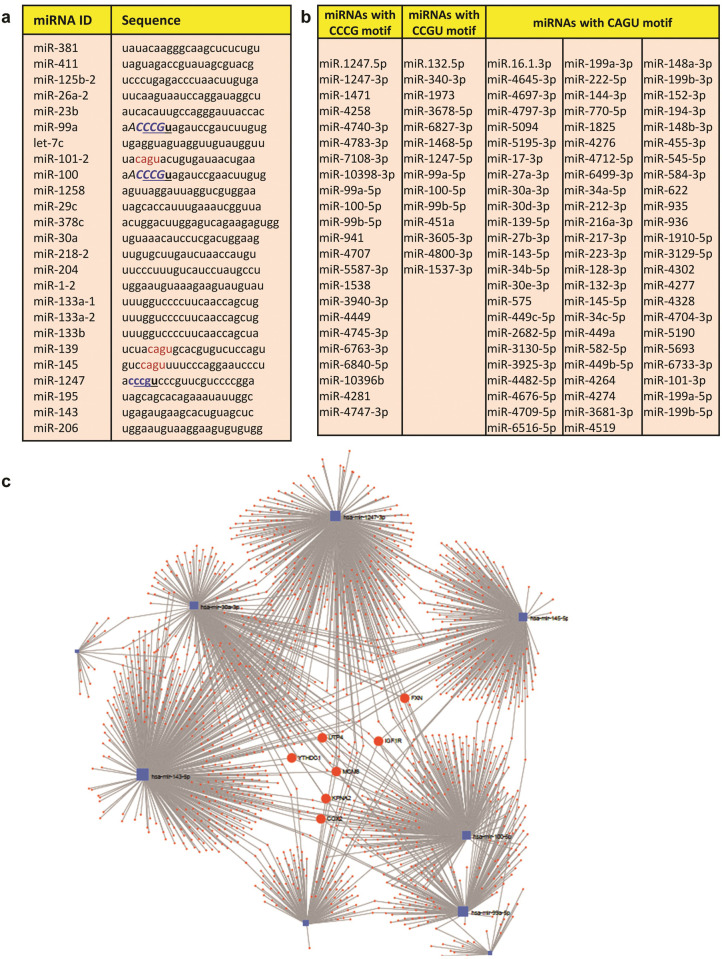
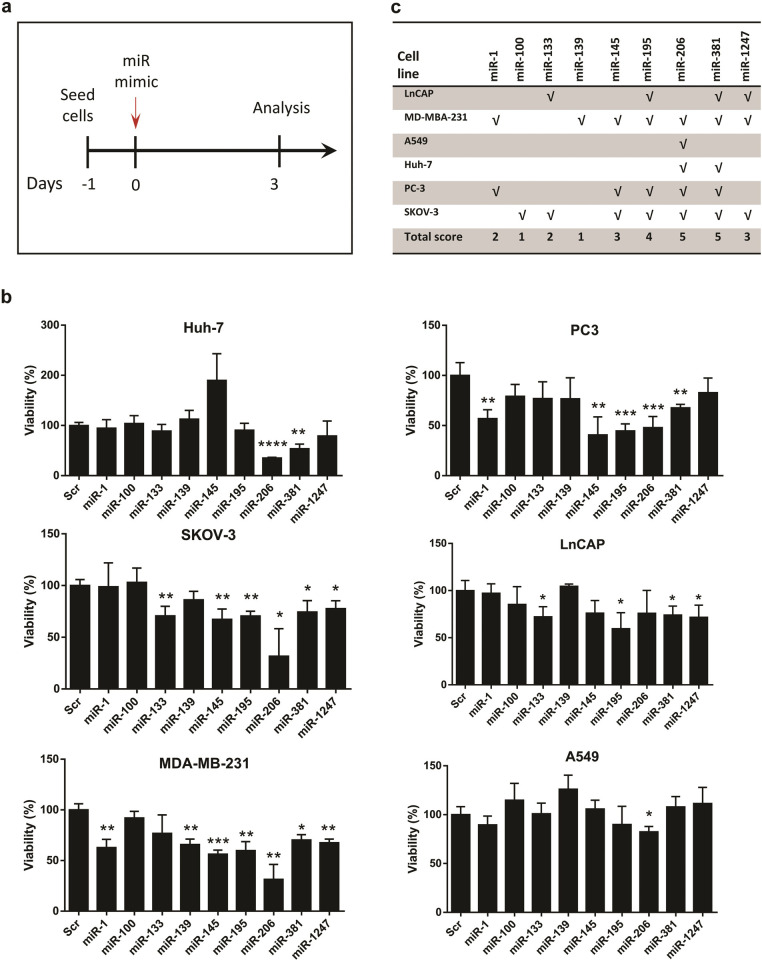
By compiling all publicly available miRNA profiling data from The Cancer Genome Atlas (TCGA) Pan-Cancer Project, we reveal a small set of tumour-suppressing miRNAs (which we designate as 'normomiRs') that are highly expressed in 14 types of normal tissues but poorly expressed in corresponding tumour tissues. Interestingly, muscle-enriched miRNAs (e.g. miR-133a/b and miR-206) and miRNAs from DLK1-DIO3 locus (e.g. miR-381 and miR-411) constitute a large fraction of the normomiRs. Moreover, we define that the CCCGU motif is absent in the oncomiRs' seed sequences but present in a fraction of tumour-suppressive miRNAs. Finally, the gain of function of candidate normomiRs across several cancer cell types indicates that miR-206 and miR-381 exert the most potent inhibition on multiple cancer types in vitro.
Our results reveal a pan-cancer set of tumour-suppressing miRNAs and highlight the potential of miRNA-replacement therapies for targeting multiple types of tumour.
MicroRNAs (miRNAs) 在各种类型的癌症中经常失调。虽然反义寡核苷酸被用于阻断致癌 miRNA,但肿瘤抑制 miRNA 的递送具有作为一种有效的抗癌策略的巨大潜力。在这里,我们旨在确定并功能分析在各种肿瘤中低表达但在多种正常组织中大量表达的 miRNA。
从 TCGA 数据集下载了 14 种癌症类型的 miRNA 测序数据。使用 limma 包(R 编程语言)计算肿瘤与正常样本之间 miRNA 表达的显着差异。使用调整后的 p 值<0.05 比较正常与肿瘤 miRNA 表达谱。使用 TargetScan、miRanda 和 miRDB 预测靶基因,并使用 Enrichr 进行基因本体分析。仅具有调整后的 p<0.05 的 GO 术语被认为具有统计学意义。所有来自湿实验室实验(细胞活力测定和流式细胞术)的数据均表示为平均值±SEM,并使用 GraphPad Prism 软件(Student's t 检验,p<0.05)分析其差异。
通过编译来自癌症基因组图谱 (TCGA) 泛癌项目的所有公开 miRNA 分析数据,我们揭示了一小部分肿瘤抑制 miRNA(我们将其命名为“normomiRs”),这些 miRNA 在 14 种正常组织中高度表达,但在相应的肿瘤组织中表达水平较低。有趣的是,富含肌肉的 miRNA(例如 miR-133a/b 和 miR-206)和来自 DLK1-DIO3 基因座的 miRNA(例如 miR-381 和 miR-411)构成了 normomiRs 的很大一部分。此外,我们定义在致癌 miRNA 的种子序列中不存在 CCCGU 基序,但存在于一部分肿瘤抑制 miRNA 中。最后,候选 normomiRs 在多种癌细胞类型中的功能获得表明 miR-206 和 miR-381 在体外对多种癌症类型具有最强的抑制作用。
我们的研究结果揭示了一组泛癌肿瘤抑制 miRNA,并强调了 miRNA 替代疗法靶向多种肿瘤的潜力。