Department of Neurology, BG University Hospital Bergmannsheil, Ruhr-University, Bochum, Germany.
Heimer-Institute for Muscle Research, BG University Hospital Bergmannsheil, Ruhr-University, Bochum, Germany.
Orphanet J Rare Dis. 2022 Apr 27;17(1):177. doi: 10.1186/s13023-022-02327-4.
Pain occurs in the majority of patients with late onset Pompe disease (LOPD) and is associated with a reduced quality of life. The aim of this study was to analyse the pain characteristics and its relation to a small nerve fiber involvement in LOPD patients.
In 35 patients with LOPD under enzyme replacement therapy without clinical signs of polyneuropathy (19 females; 51 ± 15 years), pain characteristics as well as depressive and anxiety symptoms were assessed using the PainDetect questionnaire (PDQ) and the hospital anxiety and depression scale (HADS), respectively. Distal skin biopsies were analysed for intraepidermal nerve fiber density (IENFD) and compared to age- and gender-matched reference data. Skin biopsies from 20 healthy subjects served as controls to assure validity of the morphometric analysis.
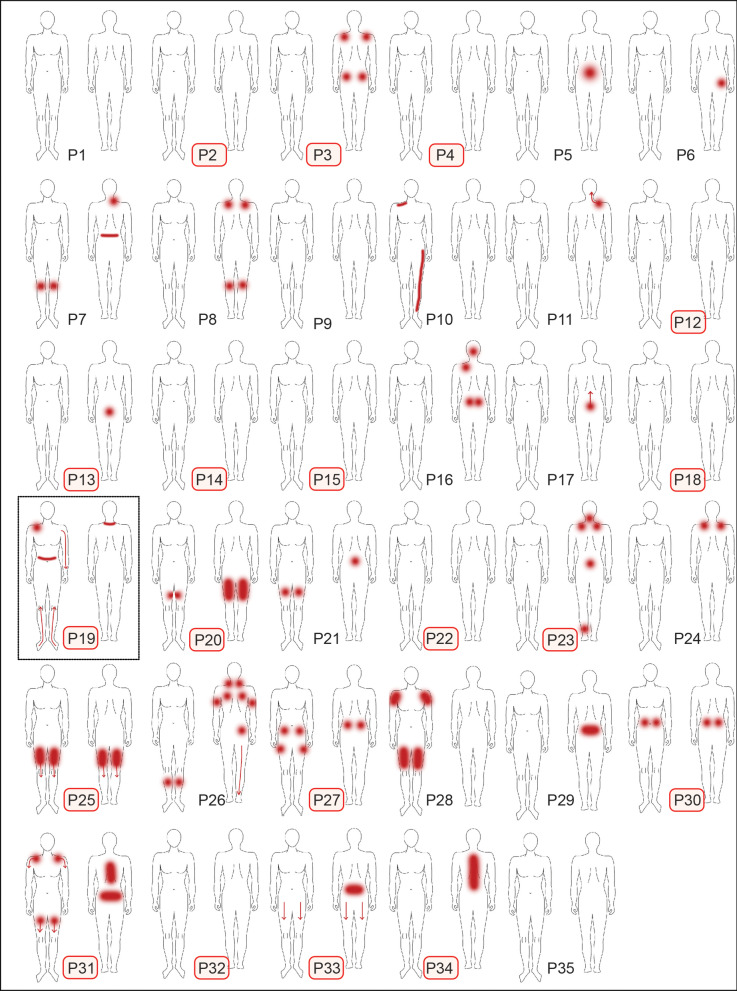
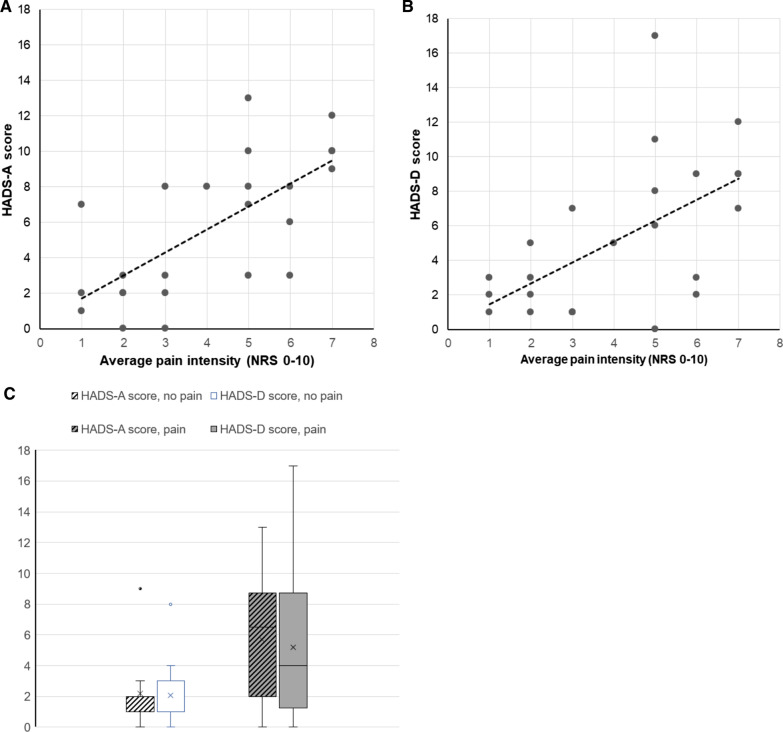
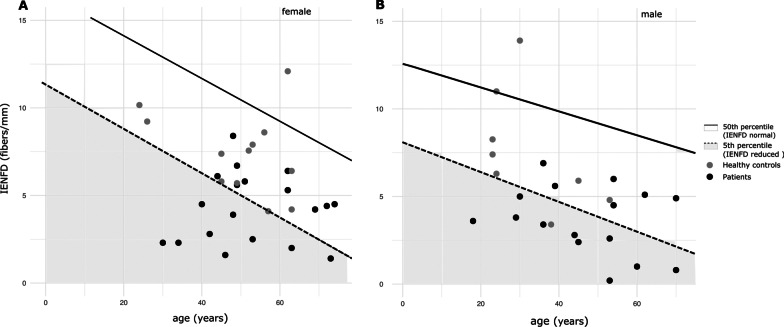
Pain was reported in 69% of the patients with an average intensity of 4.1 ± 1.1 on the numeric rating scale (NRS; anchors: 0-10). According to PDQ, neuropathic pain was likely in one patient, possible in 29%, and unlikely in 67%. Relevant depression and anxiety symptoms occurred in 31% and 23%, respectively, and correlated with pain intensity. Distal IENFD (3.98 ± 1.95 fibers/mm) was reduced in 57% of the patients. The degree of IENFD reduction did not correlate with the durations of symptoms to ERT or duration of ERT to biopsy.
Pain is a frequent symptom in treated LOPD on ERT, though a screening questionnaire seldom indicated neuropathic pain. The high frequency of small nerve fiber pathology in a treated LOPD cohort was found regardless of the presence of pain or comorbid risk factors for SFN and needs further exploration in terms of clinical context, exact mechanisms and when developing novel therapeutic options for LOPD.
大多数迟发性庞贝病(LOPD)患者都会出现疼痛,且生活质量降低。本研究旨在分析 LOPD 患者的疼痛特征及其与小纤维神经受累的关系。
在 35 名接受酶替代治疗且无周围神经病变临床症状的 LOPD 患者(19 名女性;51±15 岁)中,采用疼痛检测问卷(PDQ)和医院焦虑抑郁量表(HADS)分别评估疼痛特征、抑郁和焦虑症状。分析远端皮肤活检的表皮内神经纤维密度(IENFD),并与年龄和性别匹配的参考数据进行比较。20 名健康受试者的皮肤活检作为对照,以确保形态计量分析的有效性。
69%的患者报告有疼痛,平均数字评定量表(NRS)评分 4.1±1.1(锚定:0-10)。根据 PDQ,1 例患者可能为神经病理性疼痛,29%可能为神经病理性疼痛,67%不太可能为神经病理性疼痛。分别有 31%和 23%的患者出现相关抑郁和焦虑症状,且与疼痛强度相关。57%的患者远端 IENFD(3.98±1.95 纤维/mm)减少。IENFD 减少的程度与 ERT 症状持续时间或 ERT 到活检的持续时间无关。
尽管筛查问卷很少提示神经病理性疼痛,但在接受 ERT 的治疗性 LOPD 中,疼痛是一种常见症状。在一个接受治疗的 LOPD 队列中,无论是否存在疼痛或 SFN 的合并风险因素,都发现小纤维神经病变的发生率很高,需要进一步从临床背景、确切机制以及为 LOPD 开发新的治疗方法等方面进行探讨。