
预后生物标志物 NUMB 被乳腺癌细胞外泌体抑制,从而促进乳腺癌的进展。
Prognostic Biomarker NUMB Is Inhibited by Breast Cancer Cell Exosomes to Promote Breast Cancer Progression.
机构信息
School of Basic Medical Sciences, Chongqing Medical University, Chongqing 400016, China.
出版信息
J Immunol Res. 2022 Apr 18;2022:6032076. doi: 10.1155/2022/6032076. eCollection 2022.
OBJECTIVE
To clarify the regulation of breast cancer cell-derived exosomes on breast cancer and the expression of the NUMB endocytic adaptor protein (NUMB) protein.
METHODS
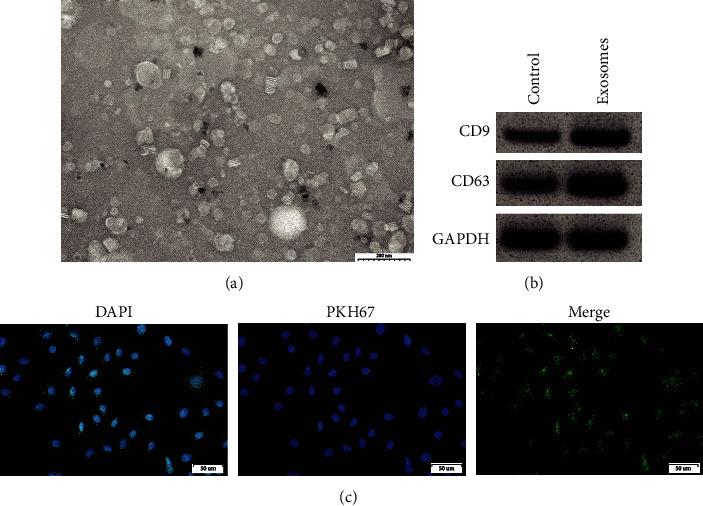
The exosomes of breast cancer cell line MDA-MB-231 were isolated. The exosomes were subsequently labeled with PKH67 and added to breast cancer MDA-MB-231 cells cultured . Transwell and clone formation assays were performed to detect cell migration, invasion, and clone formation. Meanwhile, Western blot and qPCR were conducted to determine the regulation of NUMB expression by exosomes in breast cancer cells. Furthermore, NUMB overexpressed lentivirus was supplemented to validate the recovery.
RESULTS
The number of migrating and invasive breast cancer cells in the exosome-treated group was significantly increased compared with the control group. Moreover, the number of breast cancer cell clones in the exosome-treated group was increased than in the control group. However, the NUMB expression in breast cancer cells treated with exosomes revealed a substantial decrease, indicating that the exosomes of breast cancer cells could inhibit NUMB expression. NUMB overexpressed lentivirus supplementation markedly suppressed cell migration, invasion, and proliferation of breast cancer cells compared with exosome group.
CONCLUSION
Taken together, the exosomes of breast cancer cells could inhibit the expression of NUMB and promote the migration, invasion, and cell clone formation of breast cancer cells.
目的
阐明乳腺癌细胞来源的外泌体对乳腺癌的调控作用及 NUMB 内吞衔接蛋白(NUMB)的表达。
方法
分离乳腺癌细胞系 MDA-MB-231 的外泌体。随后用 PKH67 标记外泌体,并将其添加到培养的乳腺癌 MDA-MB-231 细胞中。通过 Transwell 和克隆形成实验检测细胞迁移、侵袭和克隆形成。同时,通过 Western blot 和 qPCR 检测外泌体对乳腺癌细胞 NUMB 表达的调节作用。此外,补充 NUMB 过表达慢病毒以验证恢复情况。
结果
与对照组相比,外泌体处理组中迁移和侵袭的乳腺癌细胞数量明显增加。此外,外泌体处理组中乳腺癌细胞克隆的数量也比对照组增加。然而,外泌体处理的乳腺癌细胞中 NUMB 的表达明显下降,表明乳腺癌细胞的外泌体可以抑制 NUMB 的表达。与外泌体组相比,NUMB 过表达慢病毒补充明显抑制了乳腺癌细胞的迁移、侵袭和增殖。
结论
综上所述,乳腺癌细胞的外泌体可以抑制 NUMB 的表达,并促进乳腺癌细胞的迁移、侵袭和细胞克隆形成。



 Zotero 插件