Elbasuney Sherif, El-Sayyad Gharieb S, Tantawy Hesham, Hashem Amr H
Head of Nanotechnology Research Center, Military Technical College (MTC) Egyptian Armed Forces, Kobry Elkobbah Cairo 262-111 Egypt.
Chemical Engineering Department, Military Technical College (MTC) Egyptian Armed Forces, Kobry Elkobbah Cairo 262-111 Egypt.
RSC Adv. 2021 Jul 28;11(42):25961-25975. doi: 10.1039/d1ra04542c. eCollection 2021 Jul 27.
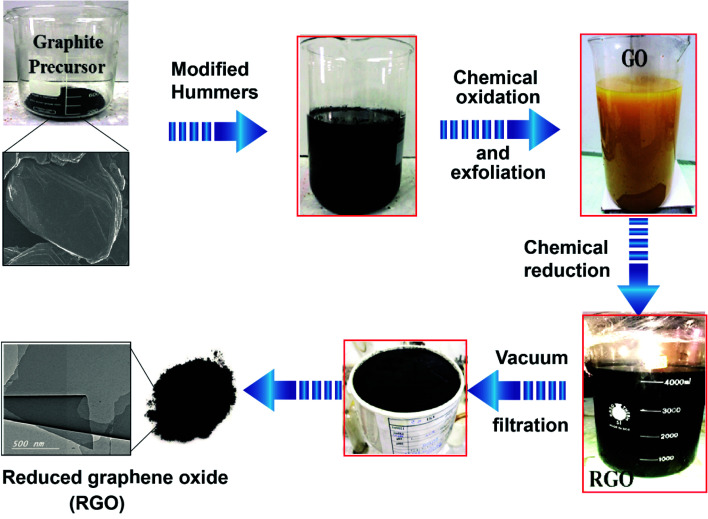
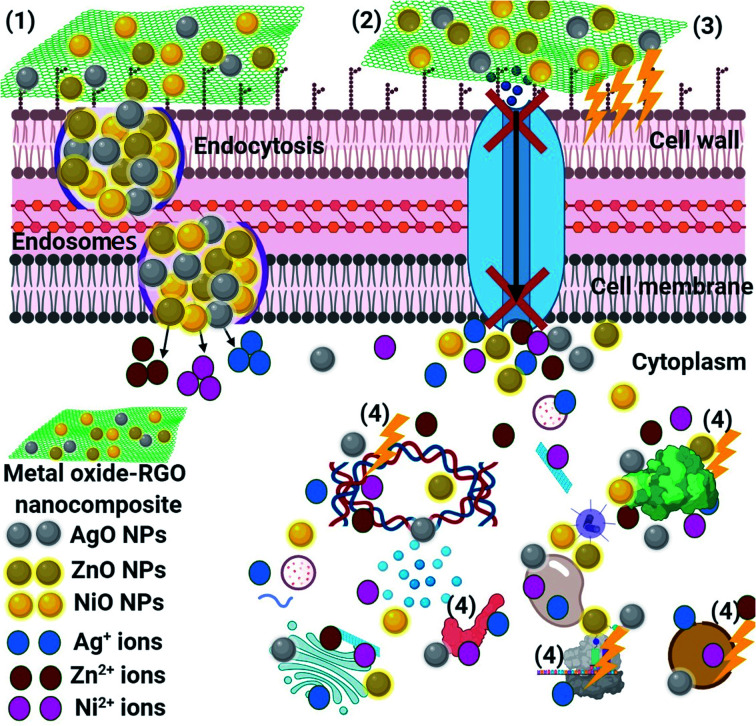
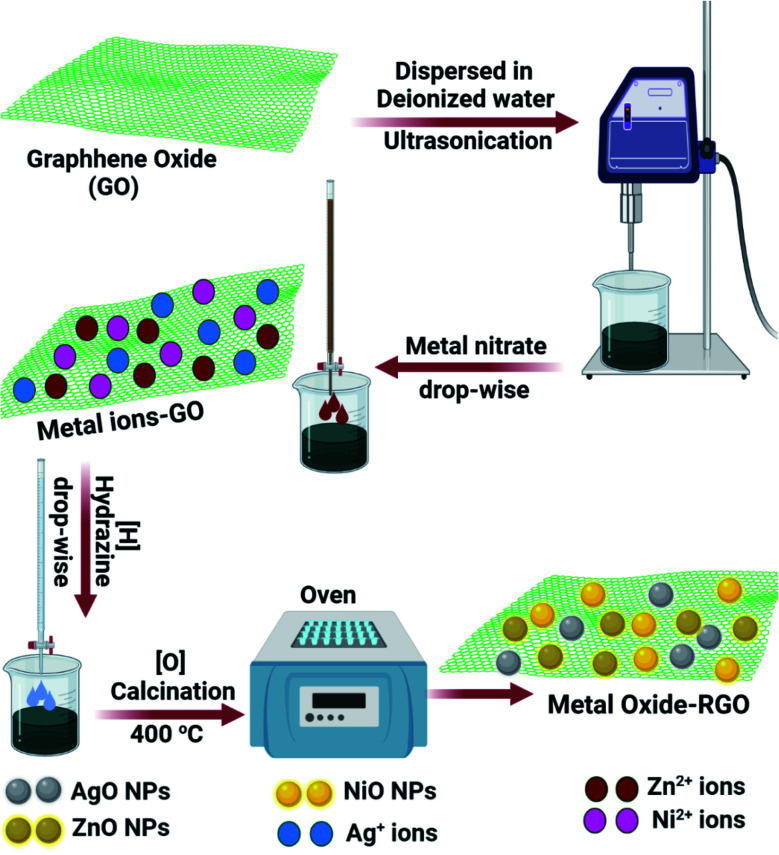
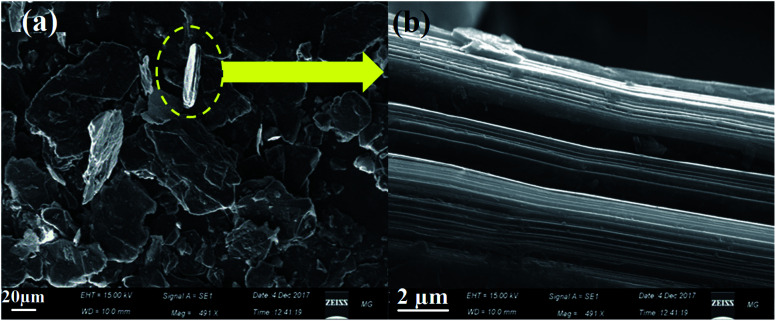
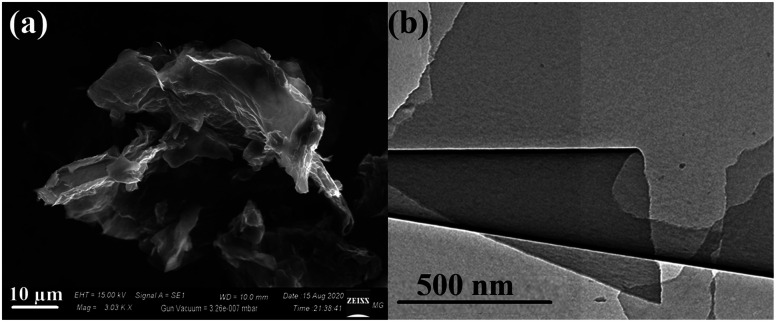
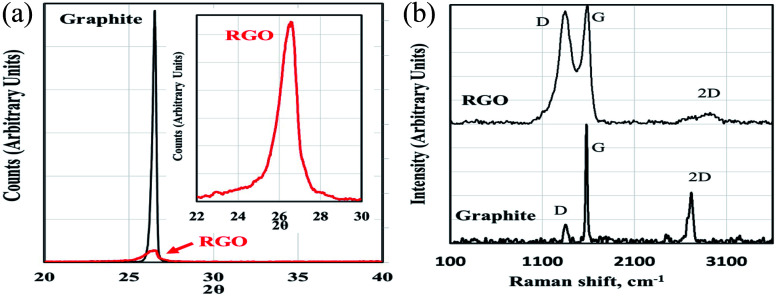
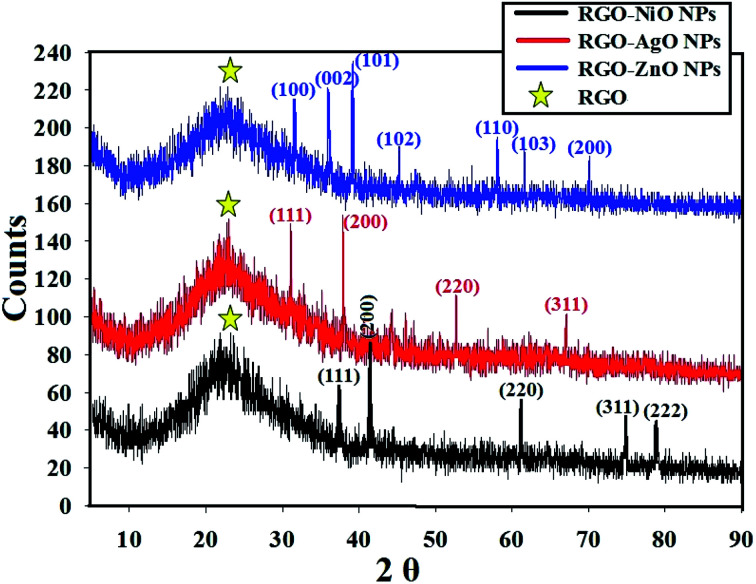
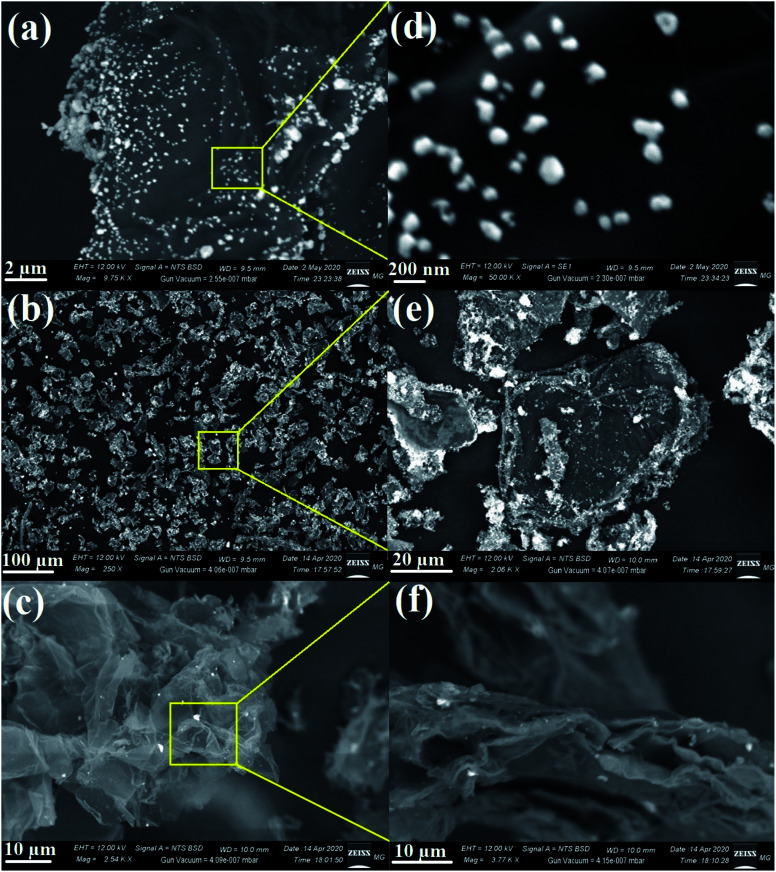
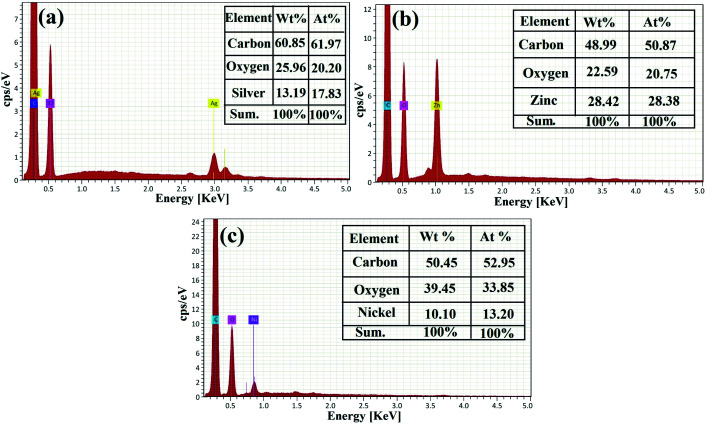
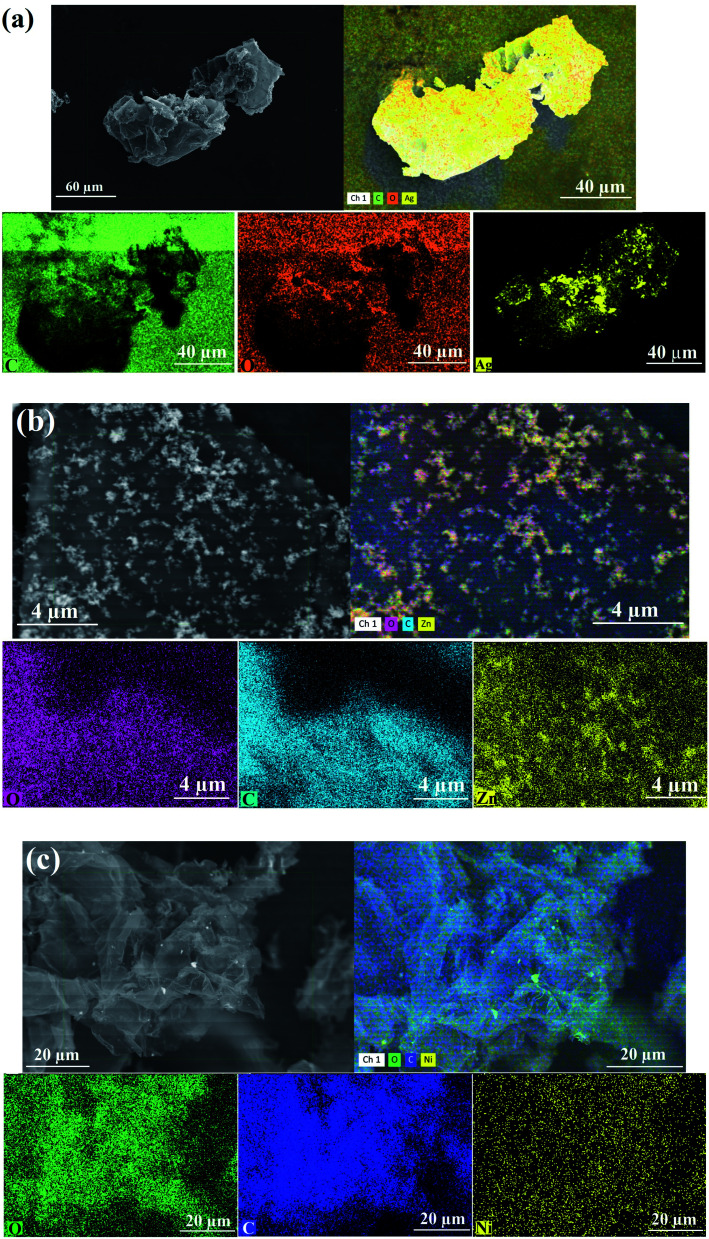
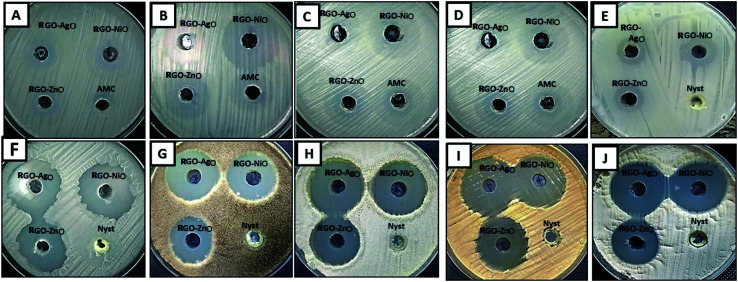
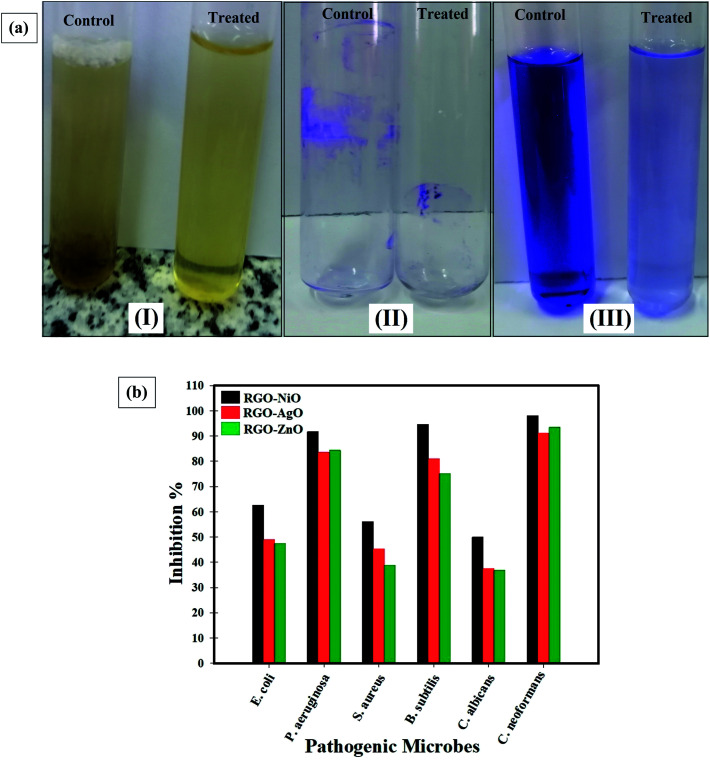
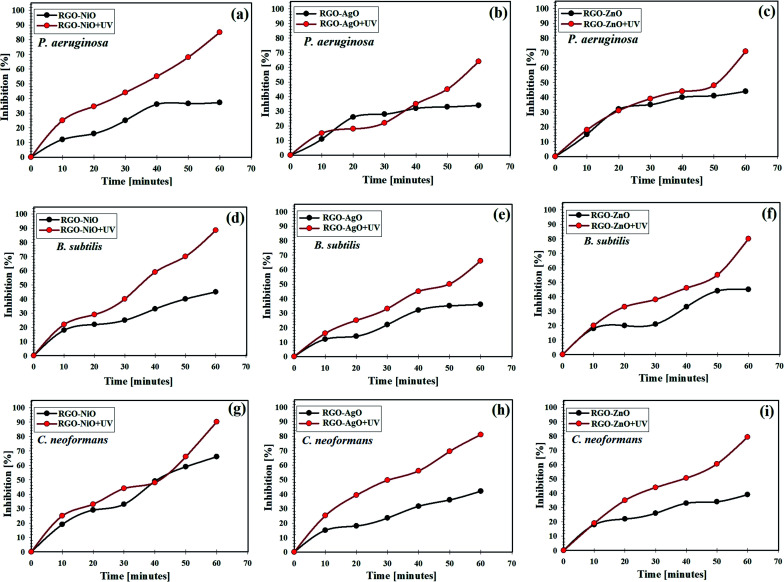
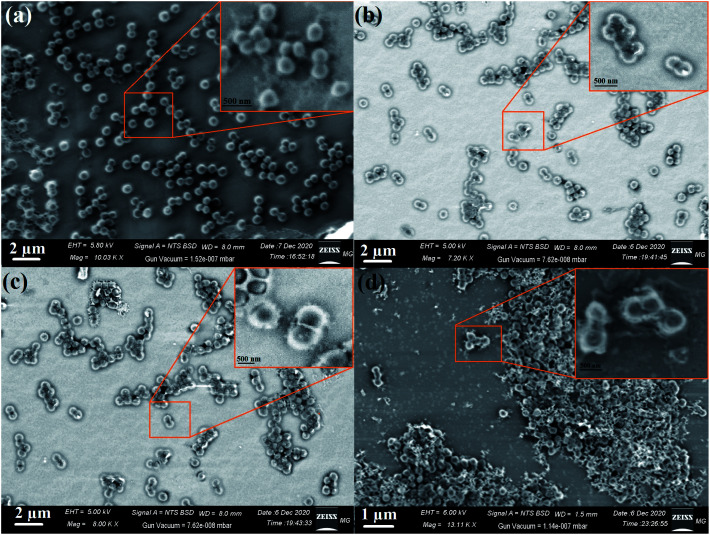
Microbial infections are considered one of the most dangerous infections in humans due to their resistance to most antimicrobial agents. In this study, nanocomposites based on reduced graphene oxide (RGO) and metal oxides (NiO, AgO, and ZnO) were fabricated. The graphite precursor and RGO were characterized by XRD, Raman spectroscopy, SEM, and HRTEM, while SEM, XRD, and EDX mapping analysis validated the synthesized nanocomposites. In addition, ZOI and MIC were employed to test the antimicrobial potential, while their antibiofilm activity and the effect of UV illumination were also investigated. Finally, reaction mechanism determination was performed using SEM analysis. The results revealed that all the synthesized nanocomposites (RGO-NiO, RGO-AgO, and RGO-ZnO) had outstanding antimicrobial activity against Gram-negative bacteria ( and ), Gram-positive bacteria ( and ), unicellular fungi ( and ) and multicellular fungi (, , and ). Moreover, the synthesized RGO-NiO nanocomposite exhibited antibiofilm activity (following 10.0 µg mL RGO-NiO), with an inhibition percentage of 94.60% for , 91.74% for , and 98.03% for . The maximum percentage inhibition under UV illumination toward , and at the end of the experiment using RGO-NiO were 83.21%, 88.54%, and 91.15%, respectively, while the values of RGO-AgO were 64.85%, 68.0%, and 80.15%, respectively, and those of RGO-ZnO were 72.95%, 82.15%, and 79.25%, respectively. The SEM analysis of in the absence of the RGO-NiO nanocomposite showed the development of unicellular fungal cells by regular budding. In contrast, after RGO-NiO treatment, noticeable morphological differences were identified in , including the lysis of the outer surface with deformations of the fungal cells. In conclusion, the prepared nanocomposites are promising antimicrobial and antibiofilm agents and can be used to treat the pathogenic microbes at low concentrations and represent a new strategy for managing infectious diseases caused by pathogenic microorganisms.
由于微生物对大多数抗菌剂具有抗性,因此微生物感染被认为是人类最危险的感染之一。在本研究中,制备了基于还原氧化石墨烯(RGO)和金属氧化物(NiO、AgO和ZnO)的纳米复合材料。通过XRD、拉曼光谱、SEM和HRTEM对石墨前驱体和RGO进行了表征,同时通过SEM、XRD和EDX映射分析验证了合成的纳米复合材料。此外,采用抑菌圈(ZOI)和最低抑菌浓度(MIC)来测试抗菌潜力,同时还研究了它们的抗生物膜活性以及紫外线照射的影响。最后,使用SEM分析确定反应机理。结果表明,所有合成的纳米复合材料(RGO-NiO、RGO-AgO和RGO-ZnO)对革兰氏阴性菌( 和 )、革兰氏阳性菌( 和 )、单细胞真菌( 和 )和多细胞真菌( 、 、 和 )均具有出色的抗菌活性。此外,合成的RGO-NiO纳米复合材料表现出抗生物膜活性(在10.0 µg/mL RGO-NiO作用后),对 的抑制率为94.60%,对 的抑制率为91.74%,对 的抑制率为98.03%。在实验结束时,使用RGO-NiO对 、 和 的紫外线照射下的最大抑制百分比分别为83.21%、88.54%和91.15%,而RGO-AgO的值分别为64.85%、68.0%和80.15%,RGO-ZnO的值分别为72.95%、82.15%和79.25%。在不存在RGO-NiO纳米复合材料的情况下对 的SEM分析显示,单细胞真菌细胞通过规则出芽生长。相比之下,经过RGO-NiO处理后,在 中发现了明显的形态差异,包括外表面的裂解和真菌细胞的变形。总之,所制备的纳米复合材料是有前景的抗菌和抗生物膜剂,可用于低浓度治疗致病微生物,代表了一种管理由致病微生物引起的传染病的新策略。