Yang Jing, Zhao Nan, Liang Yuan, Lu Zuhong, Zhang Cheng
School of Control and Computer Engineering, North China Electric Power University Beijing 102206 China
School of Electronics Engineering and Computer Science, Peking University Beijing 100871 China
RSC Adv. 2021 Jul 2;11(38):23471-23476. doi: 10.1039/d1ra04267j. eCollection 2021 Jul 1.
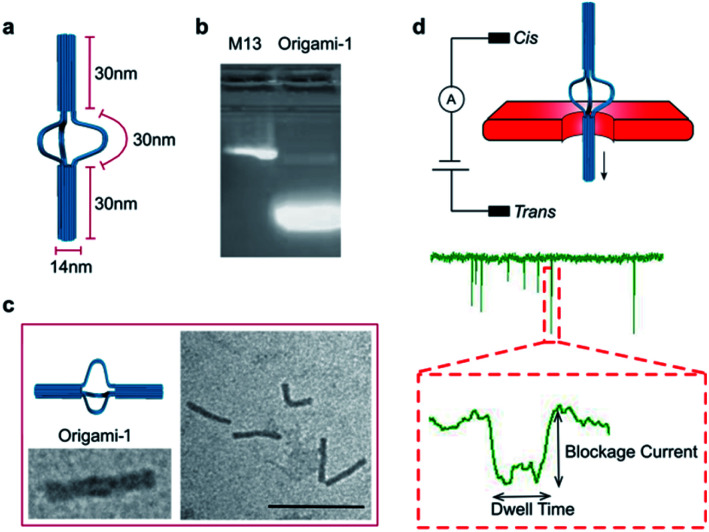
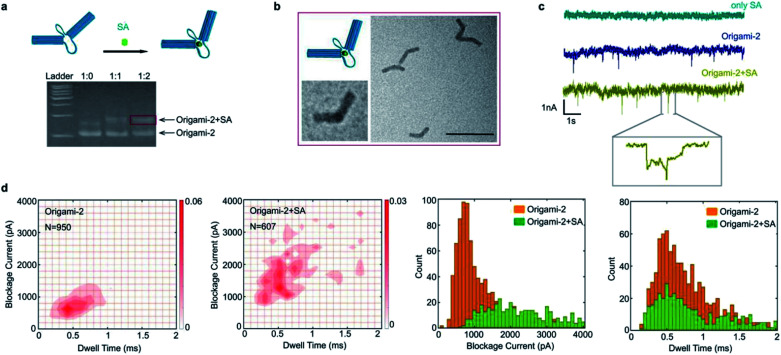
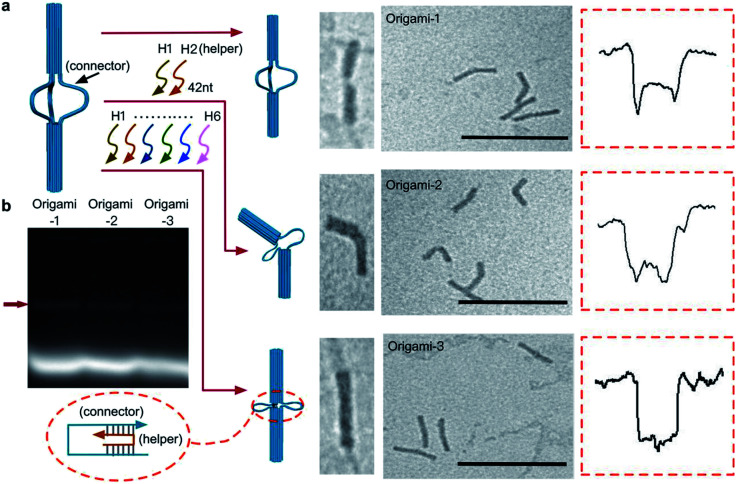
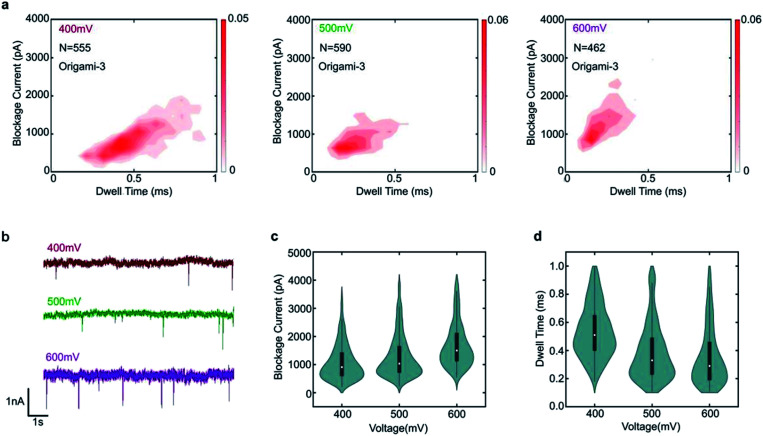
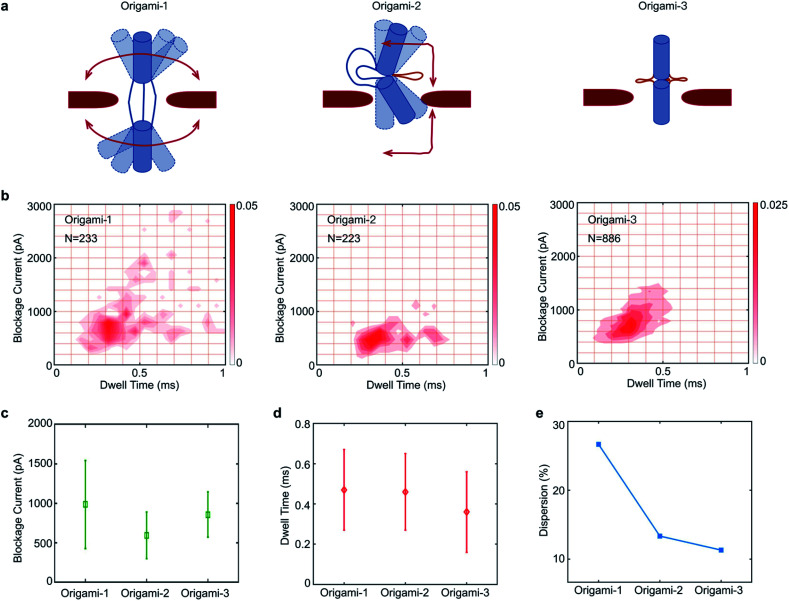
Nanopore detection is a label-free detection method designed to analyze single molecules by comparing specific translocation events with high signal-to-noise ratios. However, it is still challenging to understand the influences of structural flexibility of 100 nm DNA origami on nanopore translocations. Here, we used solid-state nanopores to characterize the translocation of "nunchaku" origami structures, the flexibility of which can be regulated by introducing specific DNA strands and streptavidin protein. The structural changes can result in significant variations in the translocation signals and distributions. It is anticipated that such a method of the flexible DNA origami translocation through a solid-state nanopore will find further applications in molecular detection as well as biosensing.
纳米孔检测是一种无标记检测方法,旨在通过将特定的转位事件与高信噪比进行比较来分析单分子。然而,了解100纳米DNA折纸的结构灵活性对纳米孔转位的影响仍然具有挑战性。在这里,我们使用固态纳米孔来表征“双节棍”折纸结构的转位,其灵活性可以通过引入特定的DNA链和链霉亲和素蛋白来调节。结构变化会导致转位信号和分布的显著变化。预计这种柔性DNA折纸通过固态纳米孔的转位方法将在分子检测以及生物传感中得到进一步应用。