Carretero-González Alberto, Hergueta-Redondo Marta, Sánchez-Redondo Sara, Ximénez-Embún Pilar, Manso Sánchez Luis, Gil Eva Ciruelos, Castellano Daniel, de Velasco Guillermo, Peinado Héctor
Medical Oncology Department, University Hospital 12 de Octubre, Madrid, Spain.
Microenvironment and Metastasis Laboratory, Molecular Oncology Programme, Spanish National Cancer Research Center (CNIO), Madrid, Spain.
Oncoimmunology. 2022 Apr 23;11(1):2067944. doi: 10.1080/2162402X.2022.2067944. eCollection 2022.
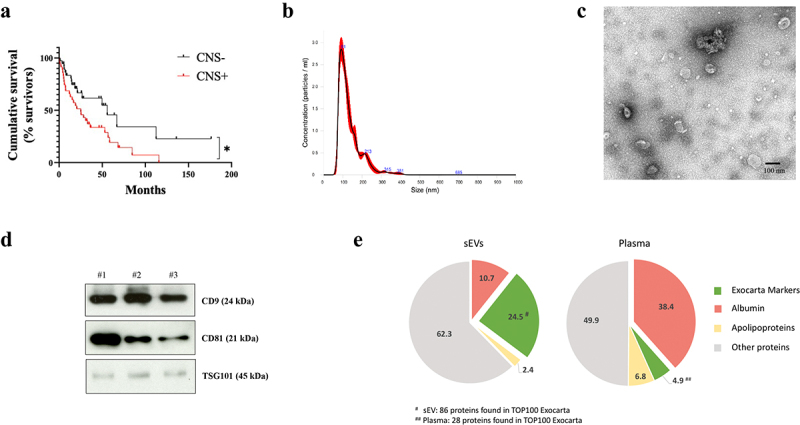
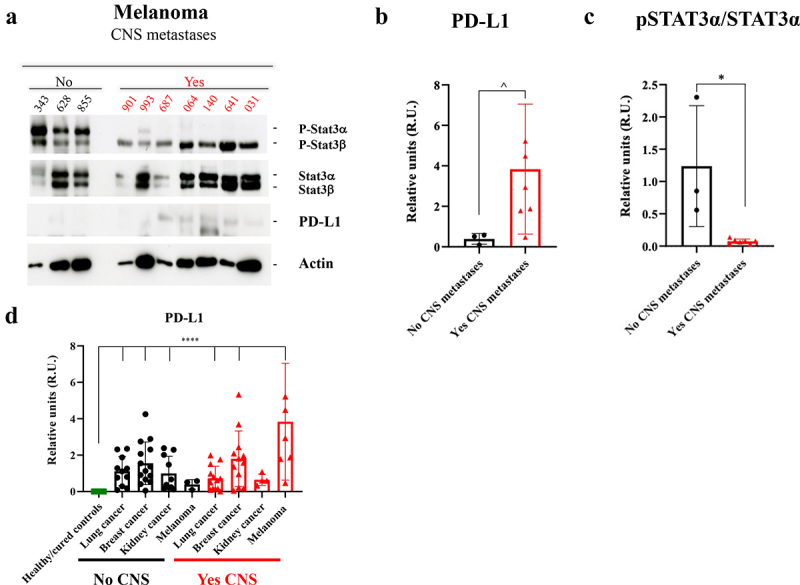
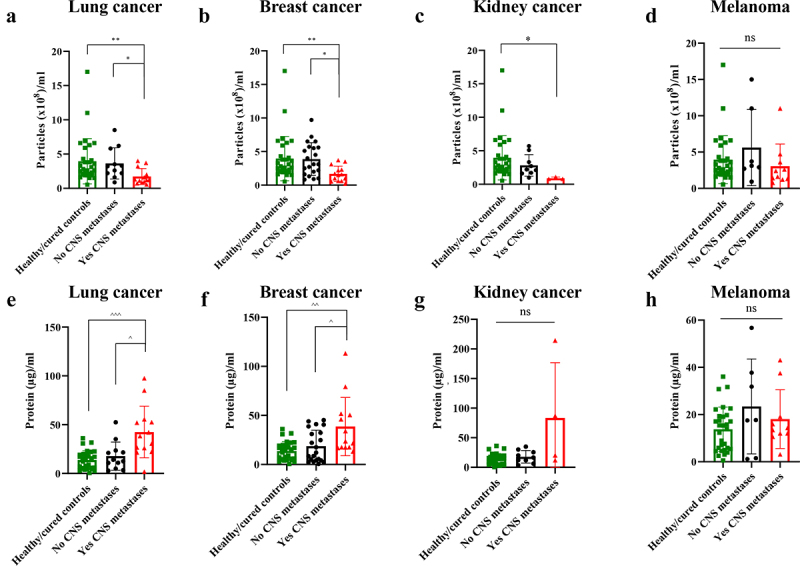
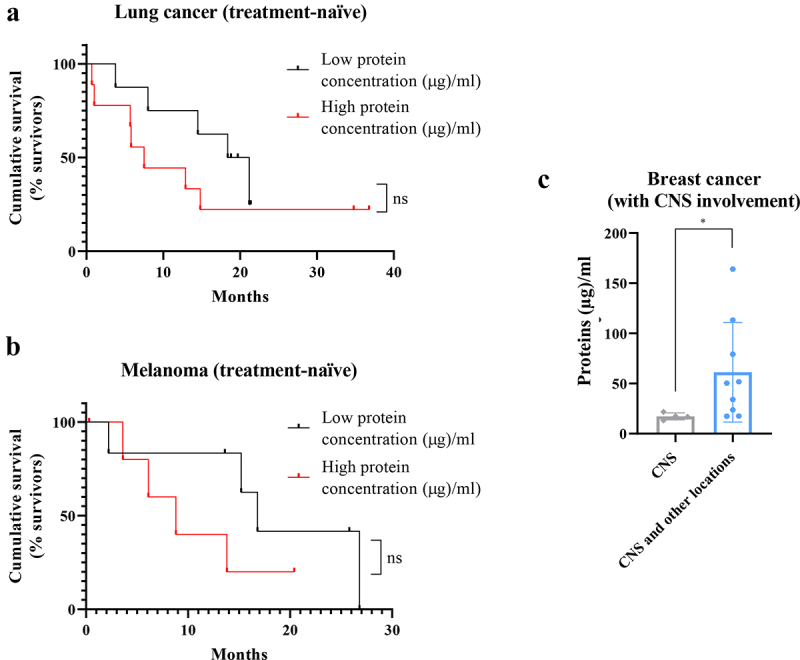
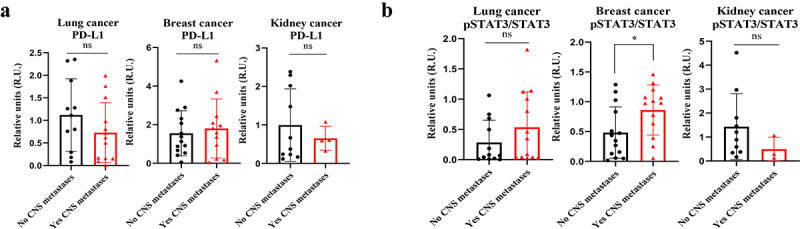
Nearly 40% of the advanced cancer patients will present brain metastases during the course of their disease, with a 2-year life expectancy of less than 10%. Immune system impairment, including the modulation of both STAT3 and PD-L1, is one of the hallmarks of brain metastases. Liquid biopsy could offer several advantages in brain metastases management, such as the possibility of noninvasive dynamic monitoring. Extracellular vesicles (EVs) have been recently proposed as novel biomarkers especially useful in liquid biopsy due to their secretion in biofluids and their role in cell communication during tumor progression. The main aim of this work was to characterize the size and protein cargo of plasma circulating EVs in patients with solid tumors and their correlation with newly diagnosed brain metastases, in addition to their association with other relevant clinical variables. We analyzed circulating EVs in the plasma of 123 patients: 42 patients with brain metastases, 50 without brain metastases and 31 healthy controls. Patients with newly diagnosed brain metastases had a lower number of circulating EVs in the plasma and a higher protein concentration in small EVs (sEVs) compared to patients without brain metastases and healthy controls. Interestingly, melanoma patients with brain metastases presented decreased STAT3 activation and increased PD-L1 levels in circulating sEVs compared to patients without central nervous system metastases. Decreased STAT3 activation and increased PD-L1 in plasma circulating sEVs identify melanoma patients with brain metastasis.
近40%的晚期癌症患者在病程中会出现脑转移,其2年预期寿命不足10%。免疫系统损伤,包括STAT3和PD-L1的调节,是脑转移的特征之一。液体活检在脑转移管理中具有诸多优势,如无创动态监测的可能性。细胞外囊泡(EVs)最近被提议作为新型生物标志物,因其可分泌到生物流体中且在肿瘤进展过程中的细胞通讯中发挥作用,所以在液体活检中特别有用。这项工作的主要目的是表征实体瘤患者血浆中循环EVs的大小和蛋白质含量,以及它们与新诊断脑转移的相关性,此外还包括它们与其他相关临床变量的关联。我们分析了123例患者血浆中的循环EVs:42例有脑转移的患者、50例无脑转移的患者和31例健康对照。与无脑转移患者和健康对照相比,新诊断为脑转移的患者血浆中循环EVs数量较少,小EVs(sEVs)中的蛋白质浓度较高。有趣的是,与无中枢神经系统转移的患者相比,有脑转移的黑色素瘤患者循环sEVs中STAT3激活降低,PD-L1水平升高。血浆循环sEVs中STAT3激活降低和PD-L1升高可识别出有脑转移的黑色素瘤患者。