Department of Respiratory and Critical Care Medicine, Shenzhen Hospital, Southern Medical University, Shenzhen, China.
Department of Respiratory and Critical Care Medicine, Shenzhen People's Hospital, Shenzhen, China.
J Int Med Res. 2022 Apr;50(4):3000605221089795. doi: 10.1177/03000605221089795.
Metagenomic next-generation sequencing (mNGS) has the potential to overcome the shortcomings of traditional culture methods. This study aimed to assess the diagnostic value of mNGS in patients with lower respiratory tract infections (LRTIs).
This retrospective observational study sequentially enrolled 47 patients with LRTIs admitted to Shenzhen Hospital of Southern Medical University between February 2019 and November 2020. Pathogens in bronchoalveolar lavage fluid (BALF) samples were investigated to compare diagnoses by mNGS with culture methods.
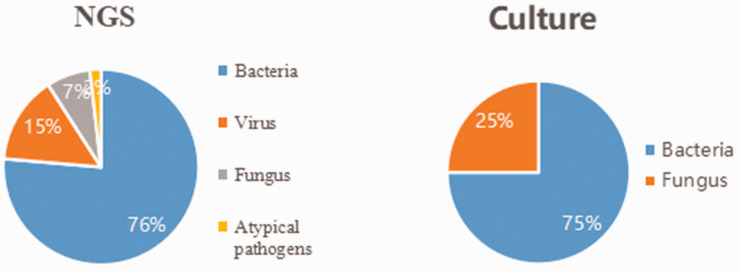
Compared with culture methods, mNGS had a diagnostic sensitivity of 80% and a specificity of 35.13% with an agreement rate of 44.68% between these two methods. mNGS significantly increased the pathogen detection rate.
mNGS may show some advantages in identifying a wide range of LRTI pathogens, improving the sensitivity for viruses and atypical pathogens. The clinical application of NGS technology is worth looking forward to.
宏基因组下一代测序(mNGS)具有克服传统培养方法缺点的潜力。本研究旨在评估 mNGS 在诊断下呼吸道感染(LRTIs)中的价值。
本回顾性观察性研究连续纳入了 2019 年 2 月至 2020 年 11 月期间在南方医科大学深圳医院就诊的 47 例 LRTIs 患者。对支气管肺泡灌洗液(BALF)样本中的病原体进行调查,以比较 mNGS 与培养方法的诊断结果。
与培养方法相比,mNGS 的诊断敏感度为 80%,特异度为 35.13%,两种方法的符合率为 44.68%。mNGS 显著提高了病原体的检测率。
mNGS 可能在识别广泛的 LRTI 病原体方面显示出一些优势,提高对病毒和非典型病原体的检测敏感度。NGS 技术的临床应用值得期待。