Department of Gastroenterology, Monash University and Alfred Health, Melbourne, Australia.
Barts Health NHS trust, London, UK.
Neurogastroenterol Motil. 2022 Oct;34(10):e14382. doi: 10.1111/nmo.14382. Epub 2022 Apr 28.
Intestinal barrier dysfunction is the likely initiating event in multiple human diseases. Currently, there are limited therapeutic strategies to address its dysfunction. Animal studies suggest that vagal nerve stimulation may improve intestinal barrier function, but this has not been evaluated in humans. This study aimed to determine the effect of vagal nerve stimulation on intestinal permeability in adults administered a bolus dose of intravenous corticotropin releasing hormone (CRH) which has been shown to increase small intestinal permeability in healthy human subjects.
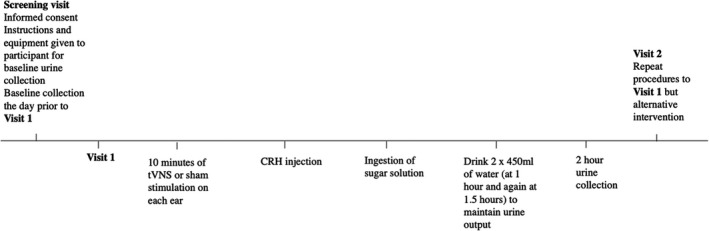
In a cross-over study, 16 volunteers (median age 34 years, 11 female) were randomized to receive auricular transcutaneous vagal nerve or sham stimulation (10 minutes each side) after intravenous administration of 100 µg of CRH. Intestinal barrier function was measured before and 2 h after each intervention with dual-sugar urine testing (lactulose:mannitol ratio) and intestinal fatty-acid binding protein (I-FABP).
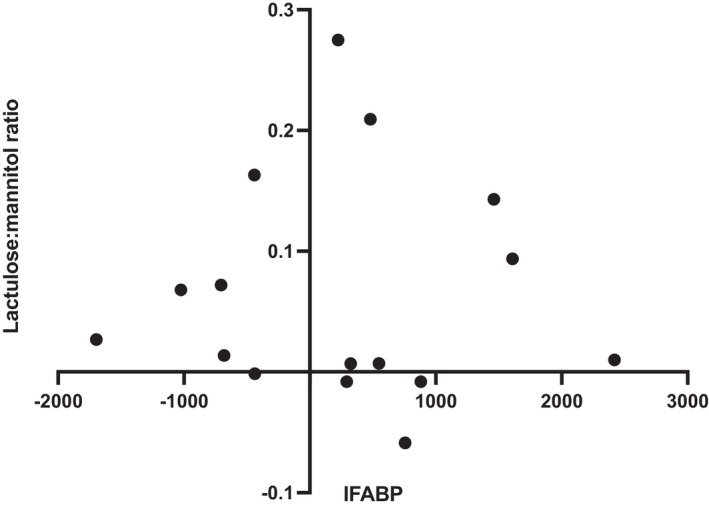
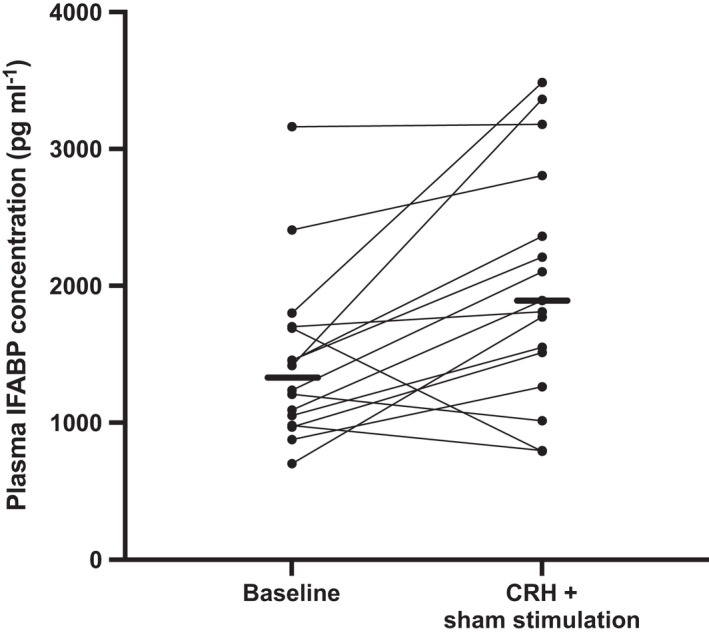
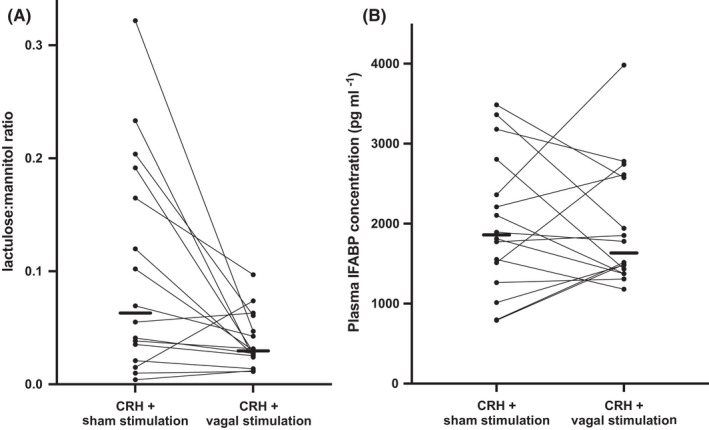
Exposure to CRH increased I-FABP concentrations by a median of 49 (IQR 4-71)% (p = 0.009). Lactulose:mannitol ratios were 0.029 (0.025-0.050) following vagal stimulation compared with 0.062 (0.032-0.170) following sham stimulation (p = 0.0092), representing a fall of 53 (22-71)%. I-FABP concentrations did not change (p = 0.90).
Brief non-invasive vagal nerve stimulation consistently reduces paracellular permeability of the small intestine after CRH administration, but does not entirely mitigate I-FABP release from the epithelium. Studies of vagal nerve stimulation in disease states are warranted.
肠道屏障功能障碍是多种人类疾病的起始事件。目前,针对其功能障碍的治疗策略有限。动物研究表明,迷走神经刺激可能改善肠道屏障功能,但这尚未在人类中得到评估。本研究旨在确定迷走神经刺激对接受静脉内促肾上腺皮质释放激素(CRH)冲击剂量的成年人肠道通透性的影响,因为 CRH 已被证明可增加健康人体的小肠通透性。
在一项交叉研究中,16 名志愿者(中位数年龄 34 岁,11 名女性)随机接受耳颞部经皮迷走神经刺激或假刺激(每侧 10 分钟),然后静脉内给予 100µg CRH。在每种干预措施前后 2 小时,通过双糖尿测试(乳果糖:甘露醇比值)和肠脂肪酸结合蛋白(I-FABP)测量肠道屏障功能。
暴露于 CRH 使 I-FABP 浓度中位数增加 49%(IQR 4-71%)(p = 0.009)。迷走神经刺激后乳果糖:甘露醇比值为 0.029(0.025-0.050),假刺激后为 0.062(0.032-0.170)(p = 0.0092),代表下降 53%(22-71%)。I-FABP 浓度没有变化(p = 0.90)。
短暂的非侵入性迷走神经刺激在 CRH 给药后一致降低了小肠的细胞旁通透性,但不能完全缓解上皮细胞释放 I-FABP。有必要在疾病状态下研究迷走神经刺激。