Department of Food Science and Human Nutrition, Agricultural University of Athens, Iera Odos 75, 11855, Athens, Greece.
Theoretical and Physical Chemistry Institute, National Hellenic Research Foundation, 48 Vassileos Constantinou Ave., 11635, Athens, Greece.
Sci Rep. 2022 Apr 28;12(1):6935. doi: 10.1038/s41598-022-10913-6.
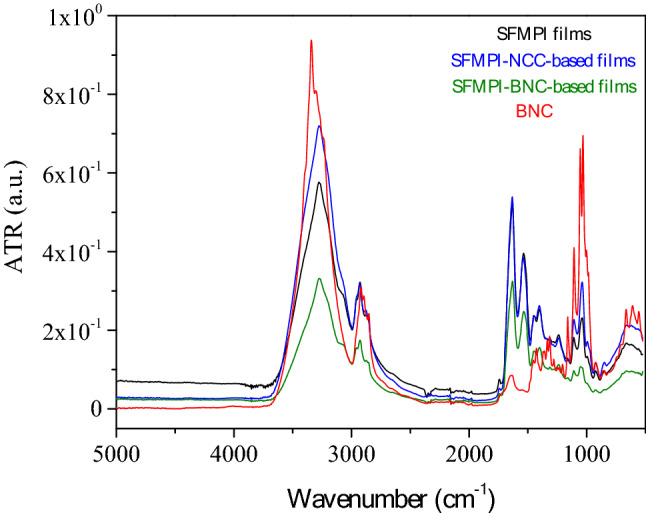
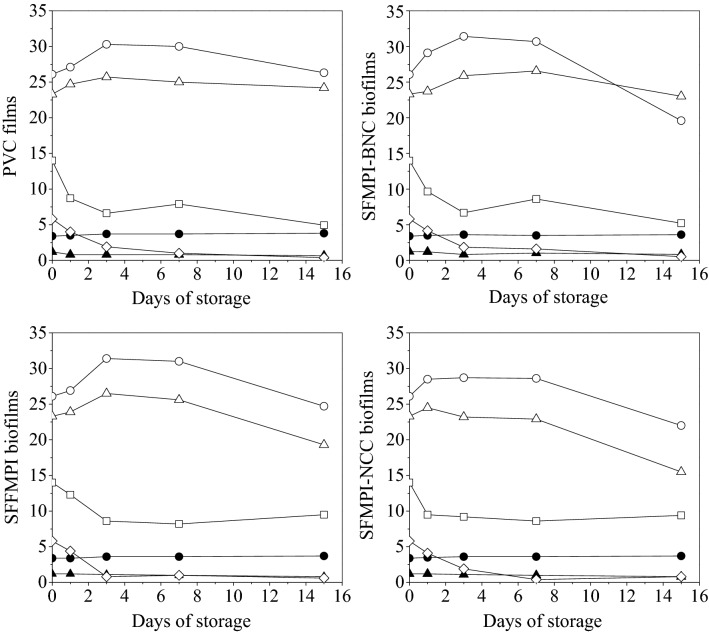
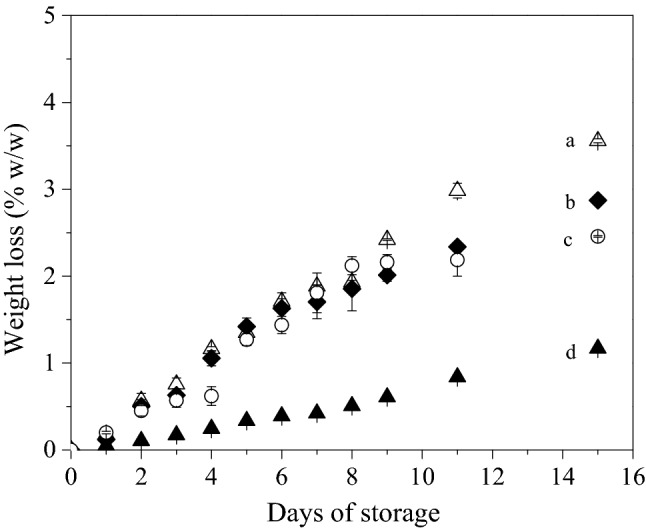
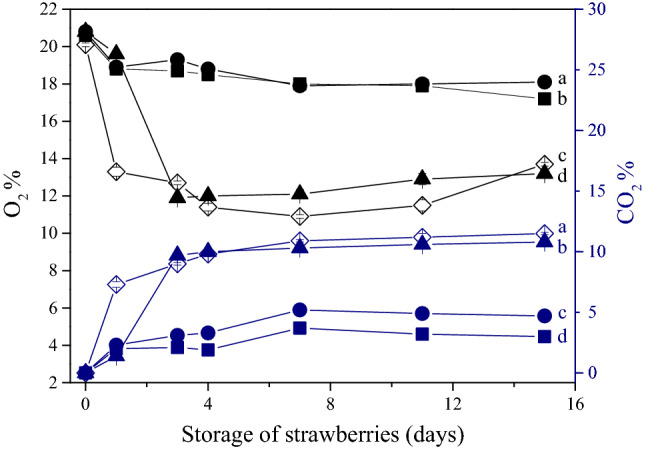
This study presents the valorization of side streams from the sunflower-based biodiesel industry for the production of bio-based and biodegradable food packaging following circular economy principles. Bacterial cellulose (BC) was produced via fermentation in 6 L static tray bioreactors using nutrient-rich supplements derived from the enzymatic hydrolysis of sunflower meal (SFM) combined with crude glycerol as carbon source. Novel biofilms were produced using either matrices of protein isolates extracted from sunflower meal (SFMPI) alone or SFMPI matrices reinforced with nanocellulose biofillers of commercial or bacterial origin. Acid hydrolysis was employed for ex-situ modification of BC to nanostructures (56 nm). The biofilms reinforced with bacterial nanocellulose structures (SFMPI-BNC) showed 64.5% higher tensile strength, 75.5% higher Young's modulus, 131.5% higher elongation at break, 32.5% lower water solubility and 14.1% lower water vapor permeability than the biofilms produced only with SFMPI. The biofilms were evaluated on fresh strawberries packaging showing that the SFMPI-BNC-based films lead to effective preservation at 10 °C considering microbial growth and physicochemical profile (weight loss, chemical characterization, color, firmness and respiration activity). The SFMPI-BNC-based films could be applied in fresh fruit packaging applications.
本研究提出了在遵循循环经济原则的情况下,利用向日葵生物柴油工业的副产物来生产基于生物的可生物降解食品包装。通过在 6 L 静态盘式生物反应器中发酵,利用来源于向日葵饼(SFM)酶解的富含营养的补充剂,并结合粗甘油作为碳源,生产出细菌纤维素(BC)。使用单独从向日葵饼中提取的蛋白质分离物(SFMPI)的基质或用商业或细菌来源的纳米纤维素生物填料增强的 SFMPI 基质来生产新型生物膜。采用酸水解法对 BC 进行原位修饰,得到纳米结构(56nm)。与仅用 SFMPI 生产的生物膜相比,用细菌纳米纤维素结构增强的生物膜(SFMPI-BNC)显示出 64.5%更高的拉伸强度、75.5%更高的杨氏模量、131.5%更高的断裂伸长率、32.5%更低的水溶性和 14.1%更低的水蒸气透过率。将生物膜应用于新鲜草莓包装的评估表明,基于 SFMPI-BNC 的薄膜在 10°C 下可有效保存,考虑到微生物生长和物理化学特性(失重、化学特性、颜色、硬度和呼吸活性)。SFMPI-BNC 基薄膜可应用于新鲜水果包装应用。