
森林退化导致广泛的鸟类栖息地和种群减少。
Forest degradation drives widespread avian habitat and population declines.
机构信息
Forest Biodiversity Research Network, Department of Forest Ecosystems and Society, Corvallis, OR, USA.
United States Forest Service, Rocky Mountain Research Station, Ogden, UT, USA.
出版信息
Nat Ecol Evol. 2022 Jun;6(6):709-719. doi: 10.1038/s41559-022-01737-8. Epub 2022 Apr 28.
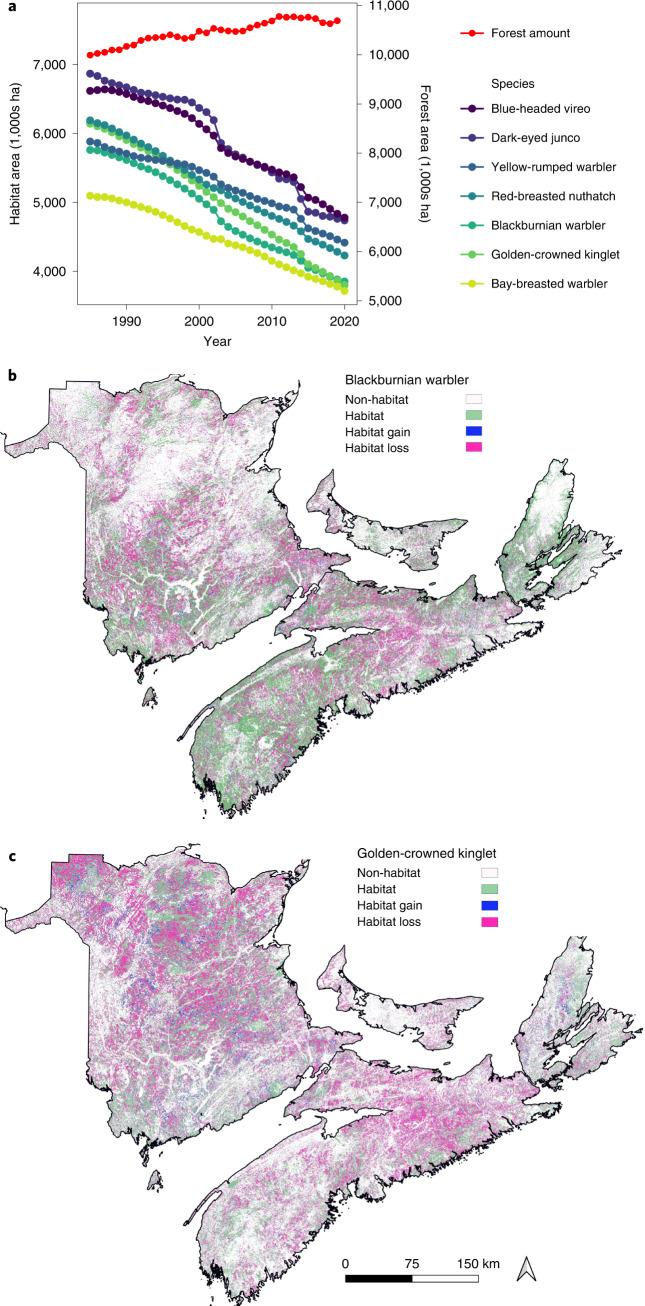
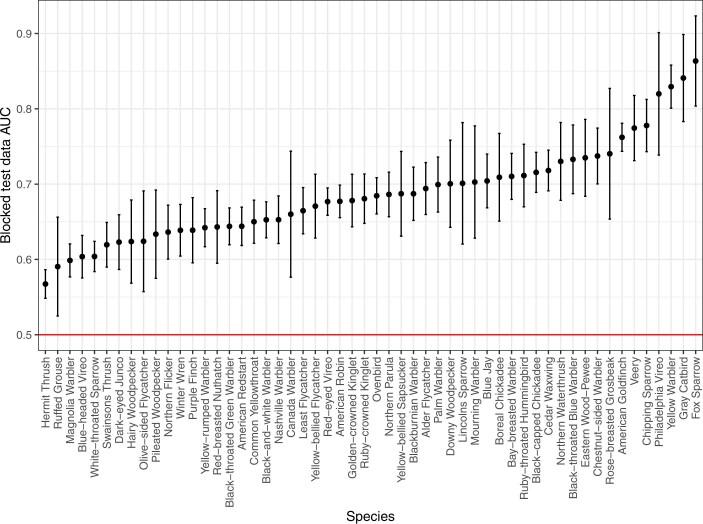
In many regions of the world, forest management has reduced old forest and simplified forest structure and composition. We hypothesized that such forest degradation has resulted in long-term habitat loss for forest-associated bird species of eastern Canada (130,017 km) which, in turn, has caused bird-population declines. Despite little change in overall forest cover, we found substantial reductions in old forest as a result of frequent clear-cutting and a broad-scale transformation to intensified forestry. Back-cast species distribution models revealed that breeding habitat loss occurred for 66% of the 54 most common species from 1985 to 2020 and was strongly associated with reduction in old age classes. Using a long-term, independent dataset, we found that habitat amount predicted population size for 94% of species, and habitat loss was associated with population declines for old-forest species. Forest degradation may therefore be a primary cause of biodiversity decline in managed forest landscapes.
在世界上许多地区,森林管理减少了古老的森林,并简化了森林的结构和组成。我们假设,这种森林退化导致了加拿大东部与森林相关的鸟类物种(130017 平方公里)的长期栖息地丧失,进而导致鸟类数量减少。尽管整体森林覆盖率变化不大,但由于频繁的皆伐和大规模向强化林业的转变,我们发现古老森林大量减少。回溯物种分布模型显示,1985 年至 2020 年期间,54 种最常见物种中有 66%的繁殖栖息地丧失,与古老年龄类别的减少密切相关。利用长期独立的数据集,我们发现栖息地数量可以预测 94%物种的种群规模,而栖息地丧失与古老森林物种的种群下降有关。因此,森林退化可能是管理森林景观生物多样性下降的主要原因。






 Zotero 插件