Department of Oncologic Pathology, Dana-Farber Cancer Institute, Harvard Medical School, Boston, MA, USA.
Department of Experimental Hematology, Institute of Hematology and Transfusion Medicine,, Warsaw, Poland.
Sci Adv. 2022 Apr 29;8(17):eabm3108. doi: 10.1126/sciadv.abm3108.
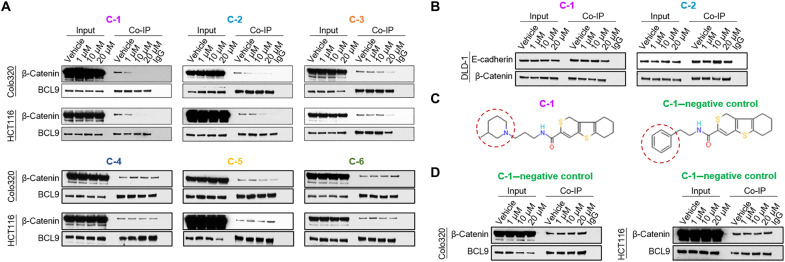
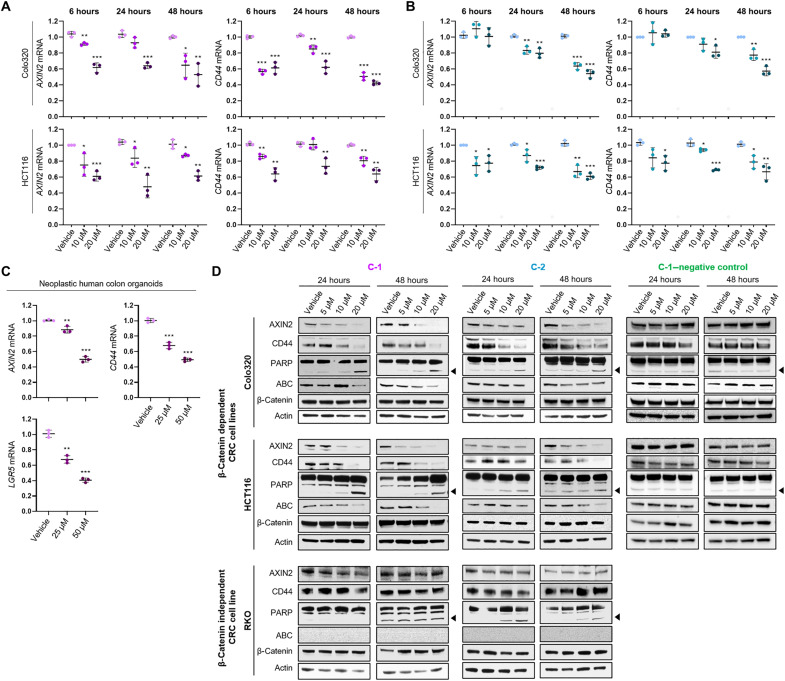
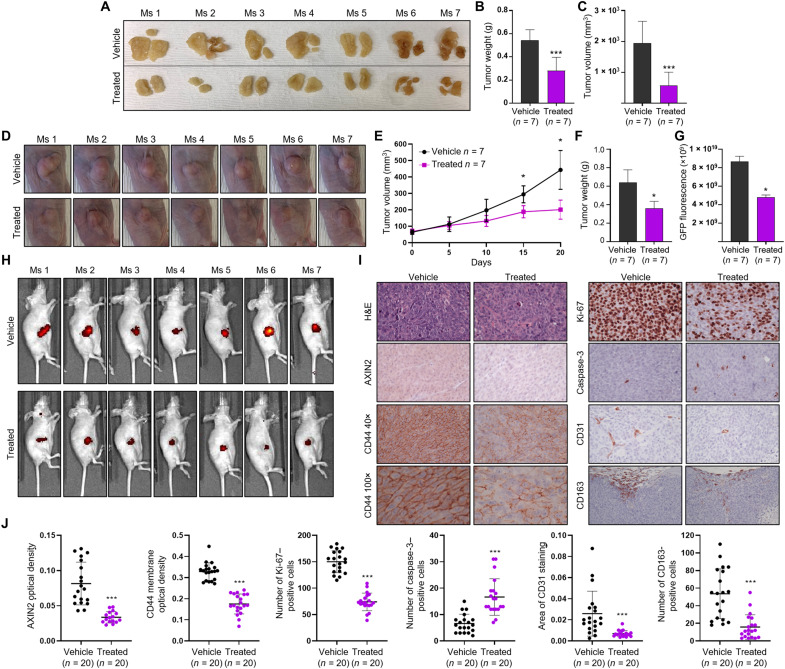
Dysregulated Wnt/β-catenin signaling is implicated in the pathogenesis of many human cancers, including colorectal cancer (CRC), making it an attractive clinical target. With the aim of inhibiting oncogenic Wnt activity, we developed a high-throughput screening AlphaScreen assay to identify selective small-molecule inhibitors of the interaction between β-catenin and its coactivator BCL9. We identified a compound that consistently bound to β-catenin and specifically inhibited in vivo native β-catenin/BCL9 complex formation in CRC cell lines. This compound inhibited Wnt activity, down-regulated expression of the Wnt/β-catenin signature in gene expression studies, disrupted cholesterol homeostasis, and significantly reduced the proliferation of CRC cell lines and tumor growth in a xenograft mouse model of CRC. This study has therefore identified a specific small-molecule inhibitor of oncogenic Wnt signaling, which may have value as a probe for functional studies and has important implications for the development of novel therapies in patients with CRC.
Wnt/β-catenin 信号通路失调与许多人类癌症的发病机制有关,包括结直肠癌(CRC),使其成为一个有吸引力的临床靶点。为了抑制致癌性 Wnt 活性,我们开发了一种高通量筛选 AlphaScreen 测定法,以鉴定β-catenin 与其共激活因子 BCL9 之间相互作用的选择性小分子抑制剂。我们鉴定出一种能与β-catenin 持续结合并能特异性抑制 CRC 细胞系中原位β-catenin/BCL9 复合物形成的化合物。该化合物抑制了 Wnt 活性,下调了基因表达研究中 Wnt/β-catenin 特征的表达,破坏了胆固醇稳态,并显著降低了 CRC 细胞系的增殖和异种移植 CRC 小鼠模型中的肿瘤生长。因此,本研究鉴定出一种特异性的致癌性 Wnt 信号小分子抑制剂,它可能作为功能研究的探针具有价值,并对开发 CRC 患者的新型疗法具有重要意义。