Plohl Olivija, Zemljič Lidija Fras, Potrč Sanja, Luxbacher Thomas
University of Maribor, Faculty of Mechanical Engineering, Laboratory for Characterization and Processing of Polymers Smetanova 17 2000 Maribor Slovenia
University of Maribor, Faculty of Chemistry and Chemical Engineering Smetanova 17 2000 Maribor Slovenia.
RSC Adv. 2020 Feb 13;10(12):6777-6789. doi: 10.1039/c9ra10414c.
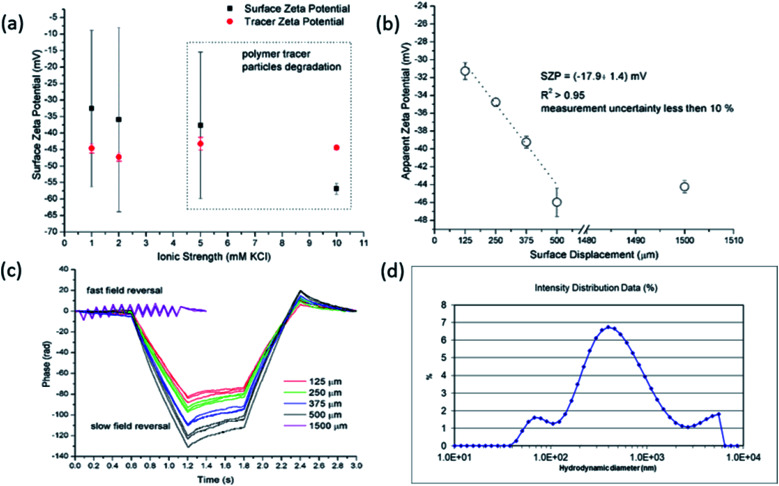
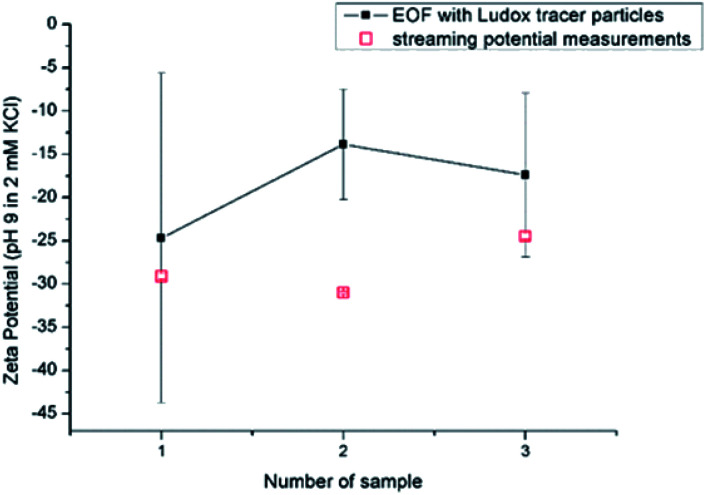
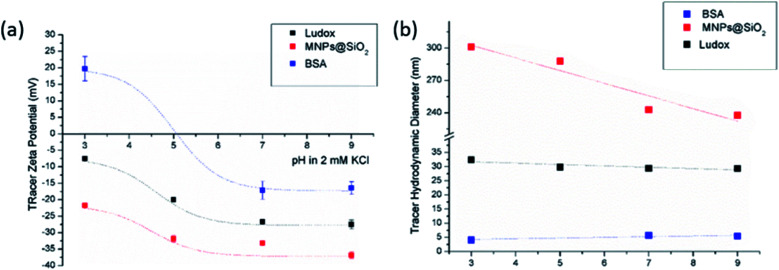
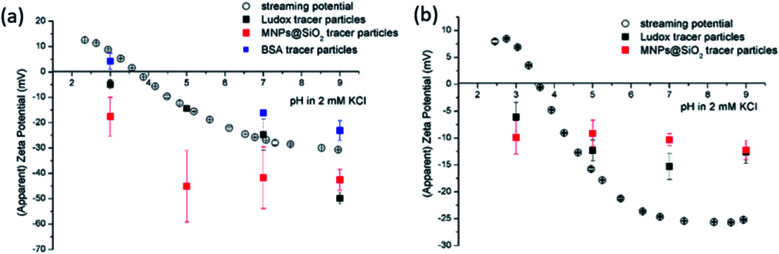
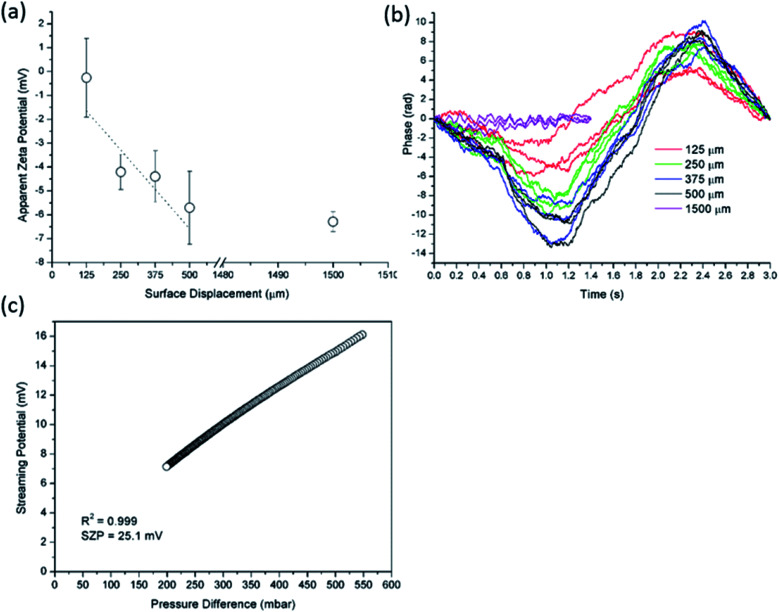
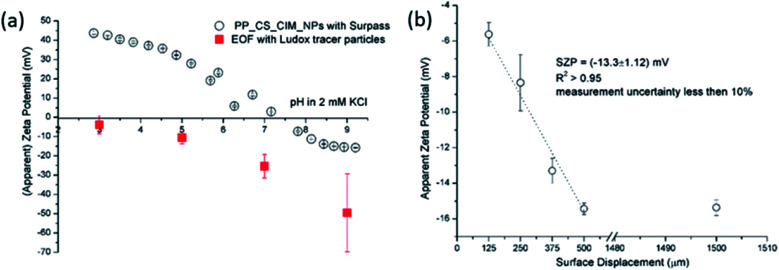
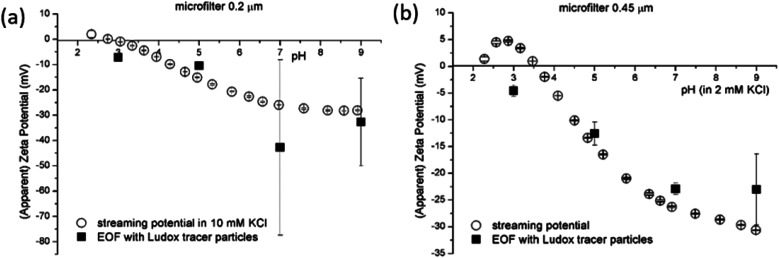
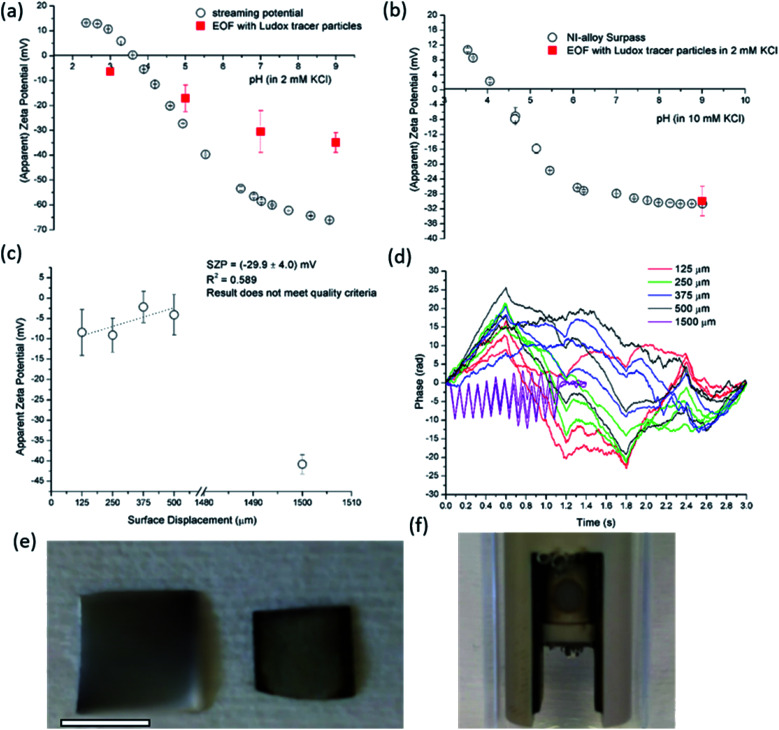
The analysis of the surface zeta potential (SZP) opens up new possibilities in the characterization of various materials used for scientific or industrial applications. It provides at the same time insight into the material surface chemistry and elucidates the interactions with charged species in the aqueous test solution. For this purpose, an accurate, reliable and repeatable analysis of the SZP is the key factor. This work focuses on a detailed and systematic comparison of two electrokinetic techniques, the mapping of the electro-osmotic flow (EOF) and the measurement of the streaming potential (SP), for the surface zeta potential (SZP) determination of several materials with varying properties. Both techniques have advantages as well as drawbacks. The applicability of latex polymer material and inorganic tracer particles at varying ionic strength, the interaction between oppositely charged tracer particles and solid surfaces, the assessment of the pH dependence of the SZP and the isoelectric point (IEP), and the effects of sample porosity and conductance have been investigated. Although in some cases the EOF method gives a SZP similar to the streaming potential measurement, especially when the tracer particle exhibits the same charge as the solid surface, it was revealed that reliable results were only obtained with the streaming potential and streaming current method. Several obstacles such as elevated conductivity at higher ionic strength, the applied voltage for the EM measurement, and the nature of tracer particles lower the accuracy and reliability of the SZP determined by the EOF method. It was shown that the EOF method is not applicable to oppositely charged surface and tracer particles and also limited to low salinity conditions especially when using polymeric tracer particles. Although the EOF method does not require the formation of a capillary flow channel, it disables a non-destructive SZP of fragile or valuable samples, such as QCM-D sensors, in comparison to the SP approach.
表面zeta电位(SZP)分析为用于科学或工业应用的各种材料的表征开辟了新的可能性。它同时提供了对材料表面化学的洞察,并阐明了与水性测试溶液中带电物种的相互作用。为此,对SZP进行准确、可靠和可重复的分析是关键因素。这项工作重点对两种电动技术进行了详细而系统的比较,即电渗流(EOF)映射和流动电位(SP)测量,用于测定几种具有不同性质的材料的表面zeta电位(SZP)。这两种技术都有优点和缺点。研究了乳胶聚合物材料和无机示踪颗粒在不同离子强度下的适用性、带相反电荷的示踪颗粒与固体表面之间的相互作用、SZP和等电点(IEP)对pH的依赖性评估以及样品孔隙率和电导率的影响。尽管在某些情况下,EOF方法给出的SZP与流动电位测量结果相似,特别是当示踪颗粒与固体表面带相同电荷时,但结果表明,只有通过流动电位和流动电流方法才能获得可靠的结果。诸如较高离子强度下电导率升高、EM测量所施加的电压以及示踪颗粒的性质等几个障碍降低了通过EOF方法测定的SZP的准确性和可靠性。结果表明,EOF方法不适用于带相反电荷的表面和示踪颗粒,并且也限于低盐度条件,特别是在使用聚合物示踪颗粒时。尽管EOF方法不需要形成毛细管流动通道,但与SP方法相比,它无法对诸如QCM-D传感器等易碎或有价值的样品进行无损SZP测量。