Ramesh Ch, Tyagi P, Kaswan J, Yadav B S, Shukla A K, Senthil Kumar M, Kushvaha S S
CSIR-National Physical Laboratory Dr K. S. Krishnan Road New Delhi India 110012
Academy of Scientific and Innovative Research (AcSIR) Ghaziabad India 201002.
RSC Adv. 2020 Jan 10;10(4):2113-2122. doi: 10.1039/c9ra09707d. eCollection 2020 Jan 8.
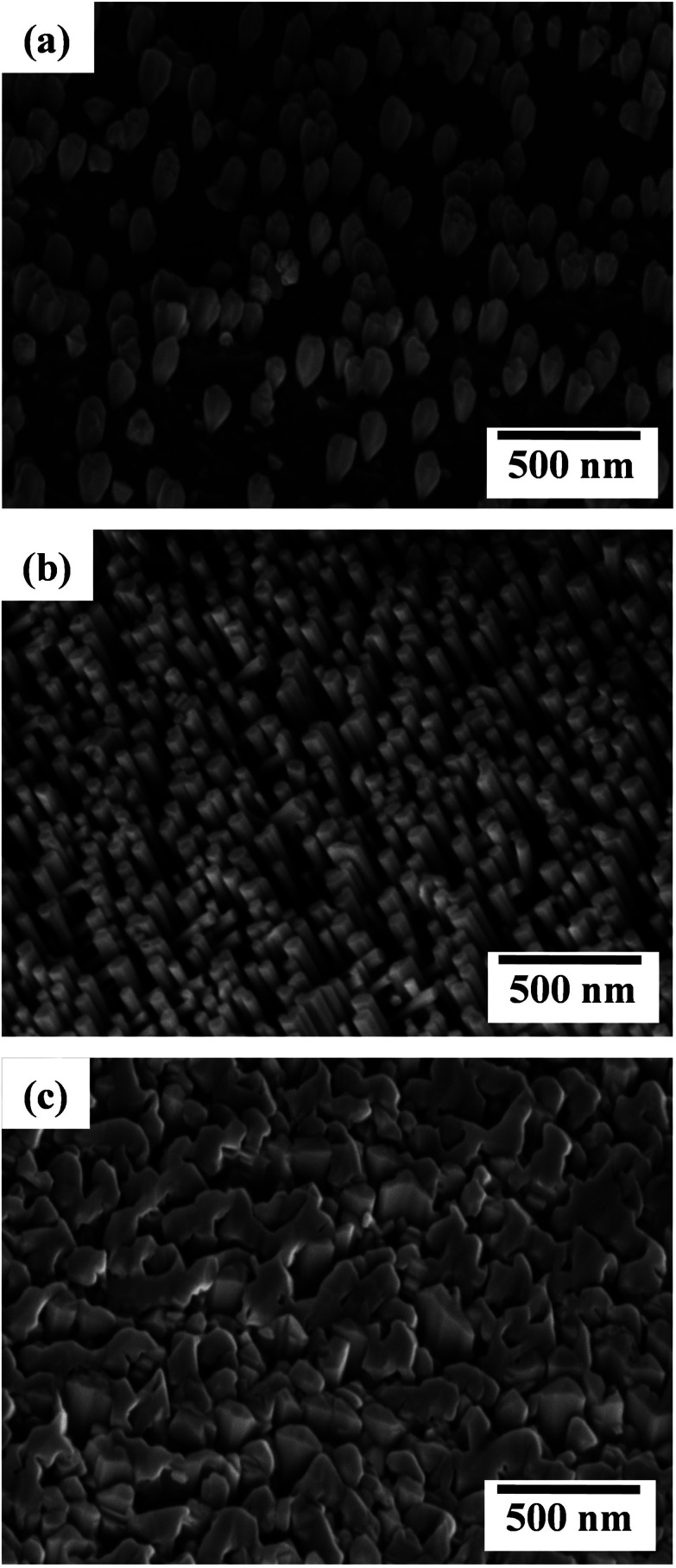
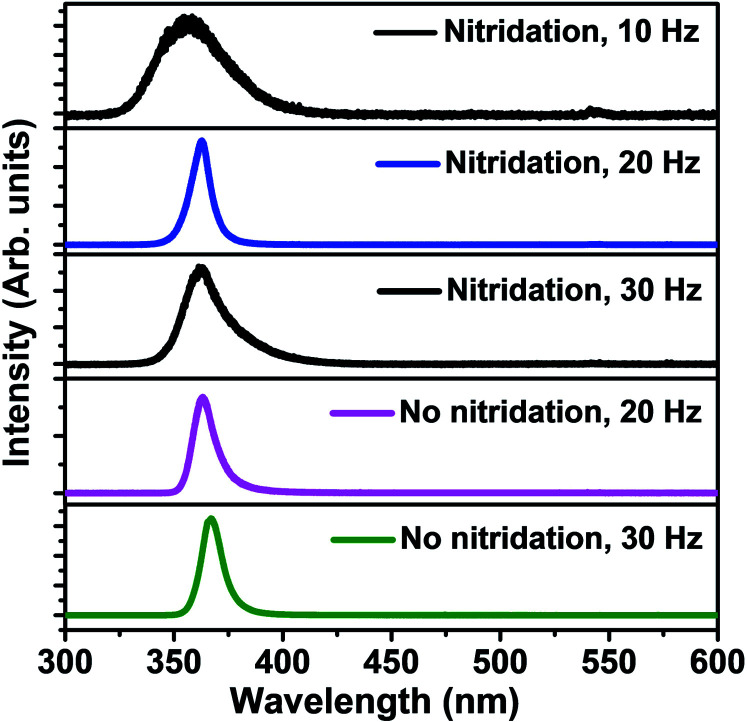
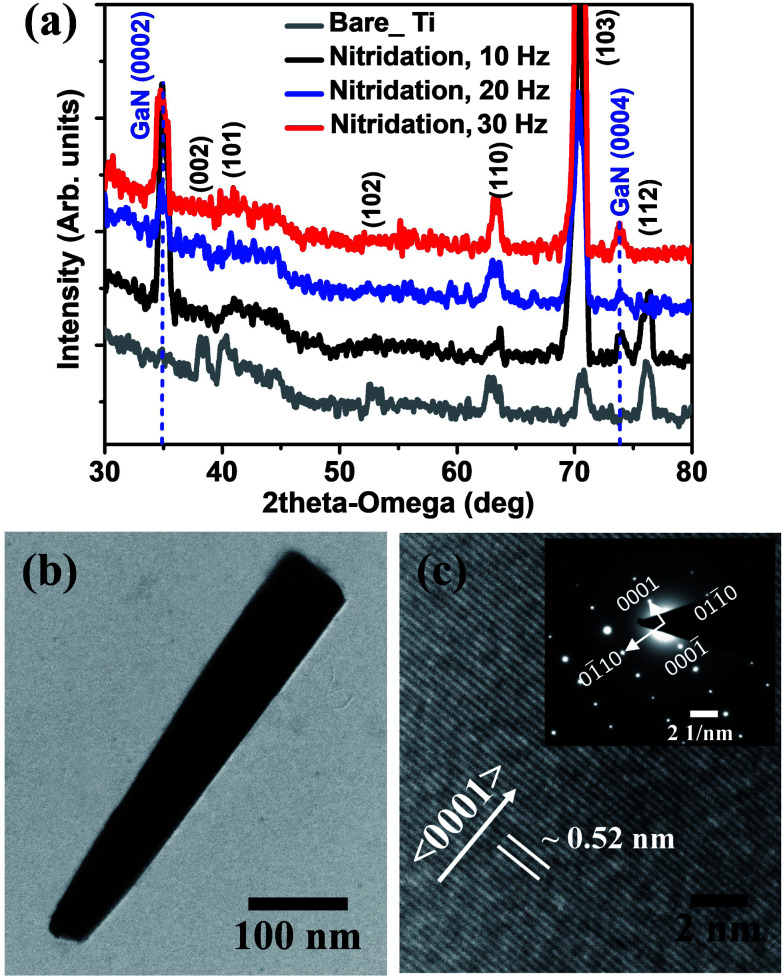
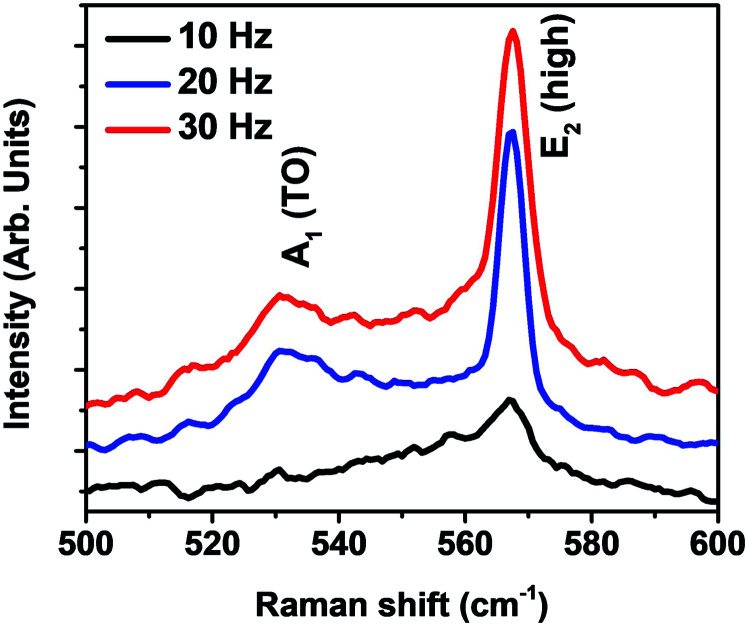
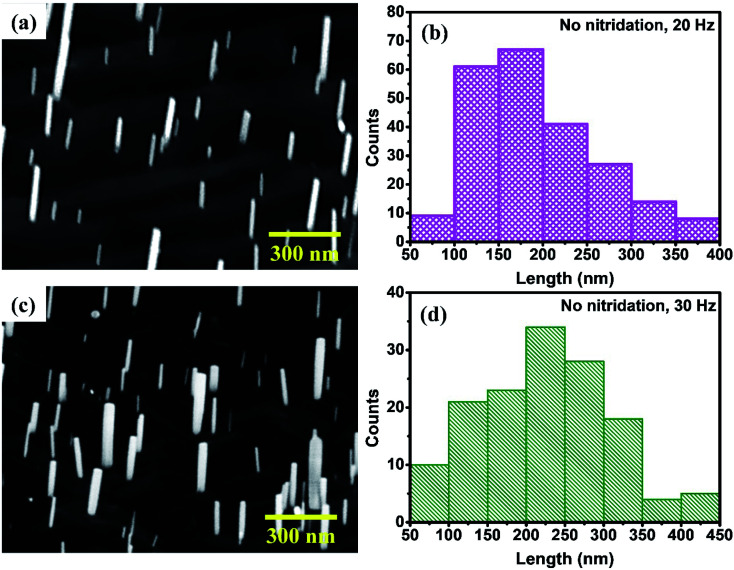
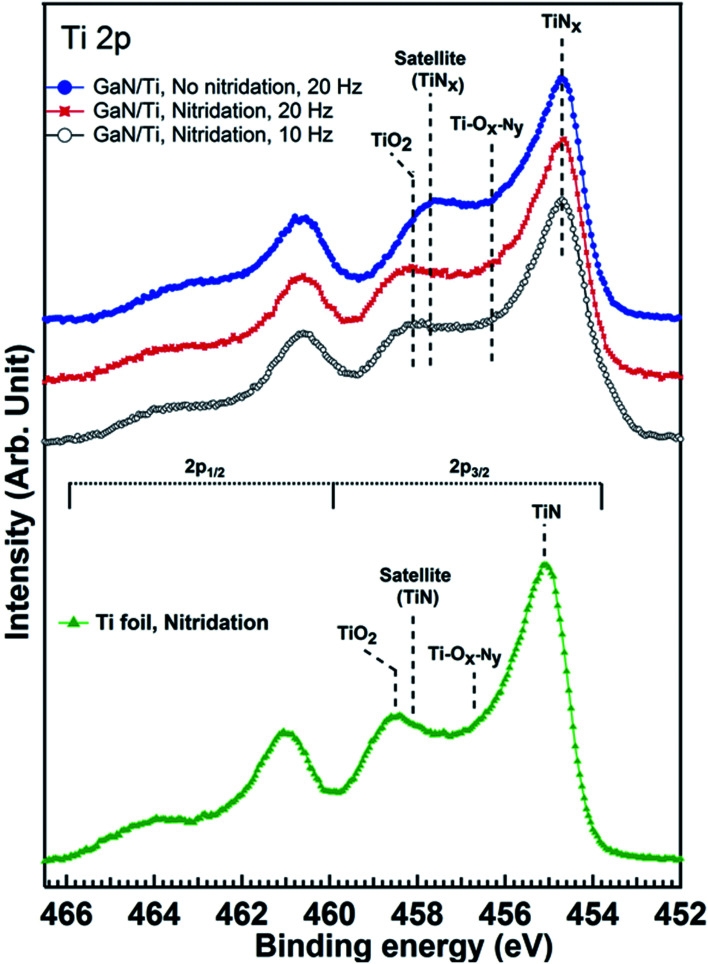
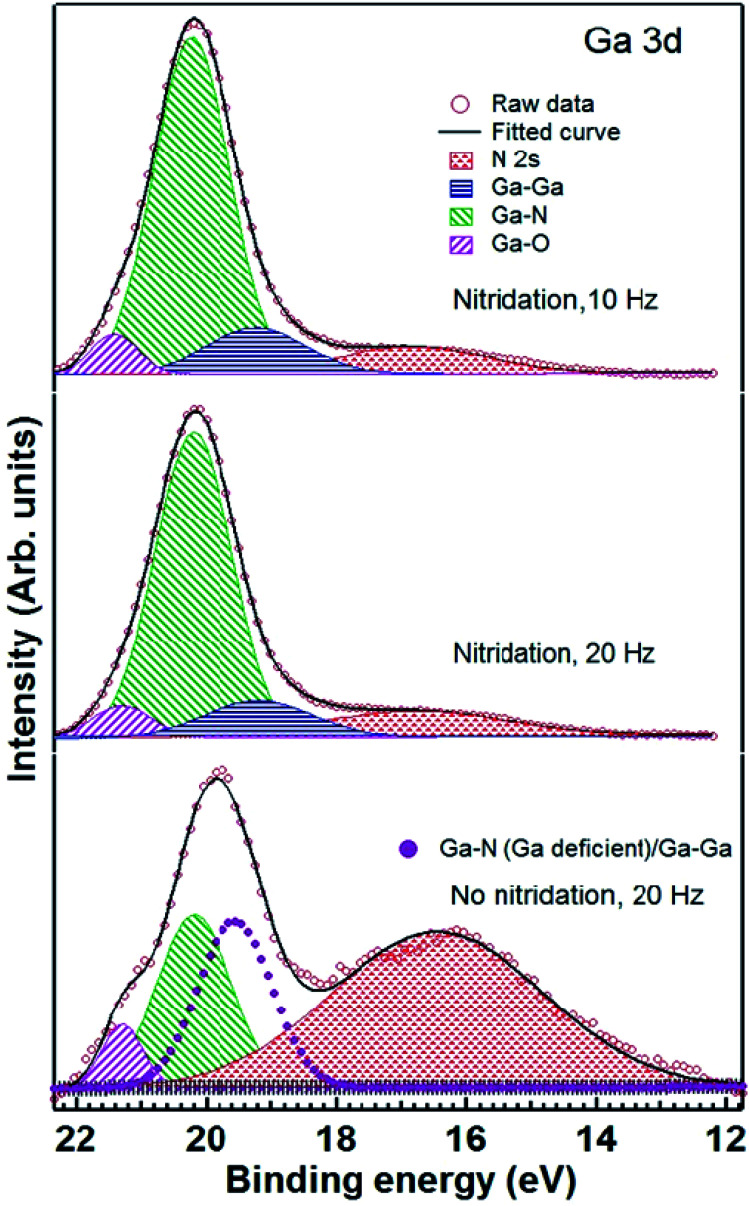
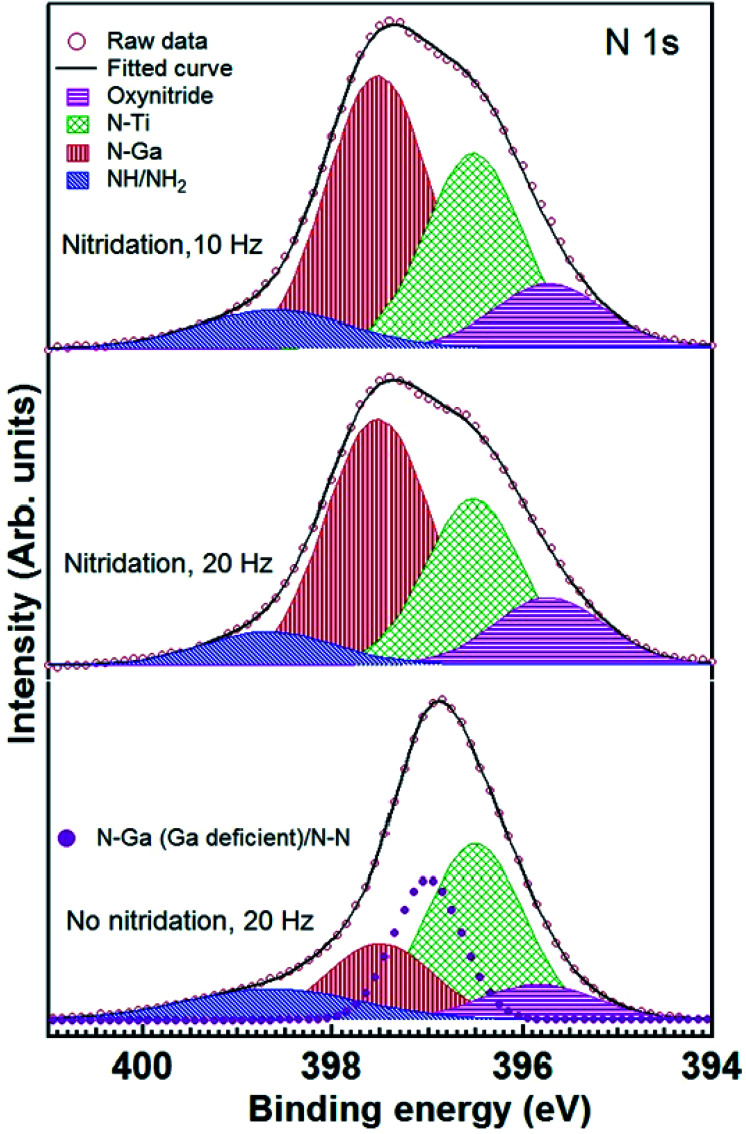
The effect of flexible Ti metal foil surface modification and laser repetition rate in laser molecular beam epitaxy growth process on the evolution of GaN nanorods and their structural, electronic and optical properties has been investigated. The GaN nanostructures were grown on bare- and pre-nitridated Ti foil substrates at 700 °C for different laser repetition rates (10-30 Hz). It is found that the low repetition rate (10 Hz) promotes sparse growth of three-dimensional inverted-cone like GaN nanostructures on pre-nitridated Ti surface whereas the entire Ti foil substrate is nearly covered with film-like GaN consisting of large-sized grains for 30 Hz growth. In case of the GaN growth at 20 Hz, uniformly-aligned, dense (∼8 × 10 cm) GaN nanorods are successfully grown on pre-nitridated Ti foil whereas sparse vertical GaN nanorods have been obtained on bare Ti foil under similar growth conditions for both 20 and 30 Hz. X-ray photoemission spectroscopy (XPS) has been utilized to elucidate the electronic structure of GaN nanorods grown under various experimental conditions on Ti foil. It confirms Ga-N bonding in the grown structures, and the calculated chemical composition turns out to be Ga rich for the GaN nanorods grown on pre-nitridated Ti foil. For bare Ti substrates, a preferred reaction between Ti and N is noticed as compared to Ga and N leading to sparse growth of GaN nanorods. Hence, the nitridation of Ti foil is a prerequisite to achieve the growth of dense and aligned GaN nanorod arrays. The X-ray diffraction, high resolution transmission electron microscopy and Raman studies revealed the -axis growth of wurtzite GaN nanorods on Ti metal foil with good crystallinity and structural quality. The photoluminescence spectroscopy showed that the dense GaN nanorod possesses a near band edge emission at 3.42 eV with a full width at half maximum of 98 meV at room temperature. The density-controlled growth of GaN nanorods on a flexible substrate with high structural and optical quality holds promise for potential applications in futuristic flexible GaN based optoelectronics and sensor devices.
研究了在激光分子束外延生长过程中,柔性钛金属箔表面改性和激光重复频率对氮化镓纳米棒生长演变及其结构、电子和光学性质的影响。氮化镓纳米结构在裸钛箔和预氮化钛箔衬底上于700℃下以不同的激光重复频率(10 - 30Hz)生长。结果发现,低重复频率(10Hz)促进了预氮化钛表面上三维倒锥形氮化镓纳米结构的稀疏生长,而对于30Hz的生长,整个钛箔衬底几乎被由大尺寸晶粒组成的薄膜状氮化镓覆盖。在20Hz下生长氮化镓时,在预氮化钛箔上成功生长出均匀排列、致密(~8×10/cm)的氮化镓纳米棒,而在裸钛箔上,在20Hz和30Hz的相似生长条件下均获得了稀疏的垂直氮化镓纳米棒。利用X射线光电子能谱(XPS)来阐明在各种实验条件下在钛箔上生长的氮化镓纳米棒的电子结构。它证实了生长结构中的Ga - N键合,并且对于在预氮化钛箔上生长的氮化镓纳米棒,计算出的化学成分结果是富镓的。对于裸钛衬底,与Ga和N相比,注意到Ti和N之间优先发生反应,导致氮化镓纳米棒的稀疏生长。因此,钛箔的氮化是实现致密且排列整齐的氮化镓纳米棒阵列生长的先决条件。X射线衍射、高分辨率透射电子显微镜和拉曼研究表明,纤锌矿氮化镓纳米棒在钛金属箔上沿c轴生长,具有良好的结晶度和结构质量。光致发光光谱表明,致密的氮化镓纳米棒在室温下在3.42eV处具有近带边发射,半高宽为98meV。在具有高结构和光学质量的柔性衬底上进行密度可控的氮化镓纳米棒生长,有望在未来基于氮化镓的柔性光电子和传感器器件中得到潜在应用。