Xie Zhouli, Nolan Trevor M, Jiang Hao, Yin Yanhai
Department of Genetics, Development and Cell Biology and Plant Science Institute, Iowa State University, Ames, IA, United States.
Front Plant Sci. 2019 Feb 28;10:228. doi: 10.3389/fpls.2019.00228. eCollection 2019.
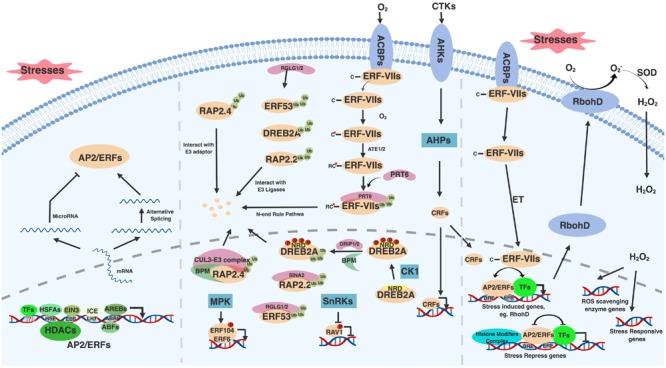
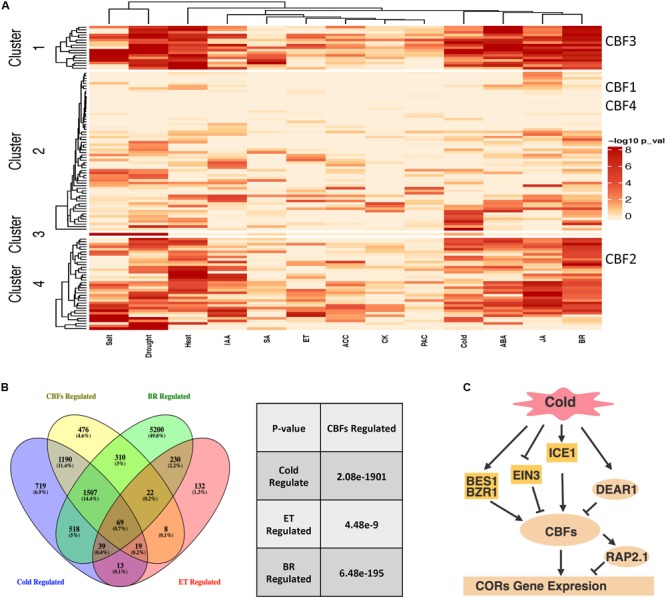
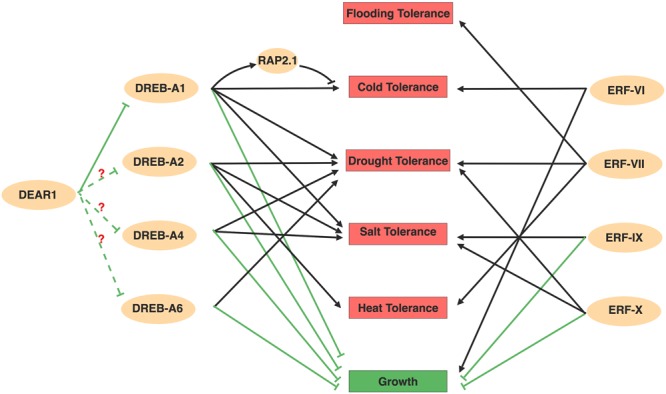
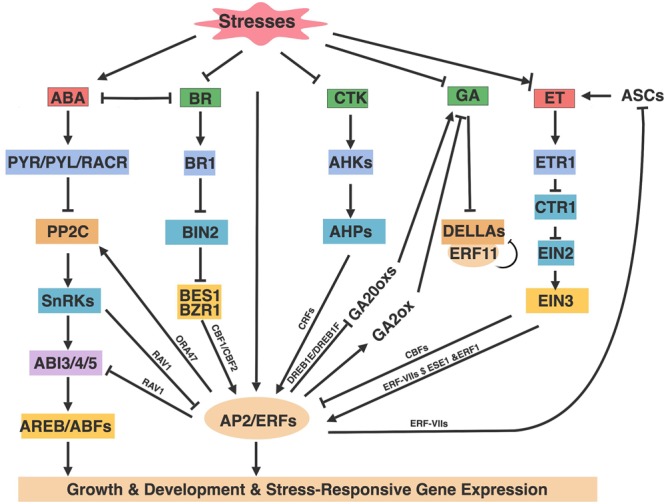
Dynamic environmental changes such as extreme temperature, water scarcity and high salinity affect plant growth, survival, and reproduction. Plants have evolved sophisticated regulatory mechanisms to adapt to these unfavorable conditions, many of which interface with plant hormone signaling pathways. Abiotic stresses alter the production and distribution of phytohormones that in turn mediate stress responses at least in part through hormone- and stress-responsive transcription factors. Among these, the APETALA2/ETHYLENE RESPONSIVE FACTOR (AP2/ERF) family transcription factors (AP2/ERFs) have emerged as key regulators of various stress responses, in which they also respond to hormones with improved plant survival during stress conditions. Apart from participation in specific stresses, AP2/ERFs are involved in a wide range of stress tolerance, enabling them to form an interconnected stress regulatory network. Additionally, many AP2/ERFs respond to the plant hormones abscisic acid (ABA) and ethylene (ET) to help activate ABA and ET dependent and independent stress-responsive genes. While some AP2/ERFs are implicated in growth and developmental processes mediated by gibberellins (GAs), cytokinins (CTK), and brassinosteroids (BRs). The involvement of AP2/ERFs in hormone signaling adds the complexity of stress regulatory network. In this review, we summarize recent studies on AP2/ERF transcription factors in hormonal and abiotic stress responses with an emphasis on selected family members in . In addition, we leverage publically available gene networks and transcriptome data to investigate AP2/ERF regulatory networks, providing context and important clues about the roles of diverse AP2/ERFs in controlling hormone and stress responses.
极端温度、缺水和高盐度等动态环境变化会影响植物的生长、存活和繁殖。植物已经进化出复杂的调控机制来适应这些不利条件,其中许多机制与植物激素信号通路相互作用。非生物胁迫会改变植物激素的产生和分布,而植物激素反过来至少部分地通过激素和胁迫响应转录因子介导胁迫反应。其中,APETALA2/乙烯响应因子(AP2/ERF)家族转录因子(AP2/ERFs)已成为各种胁迫反应的关键调节因子,在胁迫条件下,它们还对激素作出反应以提高植物的存活率。除了参与特定胁迫外,AP2/ERFs还参与广泛的胁迫耐受性,使其能够形成一个相互关联的胁迫调控网络。此外,许多AP2/ERFs对植物激素脱落酸(ABA)和乙烯(ET)作出反应,以帮助激活依赖于ABA和ET以及不依赖于它们的胁迫响应基因。而一些AP2/ERFs则参与由赤霉素(GAs)、细胞分裂素(CTK)和油菜素类固醇(BRs)介导的生长和发育过程。AP2/ERFs参与激素信号传导增加了胁迫调控网络的复杂性。在本综述中,我们总结了关于AP2/ERF转录因子在激素和非生物胁迫反应方面的最新研究,重点关注特定的家族成员。此外,我们利用公开可用的基因网络和转录组数据来研究AP2/ERF调控网络,为不同AP2/ERFs在控制激素和胁迫反应中的作用提供背景和重要线索。