Yu Chia-Chuan, Chen Chiao-Yun, Muggleton Neil G, Ko Cheng-Hung, Liu Suyen
Department of Kinesiology and Health Education, The University of Texas at Austin, Austin, TX, United States.
Department of Athletic Sports, National Chung Cheng University, Minxiong, Taiwan.
Front Hum Neurosci. 2022 Apr 13;16:796180. doi: 10.3389/fnhum.2022.796180. eCollection 2022.
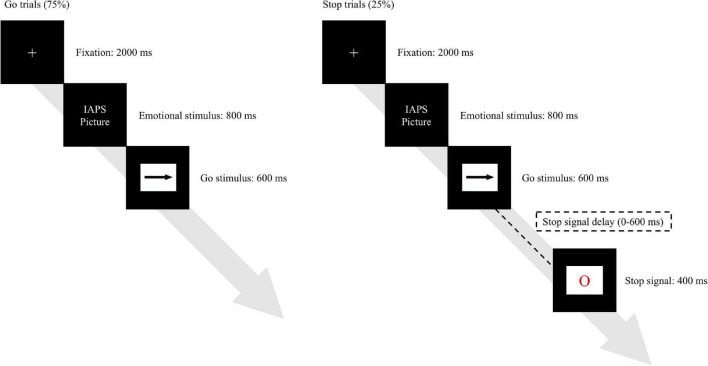
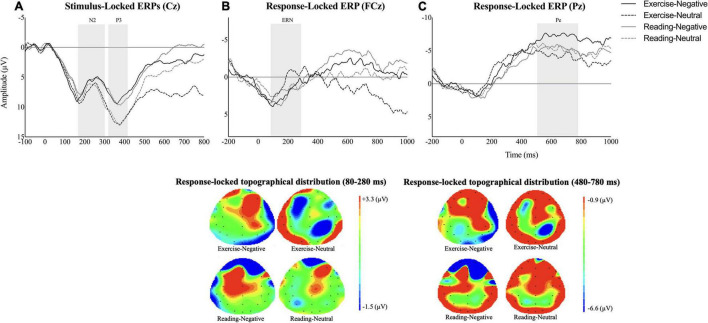
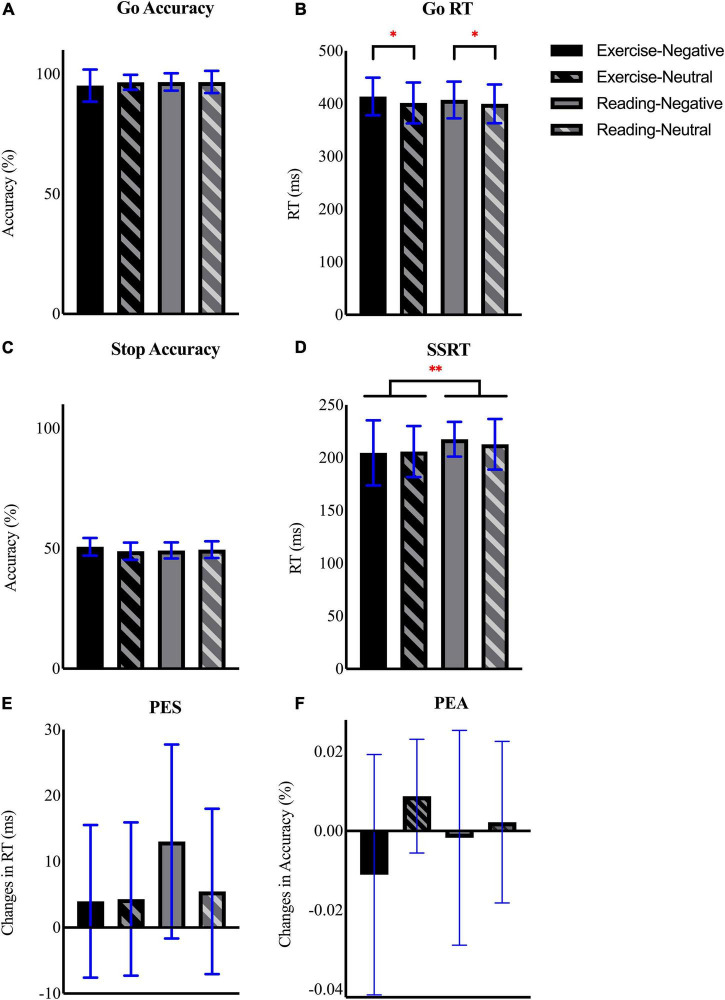
Violence has been linked to the co-occurrence of cognitive dysfunction and altered activations in several brain regions. Empirical evidence demonstrated the benefits of acute exercise on motor inhibition and error detection and their neuronal processing. However, whether such effects also hold for the population with violent behaviors remains unknown. This study examined the effects of acute aerobic exercise on inhibitory control and error monitoring among violent offenders. Fifteen male violent offenders were counterbalanced into experimental protocols, which comprised a 30-min moderately aerobic exercise [60% heart rate (HR) reserve] and a 30-min reading control session. After each session, participants performed an emotional stop signal task while event-related potentials (ERPs) were recorded simultaneously. Results showed insignificant changes in ERPs components [i.e., N2, P3, error-related negativity (ERN), and error-positivity (Pe) amplitudes] and the behavioral performance in go condition, stop accuracy, and post-error adjustments by exercise. However, the current study demonstrated that the acute exercise facilitated stop signal reaction time (SSRT) when compared to the control session regardless of emotional conditions. This is the first research to exhibit the improvements in inhibitory performance by acute exercise for violent offenders. Most importantly, this effect was independent of affective settings, expanding the existing knowledge of the influences of acute exercise on cognition. Our findings implicate the perspective of acute exercise for clinical and correctional practices.
暴力行为与认知功能障碍以及多个脑区激活改变同时出现有关。实证证据表明急性运动对运动抑制和错误检测及其神经元处理有益。然而,这些影响在暴力行为人群中是否也成立仍不清楚。本研究考察了急性有氧运动对暴力罪犯抑制控制和错误监测的影响。15名男性暴力罪犯被随机分配到实验方案中,该方案包括30分钟的中度有氧运动[心率储备的60%]和30分钟的阅读对照组。每次实验后,参与者执行一项情绪停止信号任务,同时记录事件相关电位(ERP)。结果显示,ERP成分[即N2、P3、错误相关负波(ERN)和错误正波(Pe)振幅]以及运动条件下的行为表现、停止准确性和错误后调整均无显著变化。然而,本研究表明,与对照组相比,无论情绪状态如何,急性运动都能缩短停止信号反应时间(SSRT)。这是第一项展示急性运动对暴力罪犯抑制表现有改善作用的研究。最重要的是,这种效应与情感环境无关,扩展了关于急性运动对认知影响的现有知识。我们的研究结果为临床和矫正实践中急性运动的应用提供了参考。