Luo Jing, Feng Yuan, Li Mingyue, Yin Mingyu, Qin Feng, Hu Xiquan
Department of Rehabilitation Medicine, The Third Affiliated Hospital, Sun Yat-sen University, Guangzhou, China.
Department of Hepatobiliary Surgery, The Third Affiliated Hospital, Sun Yat-sen University, Guangzhou, China.
Front Cell Neurosci. 2022 Apr 12;16:878345. doi: 10.3389/fncel.2022.878345. eCollection 2022.
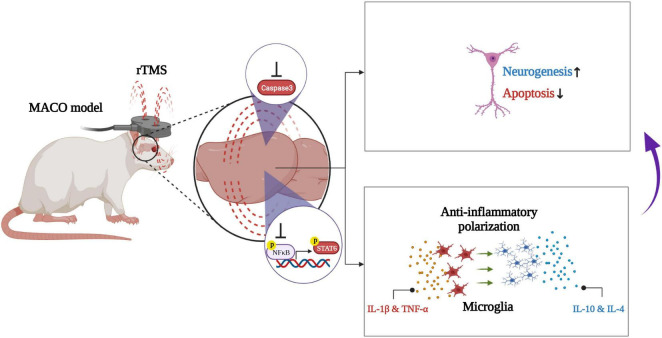
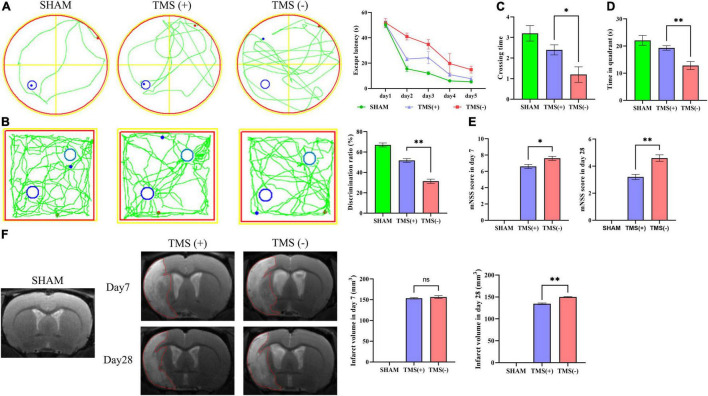
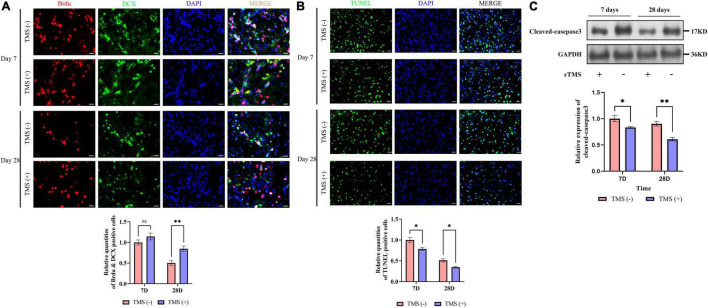
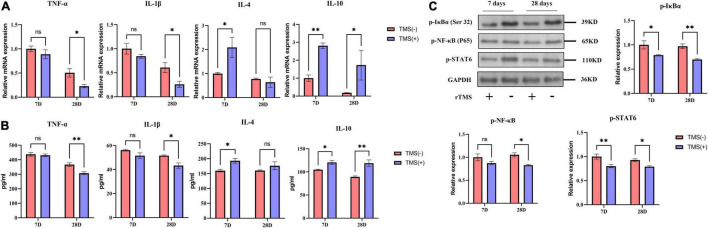
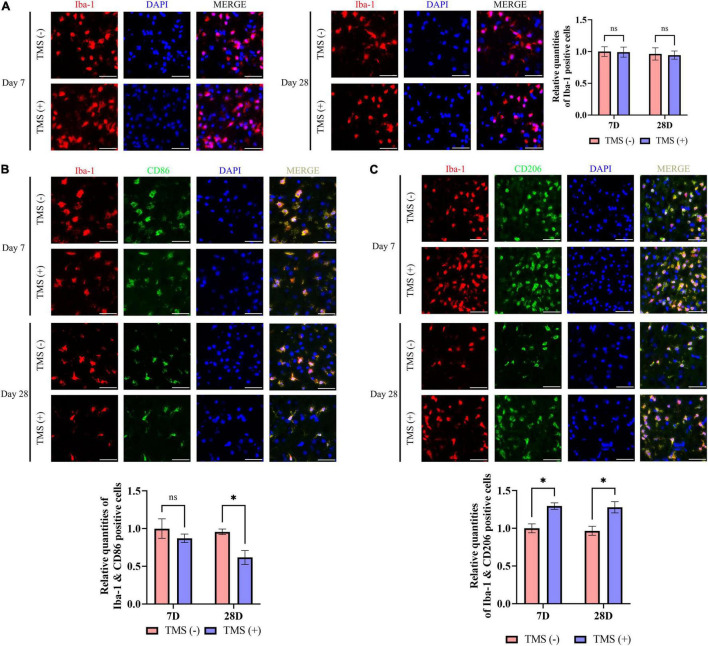
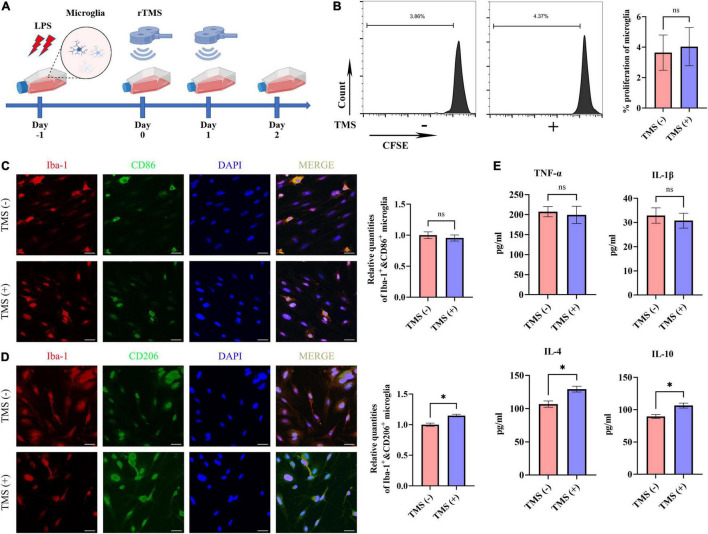
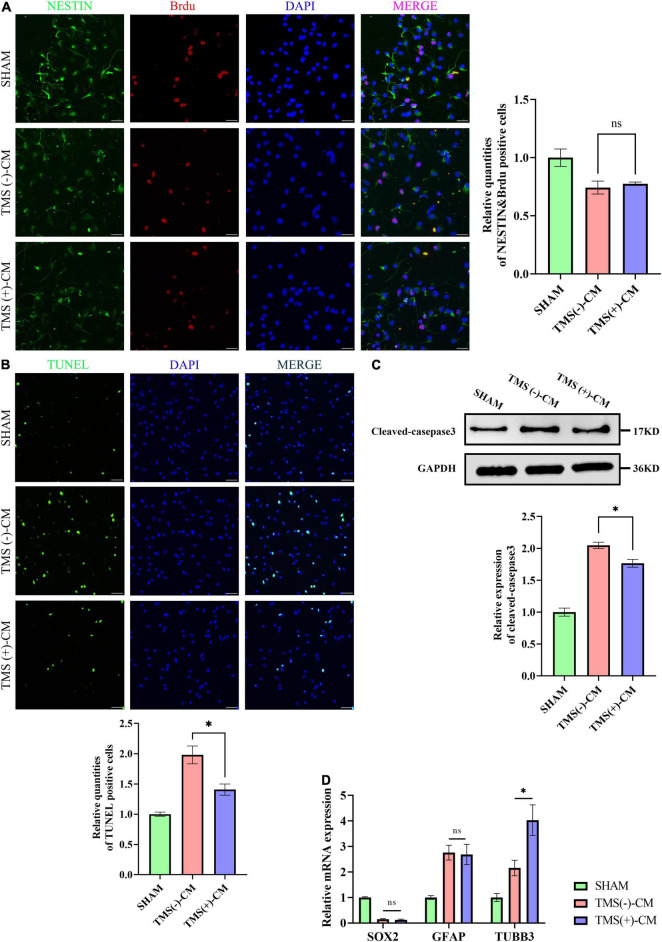
Ischemic stroke (IS) is a severe neurological disease that is difficult to recovery. Previous studies have shown that repetitive transcranial magnetic stimulation (rTMS) is a promising therapeutic approach, while the exact therapy mechanisms of rTMS in improving neural functional recovery remain unclear. Furthermore, the inflammatory environment may influence the rehabilitation efficacy. Our study shows that long-term rTMS stimulation will significantly promote neurogenesis, inhibit apoptosis, and control inflammation. rTMS inhibits the activation of transcription factors nuclear factor kappa b (NF-κB) and signal transducer and activator of transcription 6 (STAT6) and promotes the anti-inflammatory polarization of microglia. Obvious promotion of anti-inflammatory cytokines production is observed both and through rTMS stimulation on microglia. In addition, neural stem cells (NSCs) cultured in conditioned medium (CM) from microglia treated with rTMS showed downregulation of apoptosis and upregulation of neuronal differentiation. Overall, our results illustrate that rTMS can modulate microglia with anti-inflammatory polarization variation, promote neurogenesis, and improve neural function recovery.
缺血性中风(IS)是一种严重的神经系统疾病,难以恢复。先前的研究表明,重复经颅磁刺激(rTMS)是一种有前景的治疗方法,而rTMS改善神经功能恢复的确切治疗机制仍不清楚。此外,炎症环境可能会影响康复效果。我们的研究表明,长期rTMS刺激将显著促进神经发生,抑制细胞凋亡,并控制炎症。rTMS抑制转录因子核因子κB(NF-κB)和信号转导及转录激活因子6(STAT6)的激活,并促进小胶质细胞的抗炎极化。通过对小胶质细胞进行rTMS刺激,在体内和体外均观察到抗炎细胞因子产生的明显促进作用。此外,在经rTMS处理的小胶质细胞的条件培养基(CM)中培养的神经干细胞(NSCs)显示细胞凋亡下调,神经元分化上调。总体而言,我们的结果表明,rTMS可以通过抗炎极化变化调节小胶质细胞,促进神经发生,并改善神经功能恢复。