Gay Naw Hser, Suwanjang Wilasinee, Ruankham Waralee, Songtawee Napat, Wongchitrat Prapimpun, Prachayasittikul Virapong, Prachayasittikul Supaluk, Phopin Kamonrat
Center for Research and Innovation, Faculty of Medical Technology, Mahidol University Bangkok 10700 Thailand
Department of Medical Laboratory Technology, University of Medical Technology Yangon 11012 Myanmar.
RSC Adv. 2020 Apr 27;10(28):16593-16606. doi: 10.1039/c9ra06056a. eCollection 2020 Apr 23.
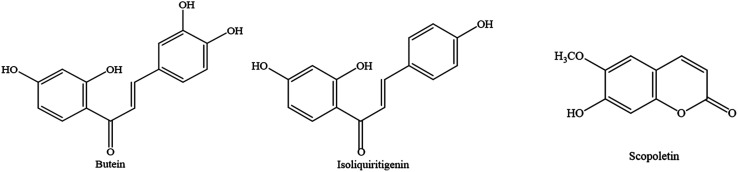
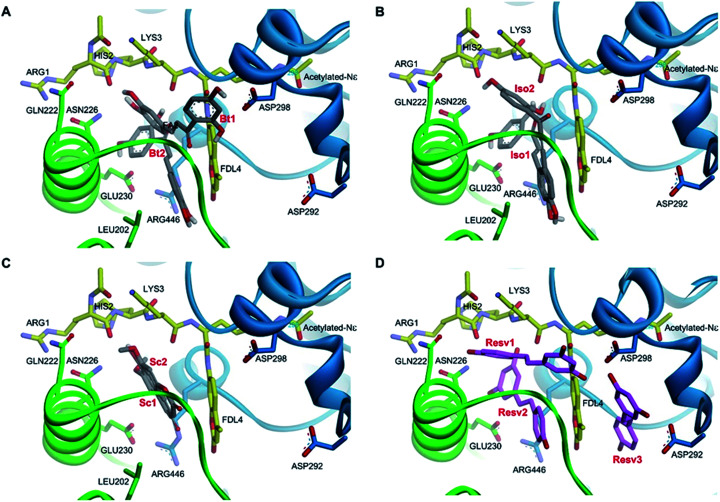
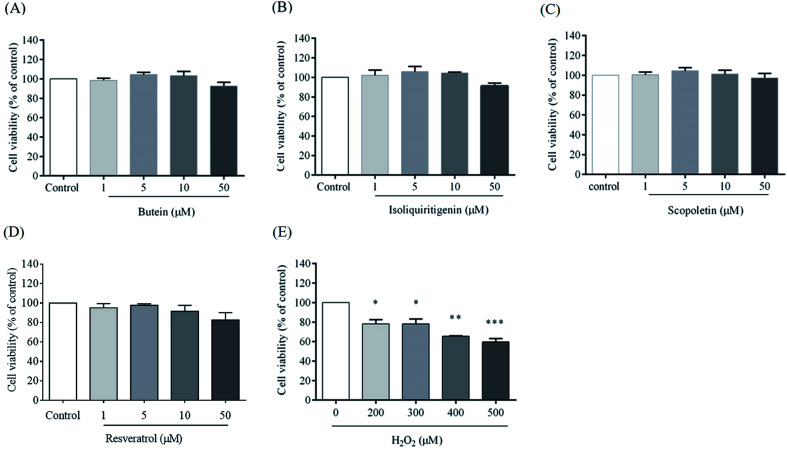
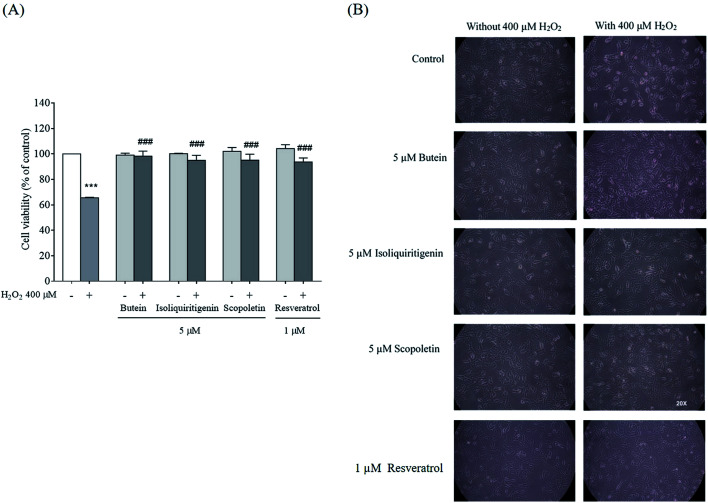
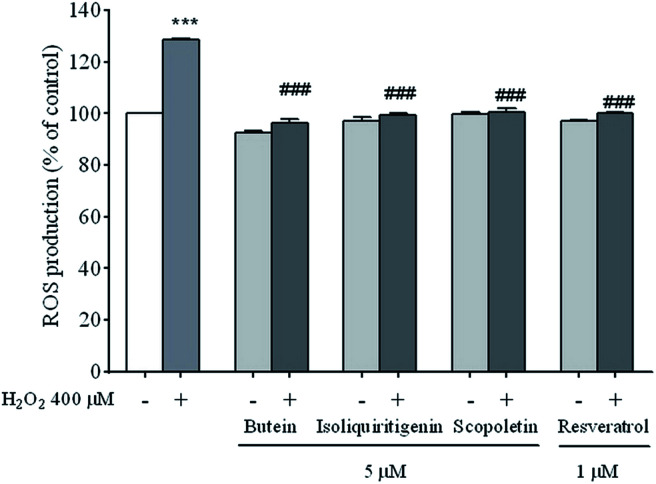
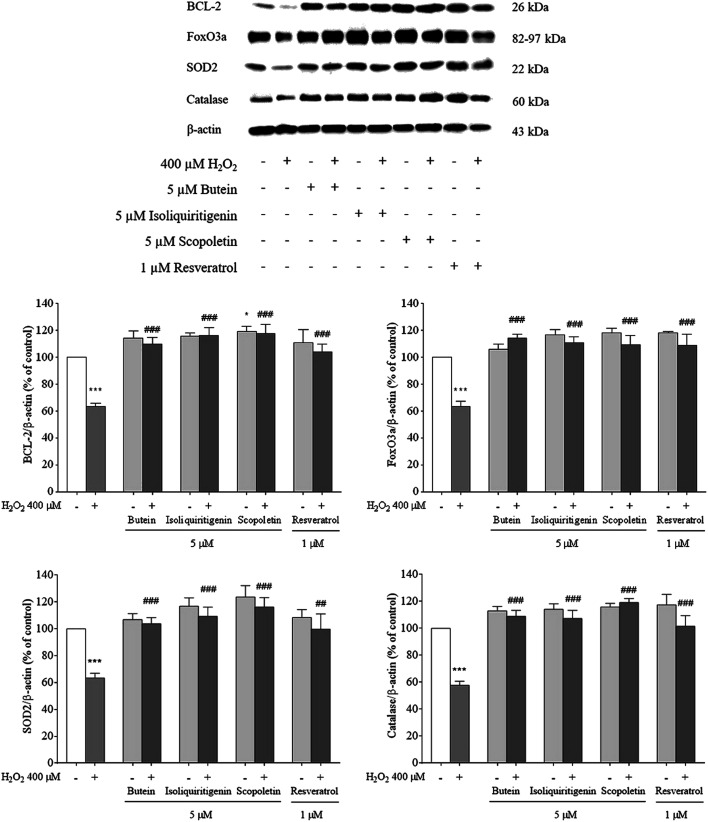
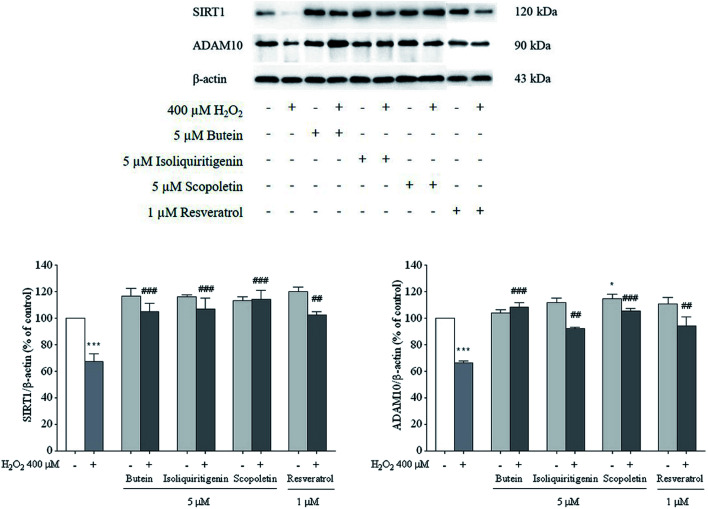
Neuronal cell death is a key feature of neurodegenerative disorders such as Parkinson's and Alzheimer's diseases. Plant polyphenols, namely butein, isoliquiritigenin, and scopoletin, have been shown to exhibit various biological activities including anti-inflammatory, antimicrobial, and antioxidant activities. Herein, butein, isoliquiritigenin, and scopoletin were explored for their neuroprotective properties against oxidative stress-induced human dopaminergic SH-SY5Y cell death. The cells exposed to hydrogen peroxide (HO) revealed a reduction in cell viability and increases in apoptosis and levels of reactive oxygen species (ROS). Interestingly, pretreatment of SH-SY5Y cells with 5 μM of butein, isoliquiritigenin, or scopoletin protected against the cell death induced by HO, and decreased the levels of apoptotic cells and ROS. In addition, the levels of SIRT1, FoxO3a, ADAM10, BCL-2, and antioxidant enzymes (catalase and SOD2) were maintained in the cells pretreated with butein, isoliquiritigenin, or scopoletin before HO treatment compared to cells without pretreatment and the reference (resveratrol). Molecular docking analysis revealed that the interactions between the activator-binding sites of SIRT1 and the phenolic compounds were similar to those of resveratrol. Taken together, the data suggest that these polyphenolic compounds could be potential candidates for prevention and/or treatment of neurodegeneration.
神经元细胞死亡是帕金森病和阿尔茨海默病等神经退行性疾病的关键特征。植物多酚,即紫铆因、异甘草素和东莨菪素,已被证明具有多种生物活性,包括抗炎、抗菌和抗氧化活性。在此,研究了紫铆因、异甘草素和东莨菪素对氧化应激诱导的人多巴胺能SH-SY5Y细胞死亡的神经保护特性。暴露于过氧化氢(H₂O₂)的细胞显示细胞活力降低,凋亡增加,活性氧(ROS)水平升高。有趣的是,用5 μM紫铆因、异甘草素或东莨菪素预处理SH-SY5Y细胞可防止H₂O₂诱导的细胞死亡,并降低凋亡细胞和ROS水平。此外,与未预处理的细胞和对照(白藜芦醇)相比,在H₂O₂处理前用紫铆因、异甘草素或东莨菪素预处理的细胞中,SIRT1、FoxO3a、ADAM10、BCL-2和抗氧化酶(过氧化氢酶和SOD2)的水平得以维持。分子对接分析表明,SIRT1激活剂结合位点与酚类化合物之间的相互作用与白藜芦醇相似。综上所述,数据表明这些多酚化合物可能是预防和/或治疗神经退行性疾病的潜在候选物。