Asano Yuya, Miyai Kosuke, Yoshimatsu Shinya, Sasaki Makoto, Ikewaki Katsunori, Matsukuma Susumu
National Defense Medical College, Saitama, Japan.
Department of Pathology and Laboratory Medicine, National Defense Medical College, Saitama, Japan.
J Pathol Transl Med. 2022 Jul;56(4):217-224. doi: 10.4132/jptm.2022.03.15. Epub 2022 May 3.
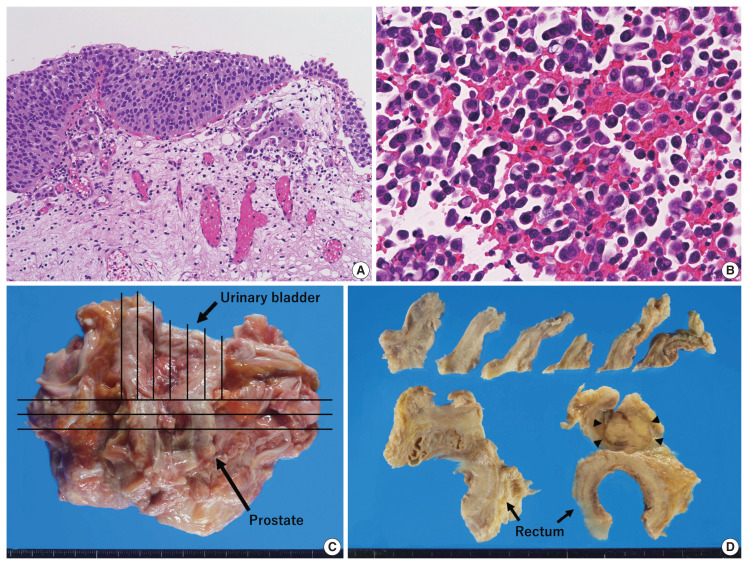
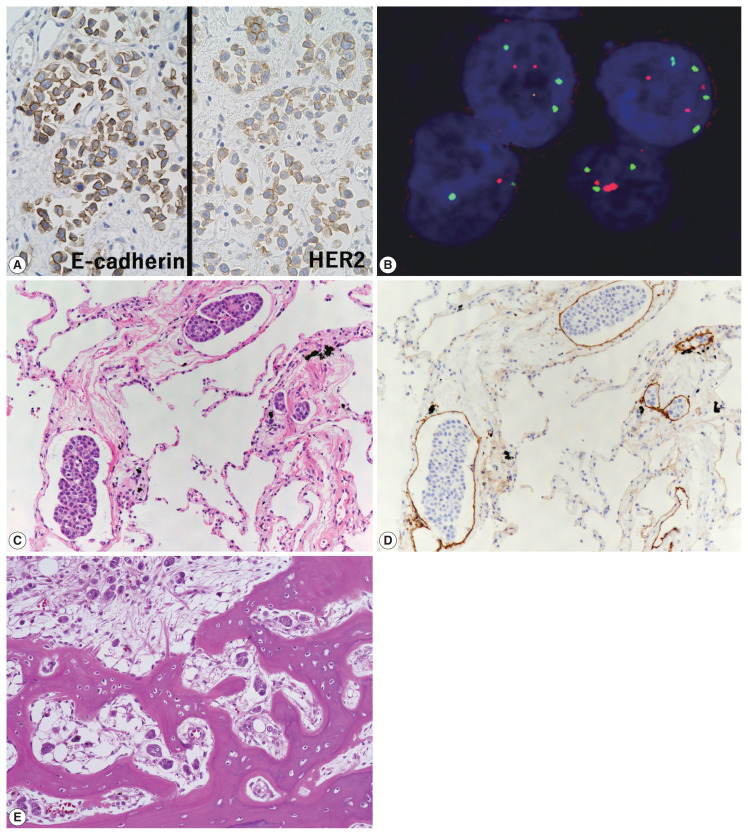
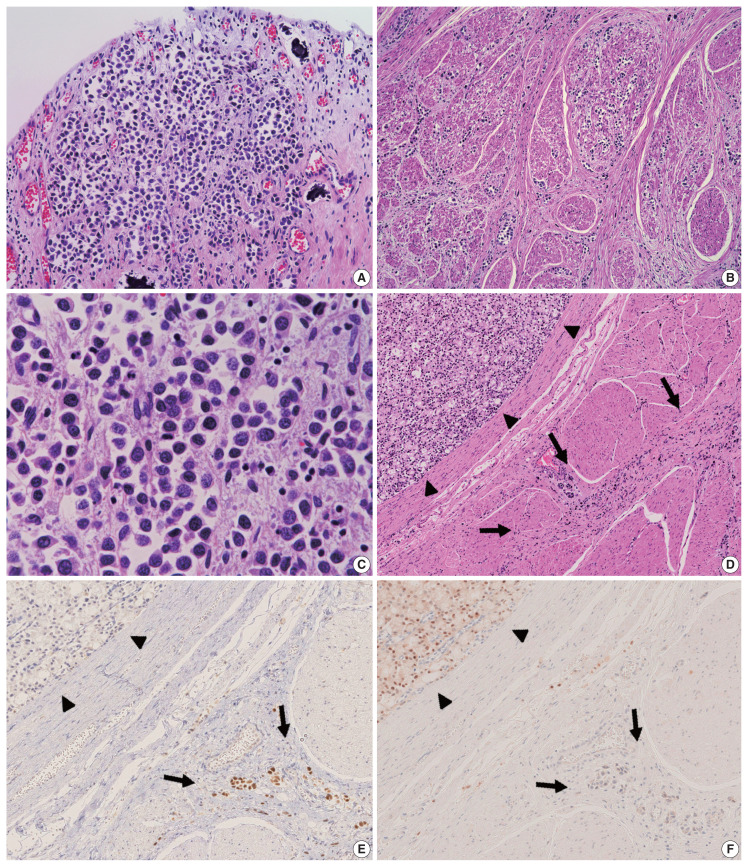
This case report outlines a clinically undetected urinary bladder plasmacytoid urothelial carcinoma (PUC) with multiple metastases detected at autopsy. An 89-year-old man presented with edema in the lower limbs. Pleural fluid cytology revealed discohesive carcinomatous cells, although imaging studies failed to identify the primary site of tumor. The patient died of respiratory failure. Autopsy disclosed a prostate tumor and diffusely thickened urinary bladder and rectum without distinct tumorous lesions. Histologically, the tumor consisted of acinar-type prostate adenocarcinoma with no signs of metastasis. Additionally, small, plasmacytoid tumor cells were observed in the urinary bladder/rectum as isolated or small clustering fashions. These metastasized to the lungs, intestine, generalized lymph nodes in a non-mass-forming manner. Combined with immunohistochemical studies, these tumor cells were diagnosed PUC derived from the urinary bladder. Both clinicians and pathologists should recognize PUC as an aggressive histological variant, which can represent a rapid systemic progression without mass-forming lesions.
本病例报告概述了一例临床未检测到的膀胱浆细胞样尿路上皮癌(PUC),尸检时发现多处转移。一名89岁男性出现下肢水肿。胸水细胞学检查发现散在的癌细胞,尽管影像学检查未能确定肿瘤的原发部位。患者死于呼吸衰竭。尸检发现前列腺肿瘤以及膀胱和直肠弥漫性增厚,但无明显肿瘤病变。组织学上,肿瘤为腺泡型前列腺腺癌,无转移迹象。此外,在膀胱/直肠中观察到散在或小簇状分布的小的浆细胞样肿瘤细胞。这些肿瘤细胞以非肿块形成的方式转移至肺、肠、全身淋巴结。结合免疫组化研究,这些肿瘤细胞被诊断为源自膀胱的PUC。临床医生和病理学家都应认识到PUC是一种侵袭性组织学变异型,可表现为无肿块形成病变的快速全身进展。