Department of Public Health, Faculty of Medicine and Health Sciences, An-Najah National University, PO. Box 7, Nablus, West Bank, Palestine.
Department of Nutrition and Food Technology, Faculty of Agriculture and Veterinary Medicine, An-Najah National University, PO. Box 7, Tulkarm, West Bank, Palestine.
BMC Psychiatry. 2022 May 2;22(1):310. doi: 10.1186/s12888-022-03915-1.
The COVID-19 pandemic had a profound psychological influence on everyone in society, and the impact it had on students, particularly medical students, cannot be underestimated. The main purpose of this study is to (1) determine the prevalence of mental disorders among medical students and their associated factors, and (2) examine the effectiveness of cognitive behavior therapy on mental health problems among medical students.
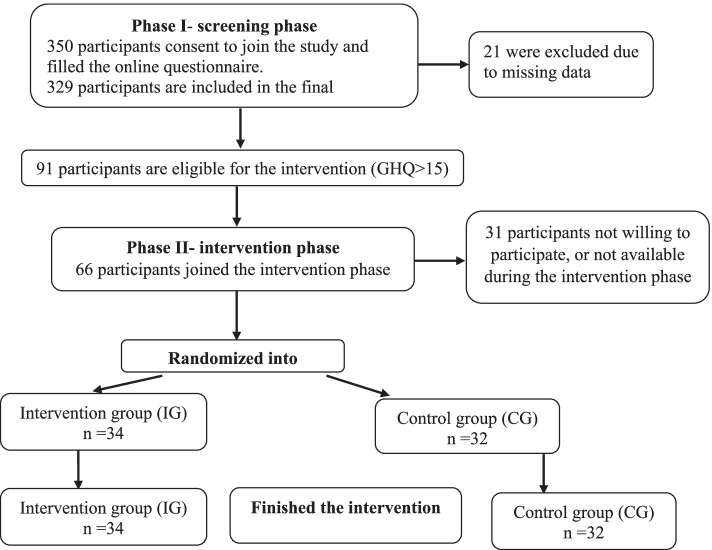
Between March and May 2021, we conducted a randomized controlled study on two phases among medical students at An-Najah National University. Data were collected using an online questionnaire and the Arabic version of the 12-item General Health Questionnaire (GHQ-12). We also used the MEDAS tool to assess their Mediterranean Diet (MD) adherence. In the second phase, sixty-six students were recruited and assigned randomly to control and intervention groups. Intervention impact was assessed using 12-item General Health Questionnaire at two-time points; baseline, and 8 weeks post-intervention. The interventional model used was cognitive behavioral therapy, and the control group received no treatment.
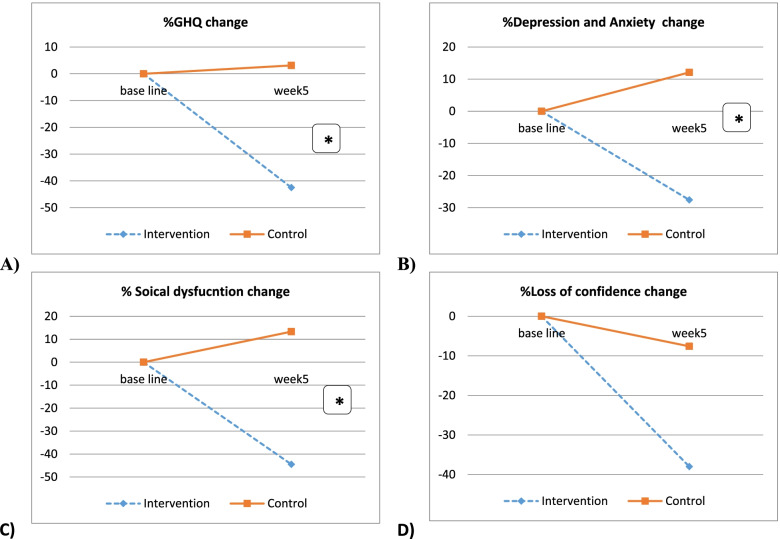
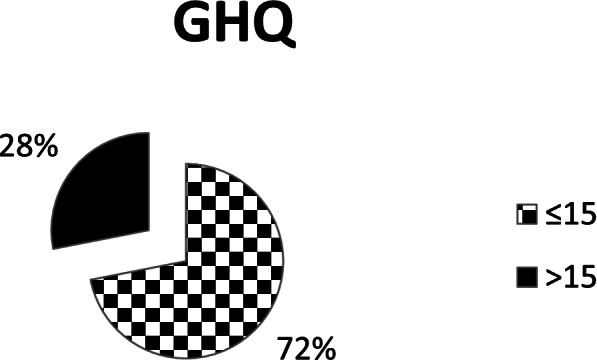
A total of 329 students were included in the analysis of the first phase of the study. Approximately 28% of students had mental health problems. We found a significant relationship between good mental health status with a higher level of physical activity level, longer sleeping hours, and shorter entertainment time (p < 0.05). In the second phase of the study, a total of 91 students were included. Overall, using the CBT program showed a significant improvement in the outcome measures. At 8 weeks post-intervention, students had lower scores on total GHQ-12, depression, anxiety, and social dysfunction.
These findings propose that adequate attention must be paid to the mental health of medical students and that CBT programs can be used for the management of mental health problems among medical students.
COVID-19 大流行对社会上每个人都产生了深远的心理影响,它对学生的影响不可低估,尤其是对医学生。本研究的主要目的是:(1) 确定医学生精神障碍的患病率及其相关因素;(2) 研究认知行为疗法对医学生心理健康问题的效果。
2021 年 3 月至 5 月,我们在纳贾赫国立大学对医学生进行了两阶段的随机对照研究。使用在线问卷和阿拉伯语版的 12 项一般健康问卷(GHQ-12)收集数据。我们还使用 MEDAS 工具评估他们的地中海饮食(MD)依从性。在第二阶段,招募了 66 名学生并随机分为对照组和干预组。使用 12 项一般健康问卷在两个时间点评估干预影响;基线和干预后 8 周。使用的干预模型是认知行为疗法,对照组未接受治疗。
共有 329 名学生被纳入研究第一阶段的分析。大约 28%的学生有心理健康问题。我们发现,良好的心理健康状态与更高的身体活动水平、更长的睡眠时间和更短的娱乐时间显著相关(p<0.05)。在研究的第二阶段,共有 91 名学生被纳入。总体而言,使用 CBT 方案在结局指标上显示出显著改善。在干预后 8 周,学生的总 GHQ-12、抑郁、焦虑和社会功能障碍评分较低。
这些发现表明,必须充分关注医学生的心理健康问题,认知行为疗法方案可用于管理医学生的心理健康问题。