Liu Yang, Li Yu, Cheng Baishuo, Feng Shige, Zhu Xiangui, Chen Wei, Zhang Haifeng
Physical Education College, Hebei Normal University, Shijiazhuang, China.
Hebei Provincial Key Laboratory of Measurement and Evaluation in Human Movement and Bio-Information, Hebei Normal University, Shijiazhuang, China.
Diabetol Metab Syndr. 2022 May 3;14(1):62. doi: 10.1186/s13098-022-00834-9.
BACKGROUND/OBJECTIVES: Visceral obesity is one of the key features of metabolic syndrome. High-intensity interval training (HIIT) could effectively reduce visceral fat, but its effects show strong heterogeneity in populations with different degrees of obesity. The mechanism may be related to the differential adaptation to training between obesity phenotypes, namely obesity prone (OP) and obesity resistant (OR). The aim of the present study was to compare adaptive changes of visceral adipose lipolysis adaptation to HIIT between OP and OR animals and further explore the upstream pathway.
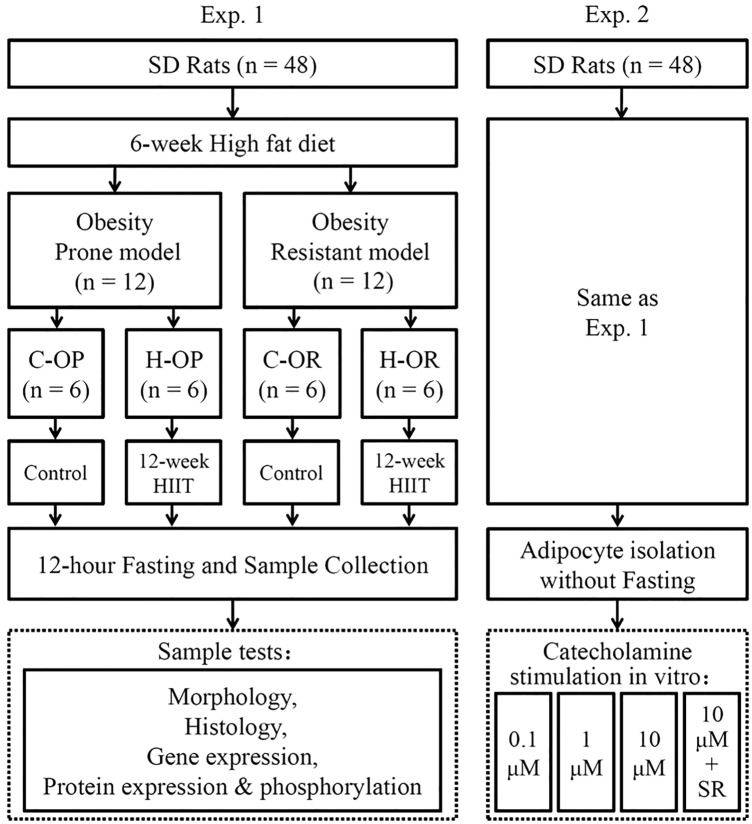
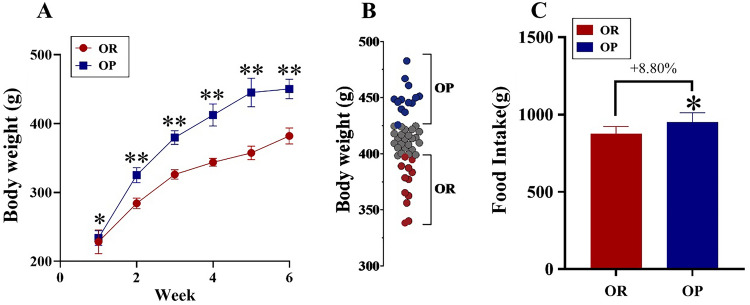
OP and OR Sprague Dawley rats were established after feeding a high-fat diet for 6 weeks; they were then divided into HIIT (H-OP and H-OR) and control (C-OP and C-OR) groups. After 12 weeks of HIIT or a sedentary lifestyle, animals were fasted for 12 h and then sacrificed for histology as well as gene and protein analysis. Visceral adipocytes were isolated without fasting for catecholamine stimulation and β3-adrenergic receptor (β3-AR) blockade in vitro to evaluate the role of upstream pathways.
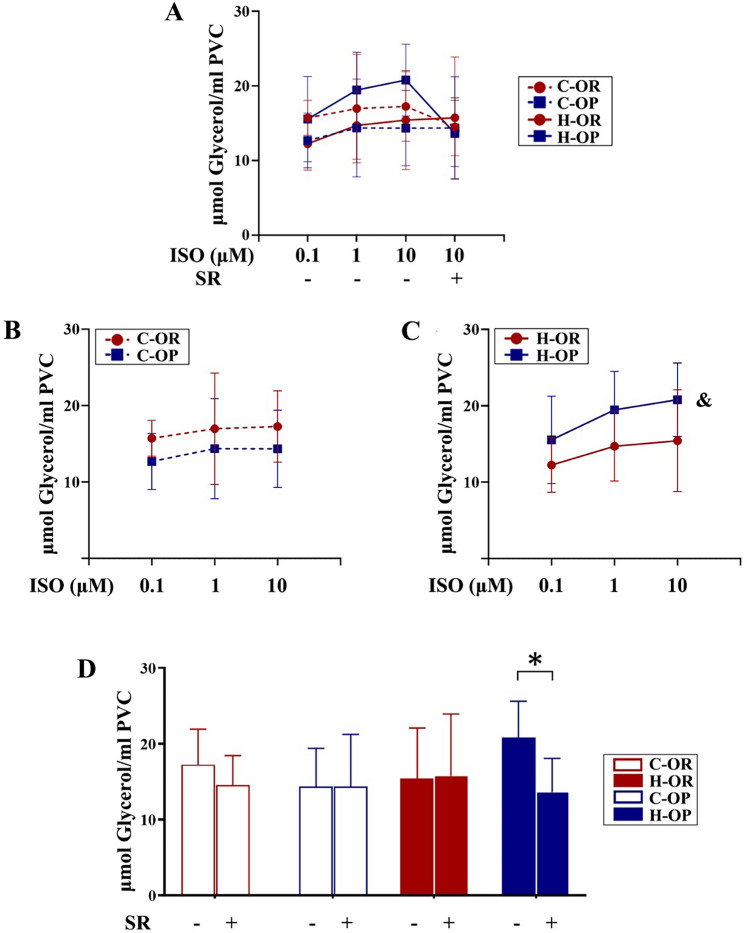
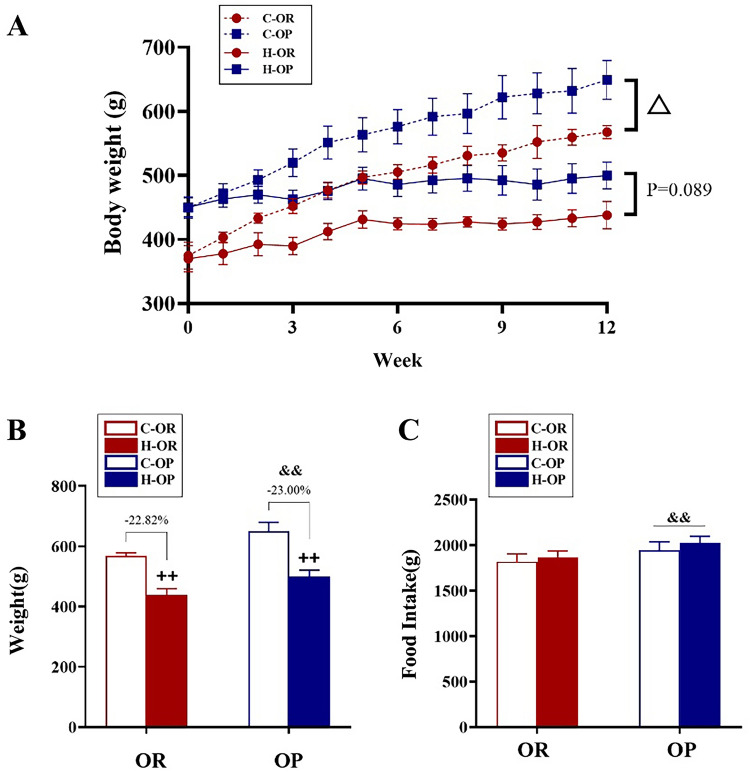
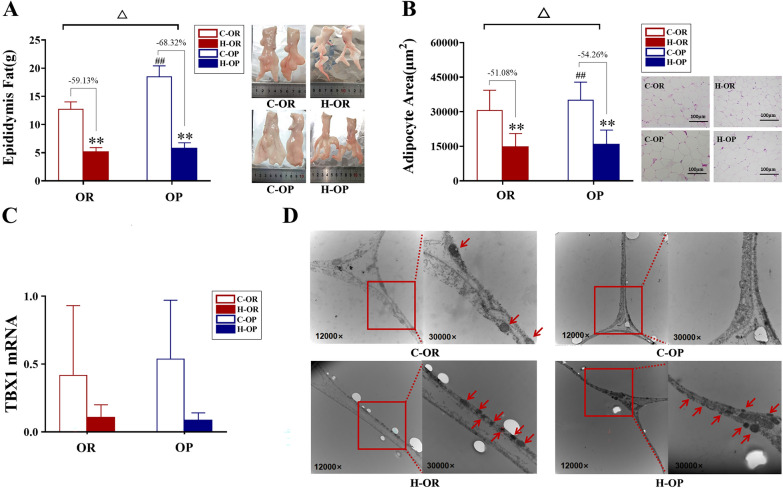
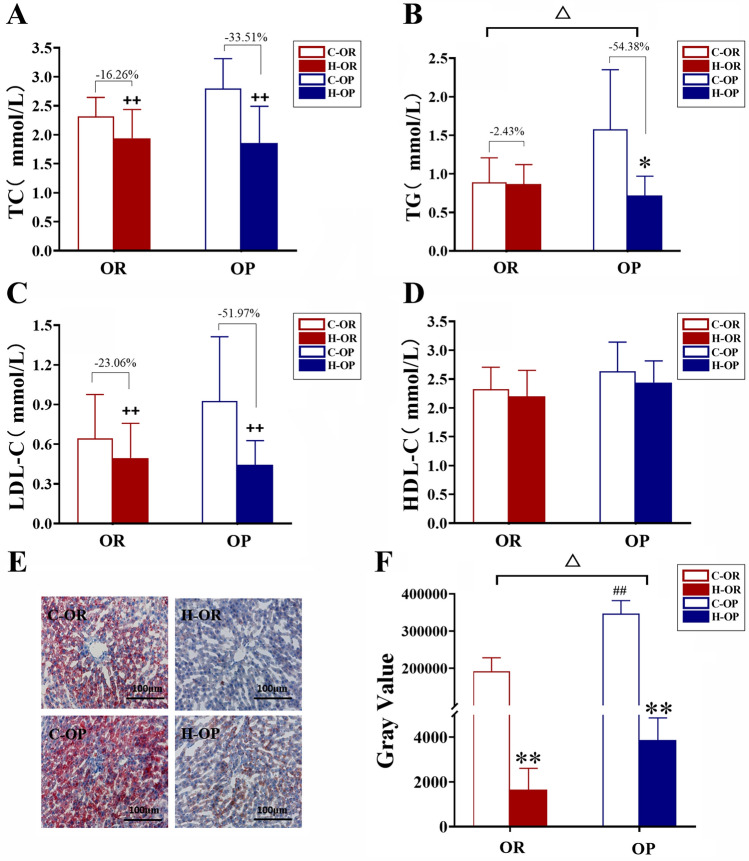
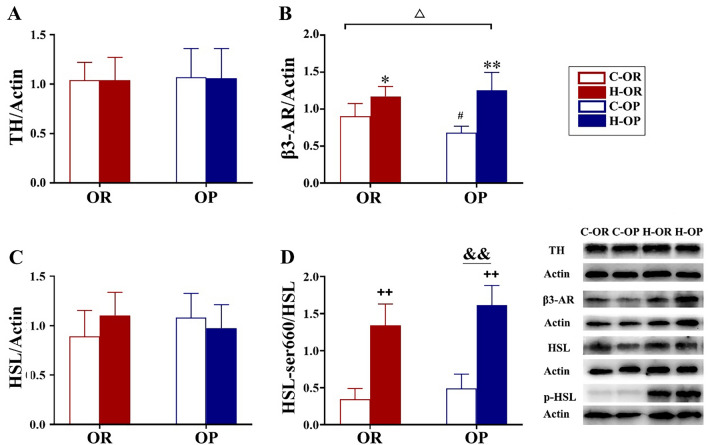
After training, there were no differences in weight loss or food intake between OP and OR rats (P > 0.05). However, the visceral fat mass, adipocyte volume, serum triglycerides and liver lipids of OP rats decreased by more than those of OR rats (P < 0.05). Meanwhile, the cell lipolytic capacity and the increase in the expression of β3-AR were higher in the OP compared with OR groups (P < 0.05). Although training did not increase sympathetic nervous system activity (P > 0.05), the cell sensitivity to catecholamine increased significantly in the OP compared with OR groups (P < 0.05). Following blocking β3-AR, the increased sensitivity disappeared.
With HIIT, OP rats lost more visceral fat than OR rats, which was related to stronger adaptive changes in lipolysis. Increased β3-AR expression mediated this adaptation.
背景/目的:内脏肥胖是代谢综合征的关键特征之一。高强度间歇训练(HIIT)可有效减少内脏脂肪,但其效果在不同肥胖程度人群中表现出很强的异质性。其机制可能与肥胖易感性(OP)和肥胖抵抗性(OR)这两种肥胖表型对训练的不同适应性有关。本研究旨在比较OP和OR动物内脏脂肪脂解对HIIT的适应性变化,并进一步探索上游途径。
给予Sprague Dawley大鼠高脂饮食6周后建立OP和OR模型;然后将它们分为HIIT组(H-OP和H-OR)和对照组(C-OP和C-OR)。经过12周的HIIT训练或久坐不动的生活方式后,动物禁食12小时,然后处死进行组织学以及基因和蛋白质分析,并在不禁食的情况下分离内脏脂肪细胞用于体外儿茶酚胺刺激和β3-肾上腺素能受体(β3-AR)阻断,以评估上游途径的作用。
训练后,OP和OR大鼠在体重减轻或食物摄入量方面无差异(P>0.05)。然而,OP大鼠的内脏脂肪量、脂肪细胞体积、血清甘油三酯和肝脏脂质的下降幅度大于OR大鼠(P<0.05)。同时,与OR组相比,OP组的细胞脂解能力和β3-AR表达增加更高(P<0.05)。尽管训练并未增加交感神经系统活性(P>0.05),但与OR组相比,OP组细胞对儿茶酚胺的敏感性显著增加(P<0.05)。阻断β3-AR后,增加的敏感性消失。
通过HIIT,OP大鼠比OR大鼠减少了更多的内脏脂肪,这与脂解更强的适应性变化有关。β3-AR表达增加介导了这种适应性变化。