Department of Biochemistry and Molecular Biology, University of Chittagong, Chittagong, Bangladesh.
Department of Pharmacy, Faculty of Science and Engineering, International Islamic University Chittagong, Chittagong, Bangladesh.
J Cell Mol Med. 2022 Jun;26(12):3343-3363. doi: 10.1111/jcmm.17339. Epub 2022 May 2.
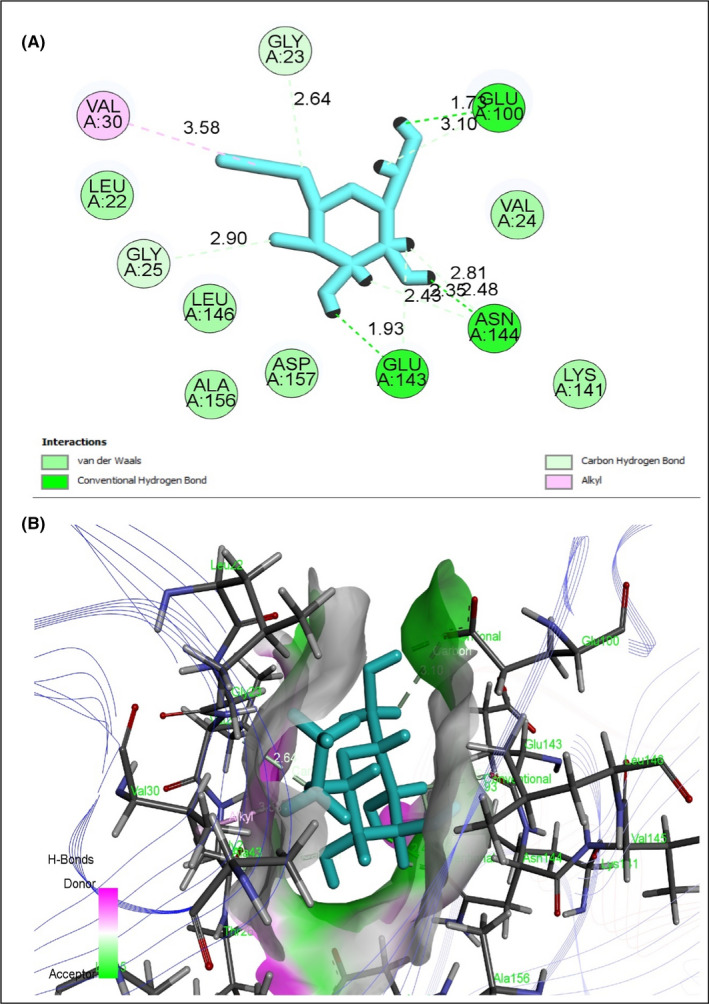
Since ancient times, plants have been used as green bioresources to ensure a healthier life by recovering from different diseases. Kattosh (Lasia spinosa L. Thwaites) is a local plant with various traditional uses, especially for arthritis, constipation and coughs. This research investigated the effect of Kattosh stem extract (LSES) on streptozotocin-induced damage to the pancreas, kidney, and liver using in vitro, in vivo and in silico methods. In vitro phytochemical, antioxidative and anti-inflammatory effects of LSES were accomplished by established methods followed by antidiabetic actions in in vivo randomized controlled intervention in STZ-induced animal models for four weeks. In an in silico study, LSES phytocompounds interacted with antidiabetic receptors of peroxisome proliferator-activated receptor-gamma (PPAR, PDB ID: 3G9E), AMP-activated protein kinase (AMPK, PDB ID: 4CFH) and α-amylase enzyme (PDB ID: 1PPI) to verify the in vivo results. In addition, LSES showed promising in vitro antioxidative and anti-inflammatory effects. In contrast, it showed a decrease in weekly blood glucose level, normalized lipid profile, ameliorated liver and cardiac markers, managed serum AST and ALT levels, and increased glucose tolerance ability in the animal model study. Restoration of pancreatic and kidney damage was reflected by improving histopathological images. In ligand-receptor interaction, ethyl α-d-glucopyranoside of Kattosh showed the highest affinity for the α-amylase enzyme, PPAR, and AMPK receptors. Results demonstrate that the affinity of Kattosh phytocompounds potentially attenuates pancreatic and kidney lesions and could be approached as an alternative antidiabetic source with further clarification.
自古以来,植物一直被用作绿色生物资源,通过从各种疾病中恢复来保证更健康的生活。Kattosh(Lasia spinosa L. Thwaites)是一种具有多种传统用途的本地植物,特别是对关节炎、便秘和咳嗽。本研究采用体外、体内和计算机模拟方法,研究了 Kattosh 茎提取物(LSES)对链脲佐菌素诱导的胰腺、肾脏和肝脏损伤的影响。通过建立的方法,在体外进行了 LSES 的植物化学、抗氧化和抗炎作用研究,然后在 STZ 诱导的动物模型中进行了为期四周的随机对照干预,研究了其体内的抗糖尿病作用。在计算机模拟研究中,LSES 植物化合物与过氧化物酶体增殖物激活受体-γ(PPAR,PDB ID:3G9E)、AMP 激活蛋白激酶(AMPK,PDB ID:4CFH)和 α-淀粉酶酶(PDB ID:1PPI)的抗糖尿病受体相互作用,以验证体内结果。此外,LSES 显示出有前途的体外抗氧化和抗炎作用。相比之下,它在动物模型研究中显示出降低每周血糖水平、正常化脂质谱、改善肝脏和心脏标志物、管理血清 AST 和 ALT 水平以及提高葡萄糖耐量能力。通过改善组织病理学图像,反映了对胰腺和肾脏损伤的恢复。在配体-受体相互作用中,Kattosh 的乙基 α-d-吡喃葡萄糖苷对 α-淀粉酶酶、PPAR 和 AMPK 受体表现出最高的亲和力。结果表明,Kattosh 植物化合物的亲和力可能减轻胰腺和肾脏病变,可以作为替代抗糖尿病的来源进行进一步研究。