Applied Tumor Genomics Research Program, Faculty of Medicine, University of Helsinki, 00014, Helsinki, Finland.
Institute of Biotechnology, HiLife, University of Helsinki, 00014, Helsinki, Finland.
Cell Mol Life Sci. 2022 May 4;79(5):276. doi: 10.1007/s00018-022-04301-6.
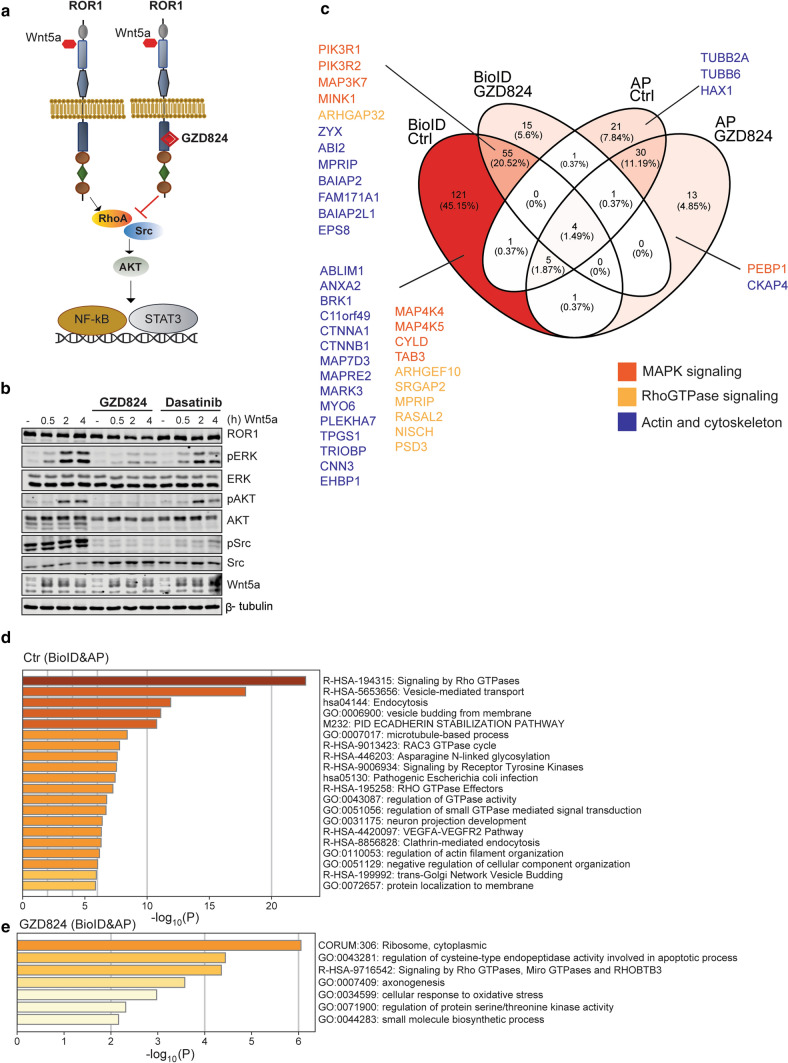
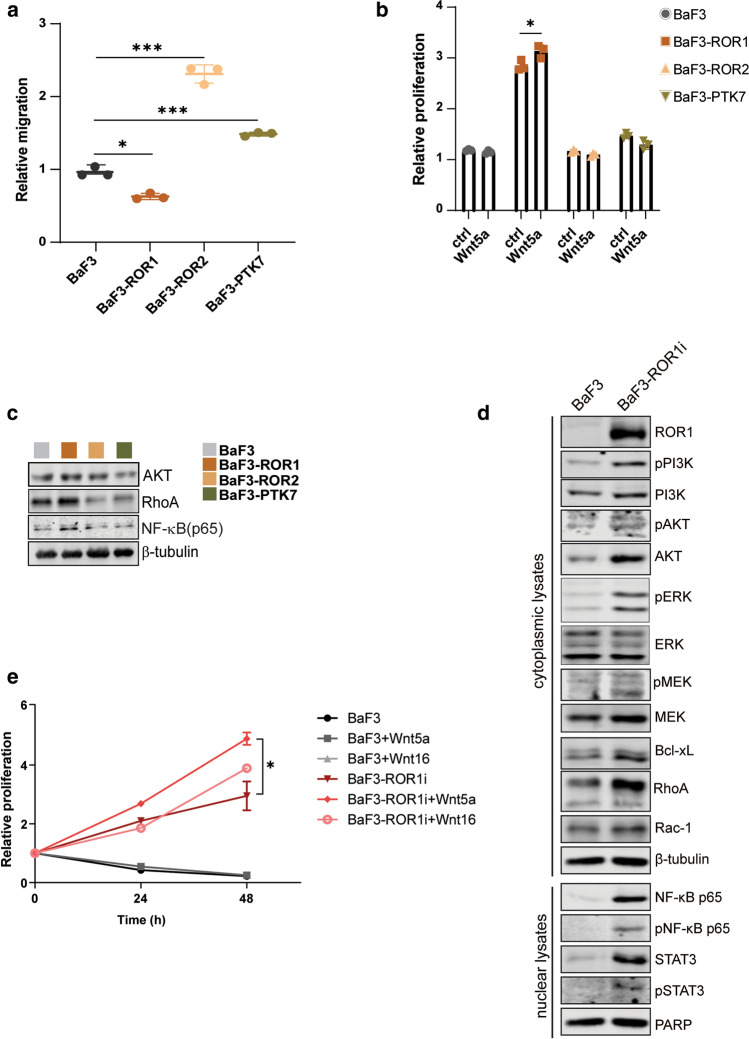
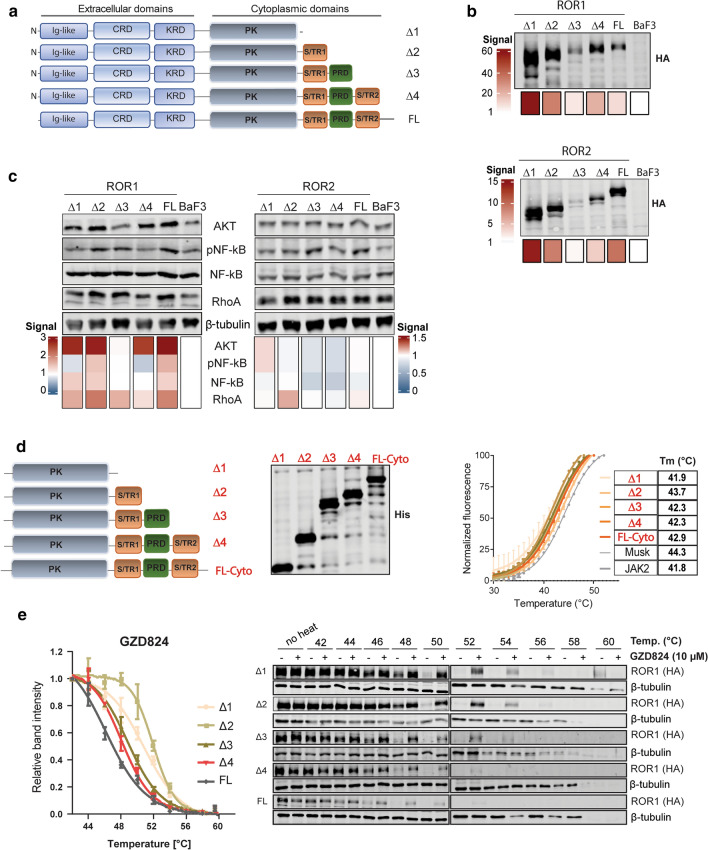
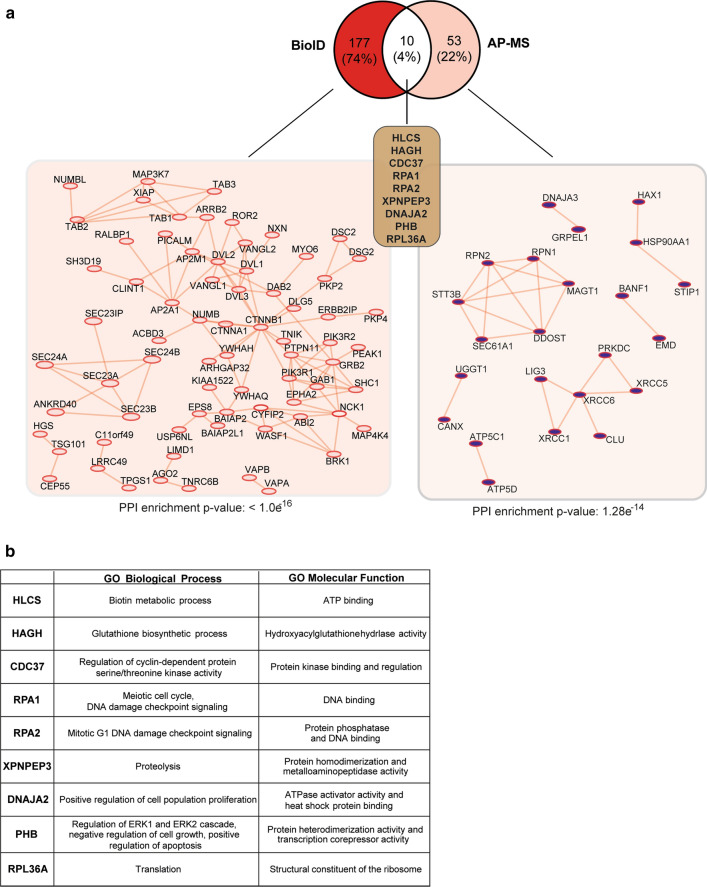
ROR1, ROR2, and PTK7 are Wnt ligand-binding members of the receptor tyrosine kinase family. Despite their lack of catalytic activity, these receptors regulate skeletal, cardiorespiratory, and neurological development during embryonic and fetal stages. However, their overexpression in adult tissue is strongly connected to tumor development and metastasis, suggesting a strong pharmacological potential for these molecules. Wnt5a ligand can activate these receptors, but lead to divergent signaling and functional outcomes through mechanisms that remain largely unknown. Here, we developed a cellular model by stably expressing ROR1, ROR2, and PTK7 in BaF3 cells that allowed us to readily investigate side-by-side their signaling capability and functional outcome. We applied proteomic profiling to BaF3 clones and identified distinctive roles for ROR1, ROR2, and PTK7 pseudokinases in modulating the expression of proteins involved in cytoskeleton dynamics, apoptotic, and metabolic signaling. Functionally, we show that ROR1 expression enhances cell survival and Wnt-mediated cell proliferation, while ROR2 and PTK7 expression is linked to cell migration. We also demonstrate that the distal C-terminal regions of ROR1 and ROR2 are required for receptors stability and downstream signaling. To probe the pharmacological modulation of ROR1 oncogenic signaling, we used affinity purification coupled to mass spectrometry (AP-MS) and proximity-dependent biotin identification (BioID) to map its interactome before and after binding of GZD824, a small molecule inhibitor previously shown to bind to the ROR1 pseudokinase domain. Our findings bring new insight into the molecular mechanisms of ROR1, ROR2, and PTK7, and highlight the therapeutic potential of targeting ROR1 with small molecule inhibitors binding to its vestigial ATP-binding site.
ROR1、ROR2 和 PTK7 是受体酪氨酸激酶家族中 Wnt 配体结合成员。尽管它们缺乏催化活性,但这些受体在胚胎和胎儿阶段调节骨骼、心肺和神经系统发育。然而,它们在成人组织中的过度表达与肿瘤的发展和转移密切相关,这表明这些分子具有很强的药理学潜力。Wnt5a 配体可以激活这些受体,但通过机制导致不同的信号转导和功能结果,这些机制在很大程度上仍然未知。在这里,我们通过在 BaF3 细胞中稳定表达 ROR1、ROR2 和 PTK7 开发了一种细胞模型,使我们能够轻松地并排研究它们的信号转导能力和功能结果。我们应用蛋白质组学谱分析对 BaF3 克隆进行分析,并确定了 ROR1、ROR2 和 PTK7 假激酶在调节参与细胞骨架动态、凋亡和代谢信号的蛋白质表达方面的独特作用。在功能上,我们表明 ROR1 的表达增强了细胞存活和 Wnt 介导的细胞增殖,而 ROR2 和 PTK7 的表达与细胞迁移有关。我们还证明了 ROR1 和 ROR2 的远端 C 末端区域对于受体的稳定性和下游信号转导是必需的。为了探究 ROR1 致癌信号的药理学调节,我们使用亲和纯化结合质谱 (AP-MS) 和邻近依赖性生物素鉴定 (BioID) 在 GZD824 结合前后对其互作组进行了探测,GZD824 是一种先前显示与 ROR1 假激酶结构域结合的小分子抑制剂。我们的研究结果为 ROR1、ROR2 和 PTK7 的分子机制提供了新的见解,并强调了使用结合其残余 ATP 结合位点的小分子抑制剂靶向 ROR1 的治疗潜力。