Center for Stem Cell and Regenerative Medicine, Tokyo Medical and Dental University (TMDU), 1-5-45, Bunkyo-ku, Yushima, Tokyo, 113-8510, Japan.
Division of Strategic Research and Development, Graduate School of Science and Engineering, Saitama University, 255, Shimo-okubo, Sakura-ku, Saitama City, Saitama, 338-8570, Japan.
Stem Cell Res Ther. 2022 May 3;13(1):177. doi: 10.1186/s13287-022-02850-y.
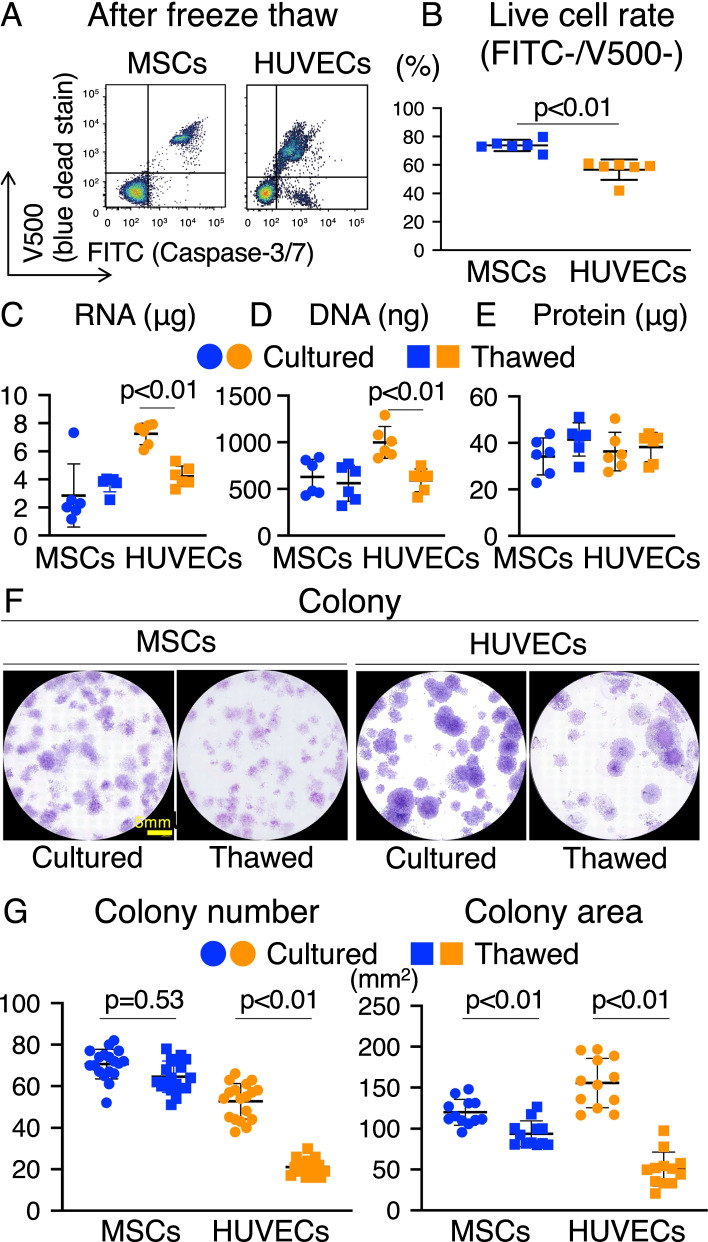
Synovial mesenchymal stem cells (MSCs) have high freeze-thaw tolerance, whereas human umbilical vein endothelial cells (HUVECs) have low freezing tolerance. The differences in cell type-specific freeze-thaw tolerance and the mechanisms involved are unclear. This study thus aimed to identify the biological and physical factors involved in the differences in freeze-thaw tolerance between MSCs and HUVECs.
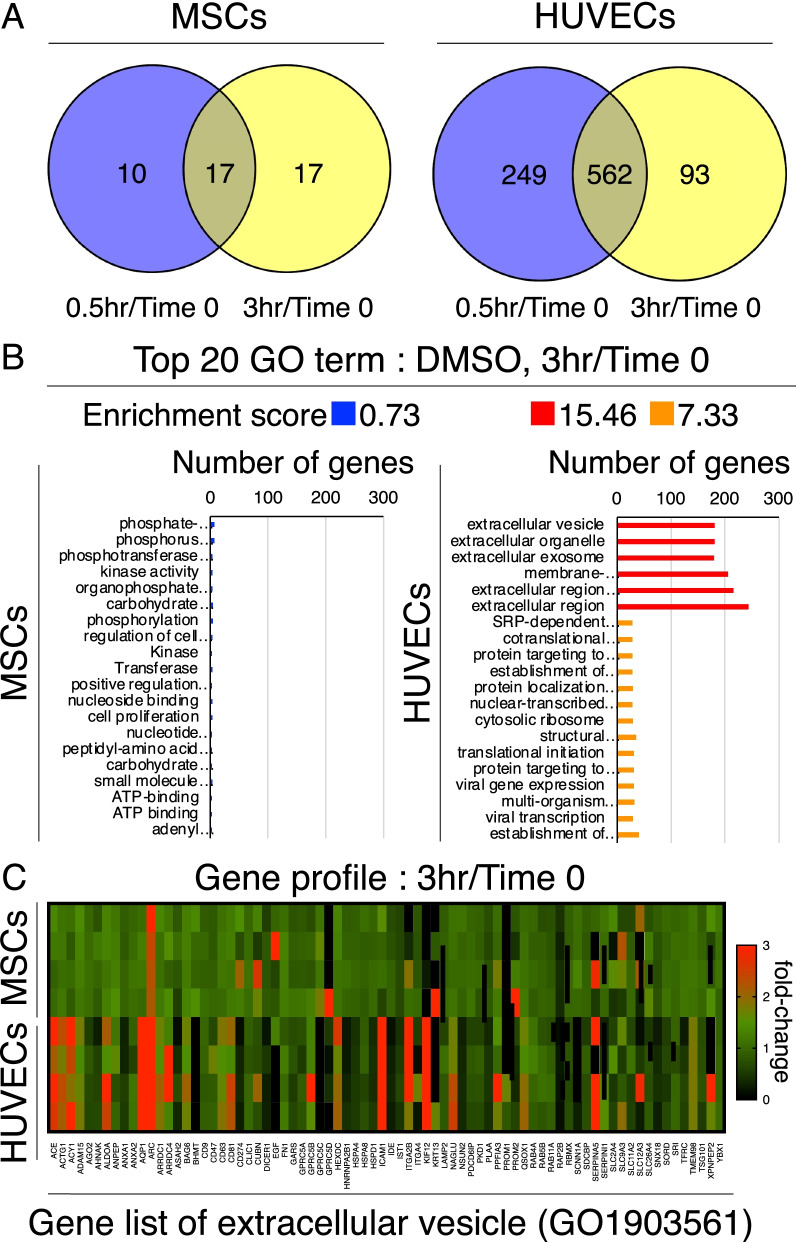
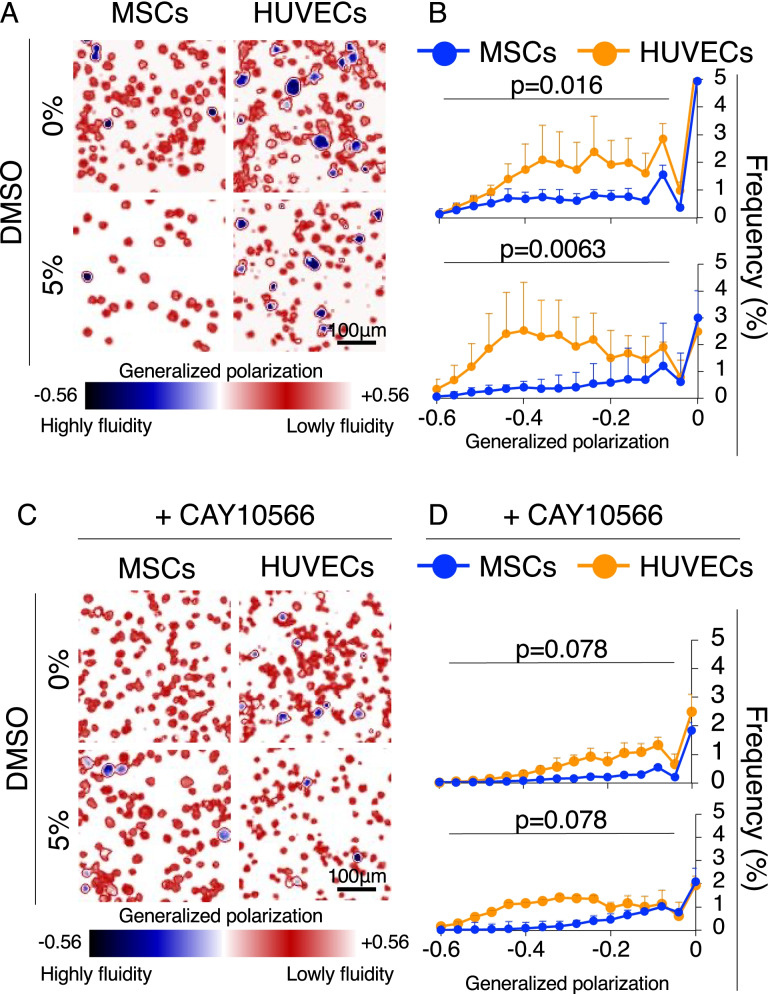
For biological analysis, MSC and HUVEC viability after freeze-thawing and alteration of gene expression in response to dimethyl sulfoxide (DMSO, a cryoprotectant) were quantitatively evaluated. For physical analysis, the cell membrane fluidity of MSCs and HUVECs before and after DMSO addition was assessed using a histogram for generalized polarization frequency.
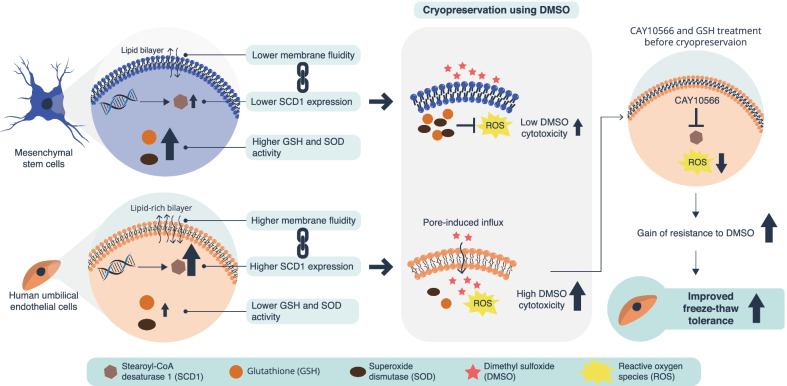
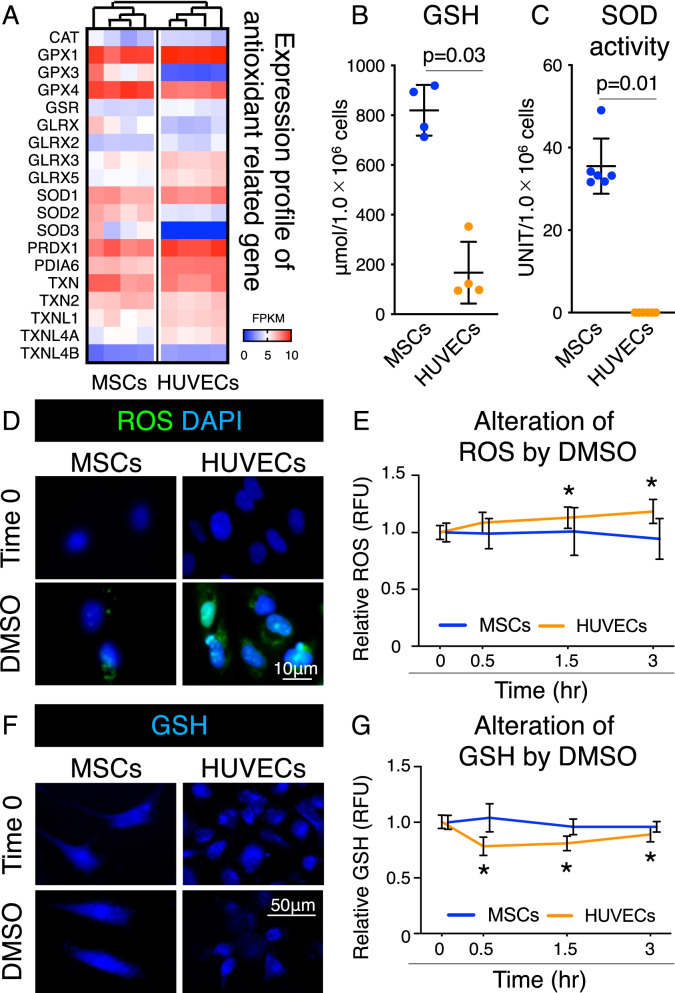
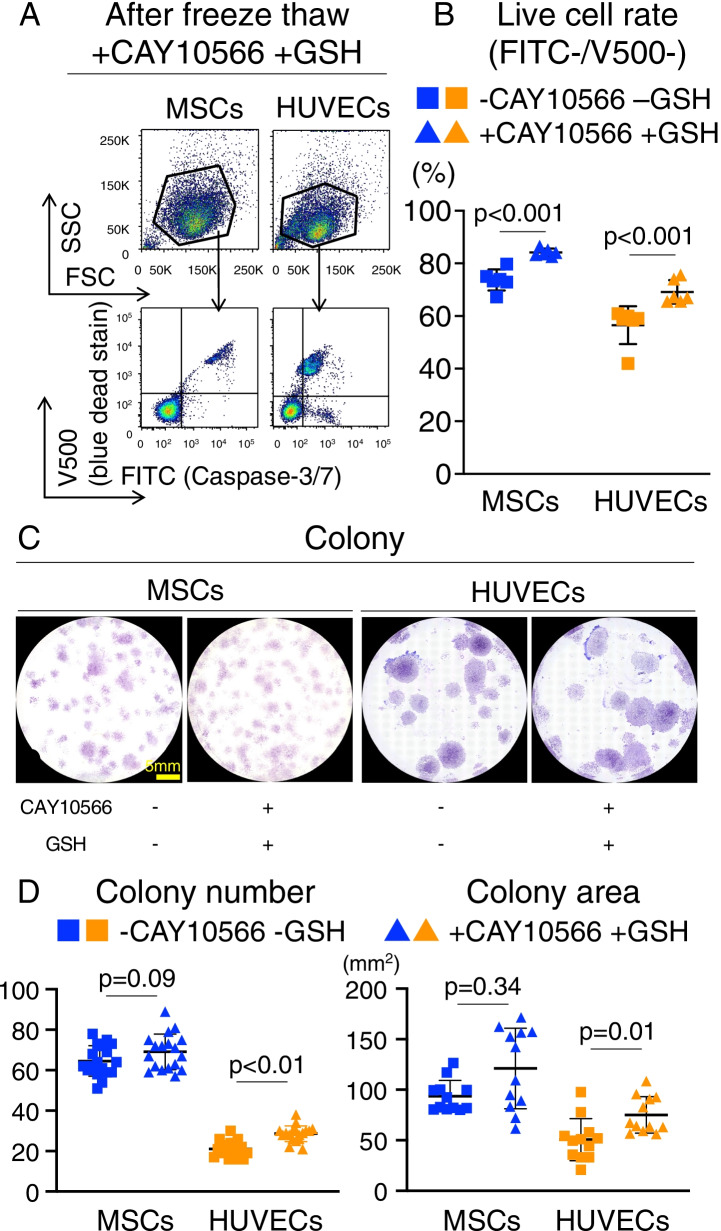
HUVECs showed lower live cell rates and higher gene expression alteration related to extracellular vesicles in response to DMSO than MSCs. Fluidity measurements revealed that the HUVEC membrane was highly fluidic and sensitive to DMSO compared to that of MSCs. Addition of CAY10566, an inhibitor of stearoyl-coA desaturase (SCD1) that produces highly fluidic desaturated fatty acids, decreased the fluidity of HUVECs and increased their tolerance to DMSO. The combination of CAY10566 and antioxidant glutathione (GSH) treatment improved HUVEC viability from 57 to 69%. Membrane fluidity alteration may thus contribute to pore-induced DMSO influx into the cytoplasm and reactive oxygen species production, leading to greater cytotoxicity in HUVECs, which have low antioxidant capacity.
Differences in freeze-thaw tolerance originate from differences in the cell membranes with respect to fluidity and antioxidant capacity. These findings provide a basis for analyzing cell biology and membrane-physics to establish appropriate long-term preservation methods aimed at promoting transplantation therapies.
滑膜间充质干细胞(MSCs)具有较高的冻融耐受性,而人脐静脉内皮细胞(HUVECs)的冻存耐受性较低。细胞类型特异性冻融耐受性的差异及其相关机制尚不清楚。因此,本研究旨在确定 MSCs 和 HUVECs 之间冻融耐受性差异所涉及的生物学和物理因素。
为了进行生物学分析,定量评估了冻融后 MSC 和 HUVEC 的存活率以及对二甲亚砜(DMSO,一种保护剂)的基因表达变化。为了进行物理分析,使用广义极化频率直方图评估了 DMSO 加入前后 MSCs 和 HUVECs 的细胞膜流动性。
与 MSCs 相比,HUVECs 表现出较低的活细胞率和与细胞外囊泡相关的更高基因表达变化,对 DMSO 更敏感。流动性测量表明,与 MSCs 相比,HUVEC 膜具有较高的流动性且对 DMSO 敏感。添加抑制剂 CAY10566(一种产生高流动性不饱和脂肪酸的硬脂酰辅酶 A 去饱和酶(SCD1)抑制剂)可降低 HUVEC 的流动性并提高其对 DMSO 的耐受性。CAY10566 和抗氧化剂谷胱甘肽(GSH)联合处理可将 HUVEC 的存活率从 57%提高到 69%。因此,细胞膜流动性的改变可能导致孔诱导的 DMSO 内流和活性氧的产生,导致抗氧化能力较低的 HUVEC 产生更大的细胞毒性。
冻融耐受性的差异源于细胞膜在流动性和抗氧化能力方面的差异。这些发现为分析细胞生物学和膜物理学提供了依据,以建立适当的长期保存方法,从而促进移植治疗。