Vuong Quan-Hoang, Le Tam-Tri, La Viet-Phuong, Nguyen Minh-Hoang
Centre for Interdisciplinary Social Research, Phenikaa University, Yen Nghia Ward, Ha Dong District, Hanoi, 100803, Viet Nam.
Heliyon. 2022 May;8(5):e09351. doi: 10.1016/j.heliyon.2022.e09351. Epub 2022 Apr 28.
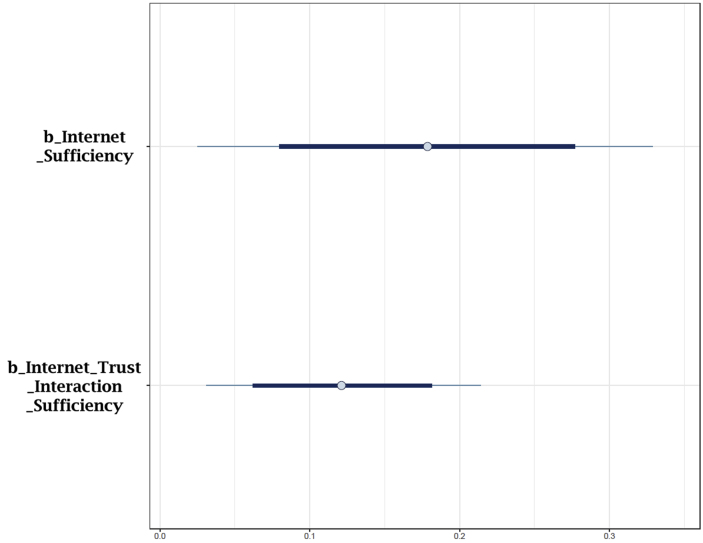
Digital healthcare has been greatly benefiting the public health system, especially during the COVID-19 pandemic. In digital healthcare, information communication through the Internet is crucial. The current study explores how patients' accessibility and trust in Internet information influence their decisions and assessment of healthcare providers by employing the Bayesian Mindsponge Framework (BMF) on a dataset of 1,459 Vietnamese patients. We find that patients' accessibility to Internet information positively affects the perceived sufficiency of information for choosing a healthcare provider, and their trust in the information intensifies this effect. Internet information accessibility is negatively associated with post-treatment assessment of healthcare providers, and trust also moderates this effect. Moreover, patients considering professional reputation important while making a decision are more likely to regard their choices as optimal, whereas patients considering services important have contradicting tendencies. Based on these findings, a concern about the risk of eroding trust toward Internet sources about healthcare information is raised. Thus, quality control and public trust-building measures need to be taken to improve the effectiveness of healthcare-related communication through the Internet and facilitate the implementation of digital healthcare.
数字医疗一直在极大地造福于公共卫生系统,尤其是在新冠疫情期间。在数字医疗中,通过互联网进行信息交流至关重要。本研究通过对1459名越南患者的数据集应用贝叶斯思维海绵框架(BMF),探讨患者对互联网信息的可获取性和信任度如何影响他们对医疗服务提供者的决策和评估。我们发现,患者对互联网信息的可获取性对选择医疗服务提供者时信息的感知充分性有积极影响,而他们对信息的信任会强化这种影响。互联网信息可获取性与对医疗服务提供者的治疗后评估呈负相关,信任也会调节这种影响。此外,在做决策时认为专业声誉重要的患者更有可能认为自己的选择是最佳的,而认为服务重要的患者则有相反的倾向。基于这些发现,人们对侵蚀对医疗信息互联网来源的信任风险表示担忧。因此,需要采取质量控制和建立公众信任的措施,以提高通过互联网进行的医疗相关沟通的有效性,并促进数字医疗的实施。