The Institute for Bioelectronic Medicine, The Feinstein Institutes for Medical Research, Northwell Health, Manhasset, New York, USA.
Cold Spring Harbor Laboratory, Cold Spring Harbor, Manhasset, New York, USA.
FASEB J. 2022 Jun;36(6):e22335. doi: 10.1096/fj.202101518R.
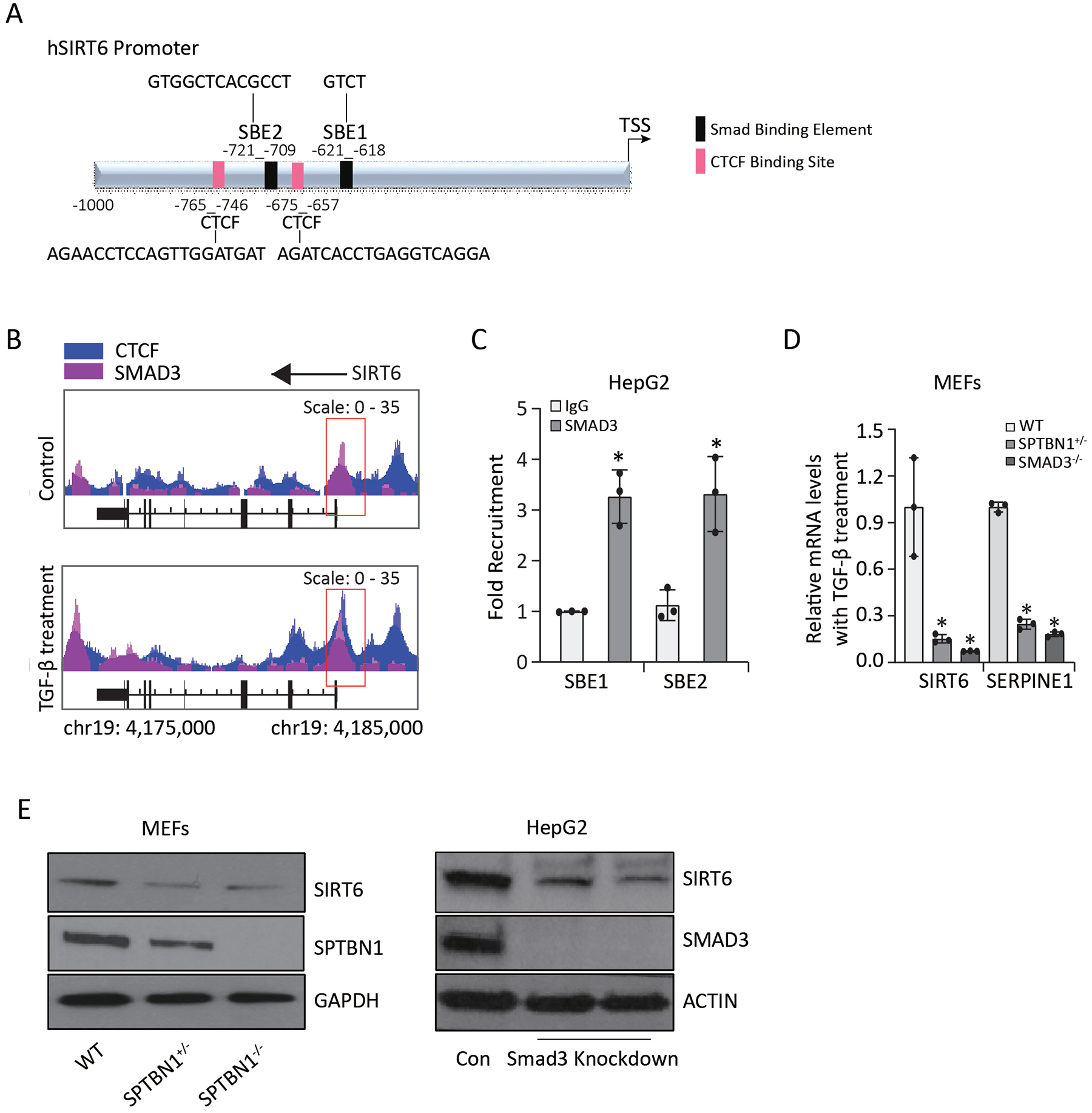
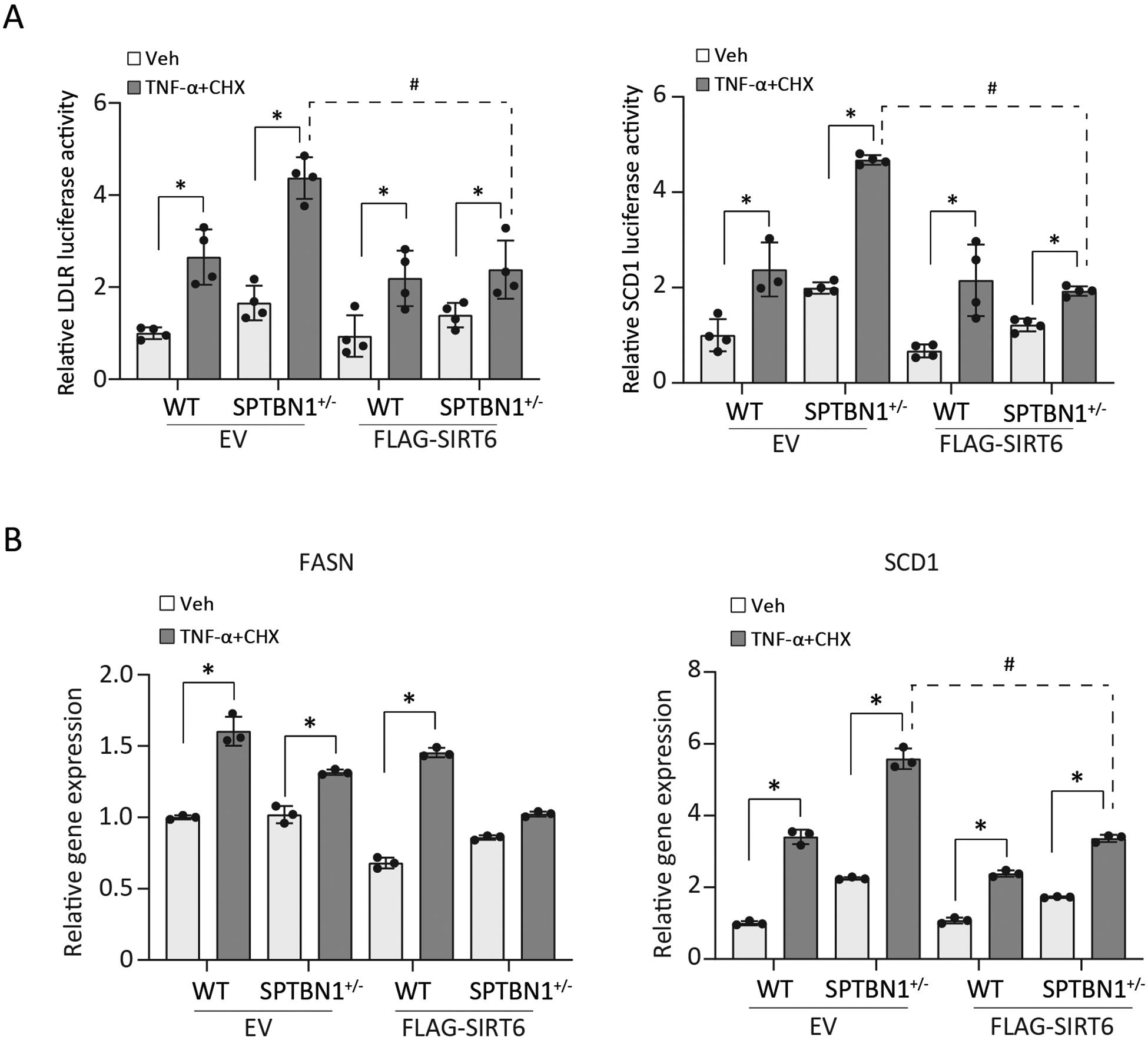
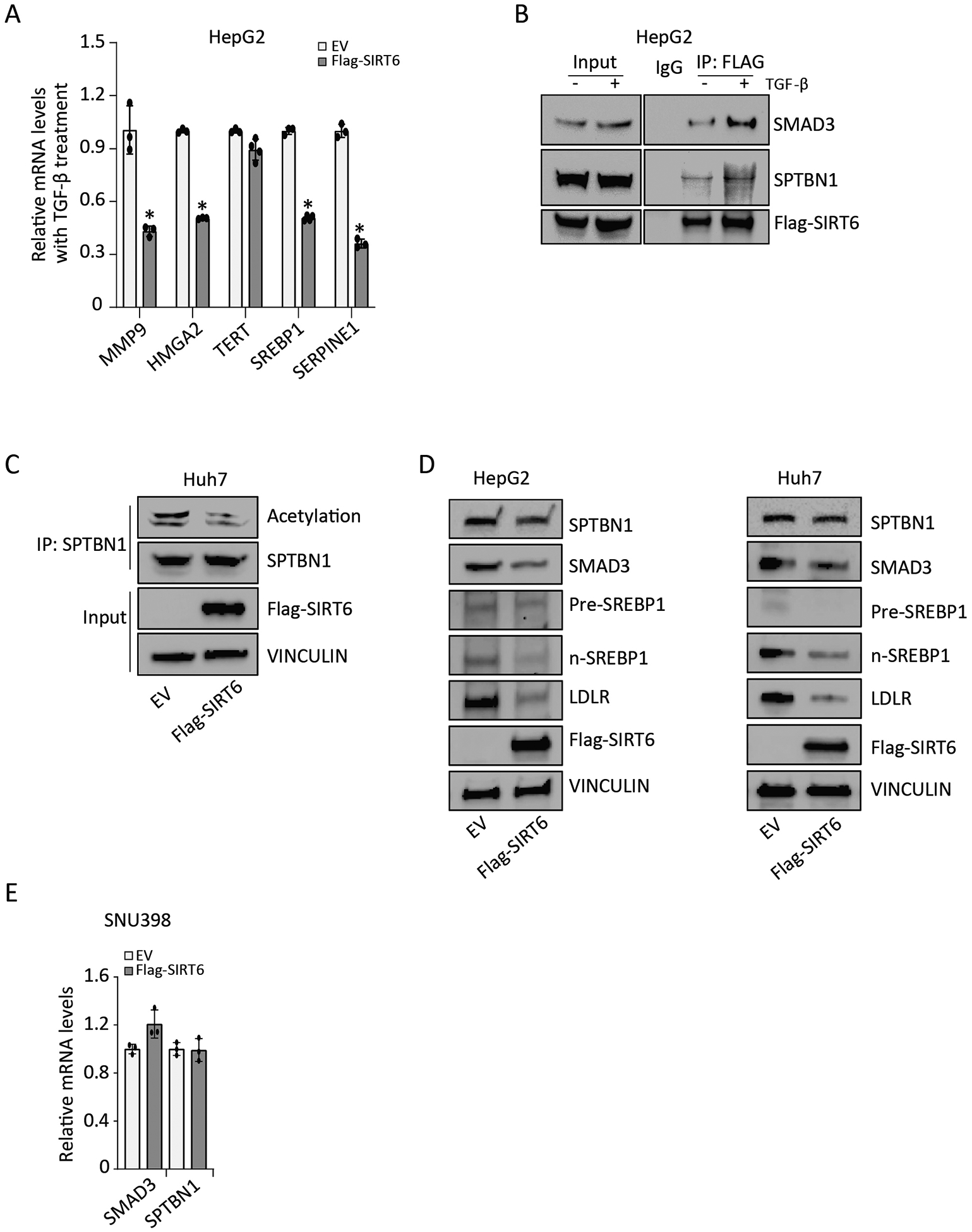
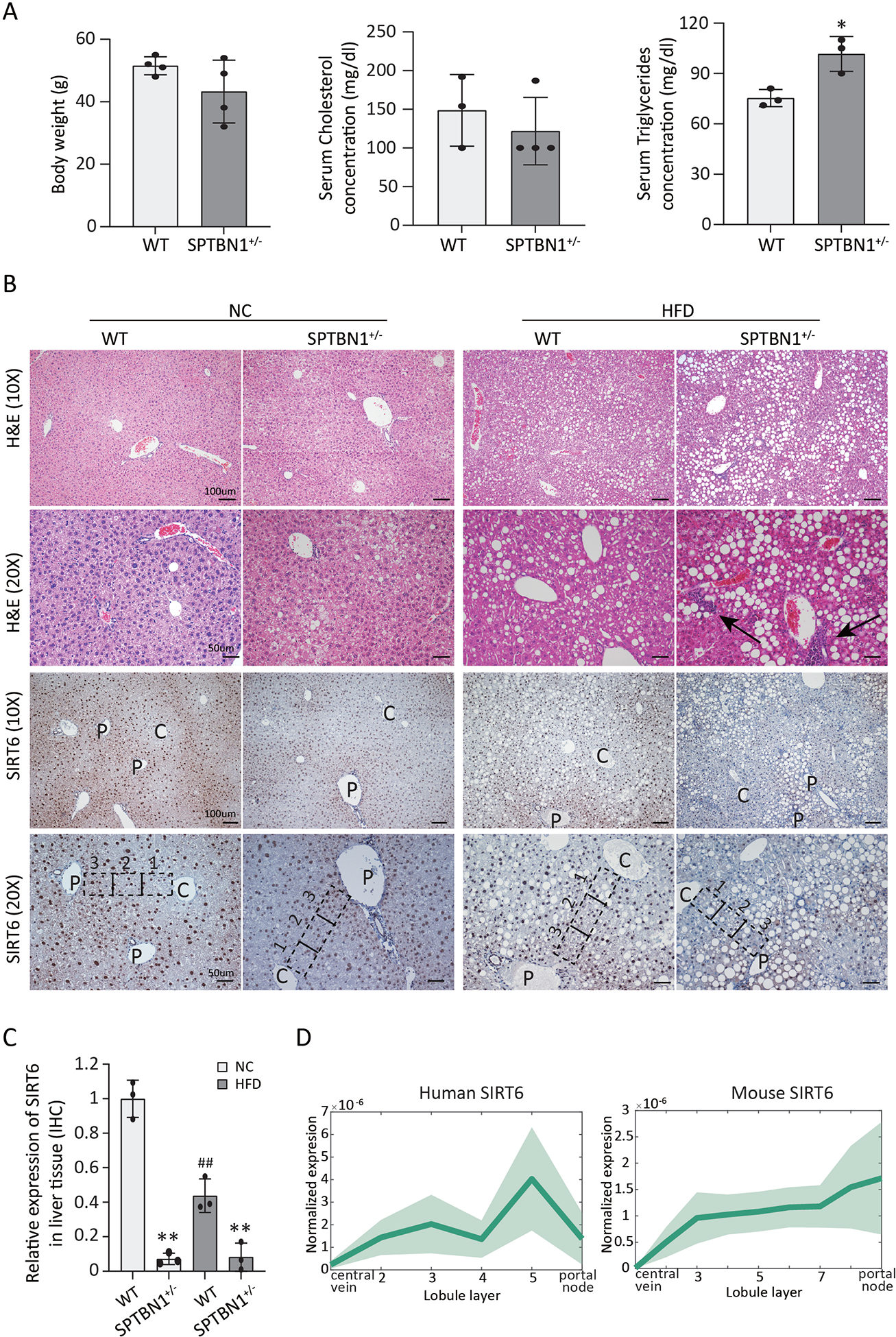
Dysregulated transforming growth factor-beta (TGF-β) signaling contributes to fibrotic liver disease and hepatocellular cancer (HCC), both of which are associated with fatty liver disease. SIRT6 limits fibrosis by inhibiting TGF-β signaling through deacetylating SMAD2 and SMAD3 and limits lipogenesis by inhibiting SREBP1 and SREBP2 activity. Here, we showed that, compared to wild-type mice, high-fat diet-induced fatty liver is worse in TGF-β signaling-deficient mice (SPTBN1 ) and the mutant mice had reduced SIRT6 abundance in the liver. Therefore, we hypothesized that altered reciprocal regulation between TGF-β signaling and SIRT6 contributes to these liver pathologies. We found that deficiency in SMAD3 or SPTBN1 reduced SIRT6 mRNA and protein abundance and impaired TGF-β induction of SIRT6 transcripts, and that SMAD3 bound to the SIRT6 promoter, suggesting that an SMAD3-SPTBN1 pathway mediated the induction of SIRT6 in response to TGF-β. Overexpression of SIRT6 in HCC cells reduced the expression of TGF-β-induced genes, consistent with the suppressive role of SIRT6 on TGF-β signaling. Manipulation of SIRT6 abundance in HCC cells altered sterol regulatory element-binding protein (SREBP) activity and overexpression of SIRT6 reduced the amount of acetylated SPTBN1 and the abundance of both SMAD3 and SPTBN1. Furthermore, induction of SREBP target genes in response to SIRT6 overexpression was impaired in SPTBN1 heterozygous cells. Thus, we identified a regulatory loop between SIRT6 and SPTBN1 that represents a potential mechanism for susceptibility to fatty liver in the presence of dysfunctional TGF-β signaling.
转化生长因子-β(TGF-β)信号失调导致肝纤维化和肝细胞癌(HCC),两者均与脂肪肝疾病相关。SIRT6 通过去乙酰化 SMAD2 和 SMAD3 来限制 TGF-β信号,通过抑制 SREBP1 和 SREBP2 活性来限制脂生成。在这里,我们发现与野生型小鼠相比,TGF-β信号缺陷型(SPTBN1)小鼠的高脂肪饮食诱导的脂肪肝更严重,并且突变小鼠的肝脏中 SIRT6 丰度降低。因此,我们假设 TGF-β信号和 SIRT6 之间的改变的相互调节导致这些肝脏病变。我们发现 SMAD3 或 SPTBN1 的缺乏降低了 SIRT6 mRNA 和蛋白丰度,并损害了 TGF-β诱导的 SIRT6 转录物,并且 SMAD3 结合到 SIRT6 启动子上,表明 SMAD3-SPTBN1 途径介导了对 TGF-β的 SIRT6 诱导。在 HCC 细胞中过表达 SIRT6 降低了 TGF-β诱导基因的表达,这与 SIRT6 对 TGF-β信号的抑制作用一致。HCC 细胞中 SIRT6 丰度的操纵改变了固醇调节元件结合蛋白(SREBP)活性,并且 SIRT6 的过表达降低了乙酰化 SPTBN1 的量以及 SMAD3 和 SPTBN1 的丰度。此外,SIRT6 过表达诱导的 SREBP 靶基因的表达在 SPTBN1 杂合细胞中受到损害。因此,我们鉴定了 SIRT6 和 SPTBN1 之间的调节环,这代表了在 TGF-β信号功能失调存在的情况下对脂肪肝易感性的潜在机制。