Department of Analytical Chemistry, Faculty of Chemical Sciences, Complutense University of Madrid, 28040, Madrid, Spain.
Chronic Disease Program (UFIEC), Instituto de Salud Carlos III, Majadahonda, 28220, Madrid, Spain.
Angew Chem Int Ed Engl. 2022 Jul 11;61(28):e202203662. doi: 10.1002/anie.202203662. Epub 2022 May 24.
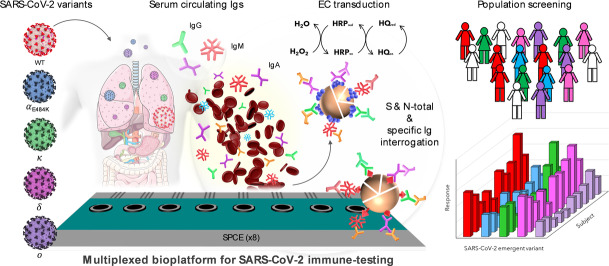
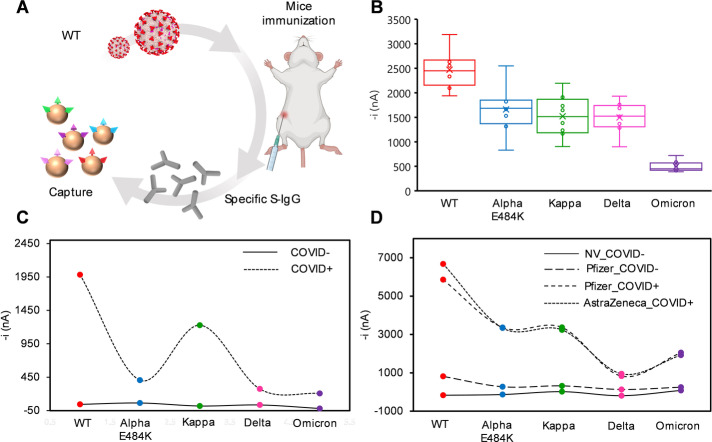
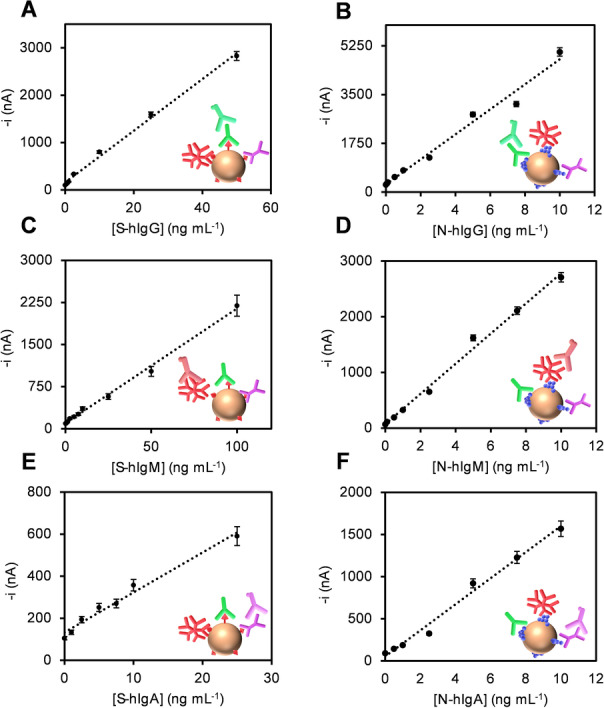
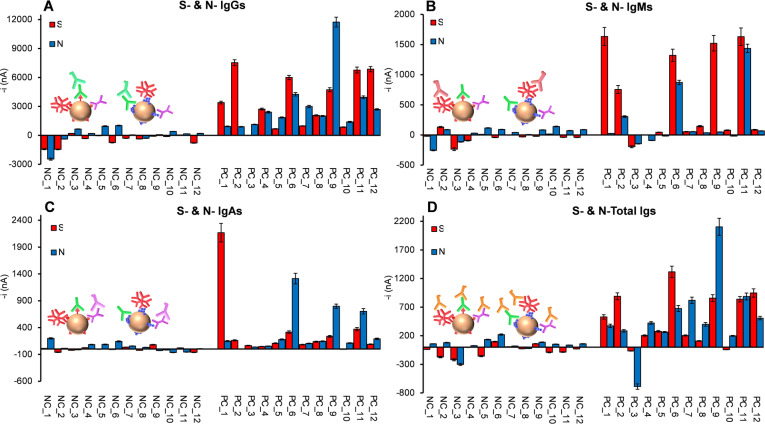
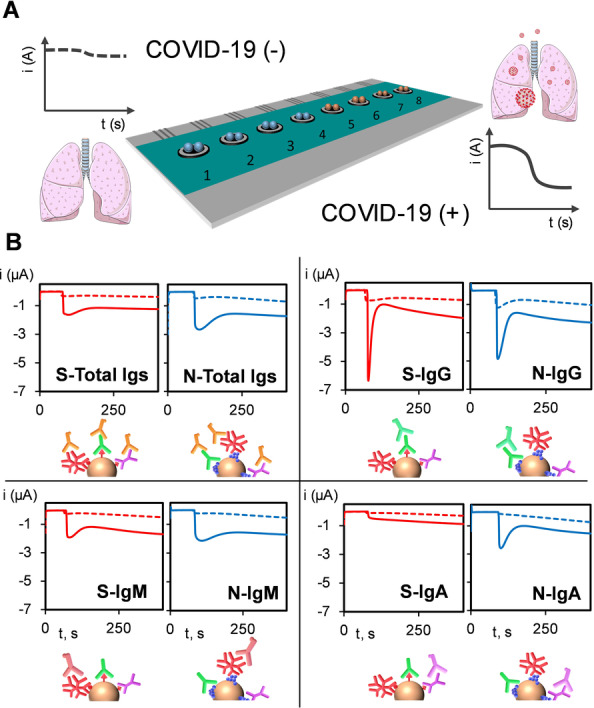
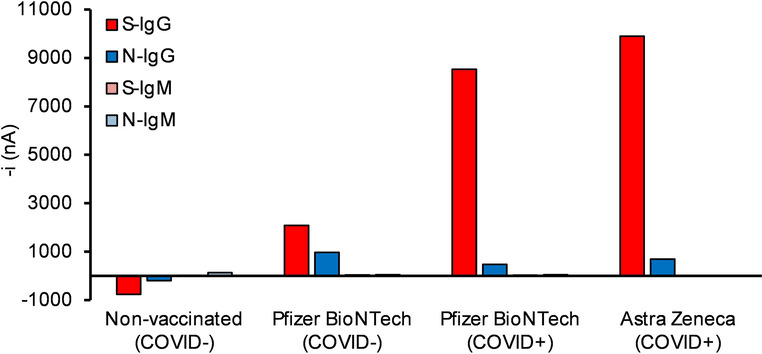
The development of versatile and sensitive biotools to quantify specific SARS-CoV-2 immunoglobulins in SARS-CoV-2 infected and non-infected individuals, built on the surface of magnetic microbeads functionalized with nucleocapsid (N) and in-house expressed recombinant spike (S) proteins is reported. Amperometric interrogation of captured N- and S-specific circulating total or individual immunoglobulin (Ig) isotypes (IgG, IgM, and IgA), subsequently labelled with HRP-conjugated secondary antibodies, was performed at disposable single or multiplexed (8×) screen-printed electrodes using the HQ/HRP/H O system. The obtained results using N and in-house expressed S ectodomains of five SARS-CoV-2 variants of concern (including the latest Delta and Omicron) allow identification of vulnerable populations from those with natural or acquired immunity, monitoring of infection, evaluation of vaccine efficiency, and even identification of the variant responsible for the infection.
本文报道了一种基于表面功能化有核衣壳(N)蛋白和内部表达的重组刺突(S)蛋白的磁性微球的通用且灵敏的生物工具的开发,用于定量检测 SARS-CoV-2 感染和未感染个体中的特定 SARS-CoV-2 免疫球蛋白。通过 HQ/HRP/H O 系统,在一次性单通道或 8 通道(8×)丝网印刷电极上,对与 HRP 标记的二级抗体结合的捕获的 N 和 S 特异性循环总或个体免疫球蛋白(Ig)同种型(IgG、IgM 和 IgA)进行安培检测。使用 N 和内部表达的 S 结构域对五种关注的 SARS-CoV-2 变体(包括最新的 Delta 和 Omicron)进行的研究结果,可用于识别具有自然或获得性免疫力的人群、监测感染、评估疫苗效率,甚至识别导致感染的变体。