Li Hongxia, Warden Antony R, He Jie, Shen Guangxia, Ding Xianting
State Key Laboratory of Oncogenes and Related Genes, Institute for Personalized Medicine, School of Biomedical Engineering, Shanghai Jiao Tong University, Shanghai 200030, China.
Sci Adv. 2022 May 6;8(18):eabm4006. doi: 10.1126/sciadv.abm4006. Epub 2022 May 4.
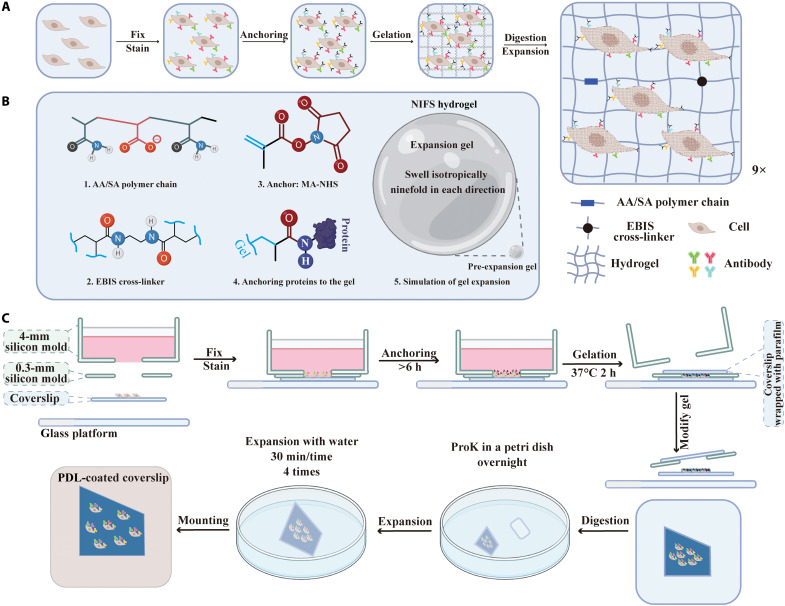
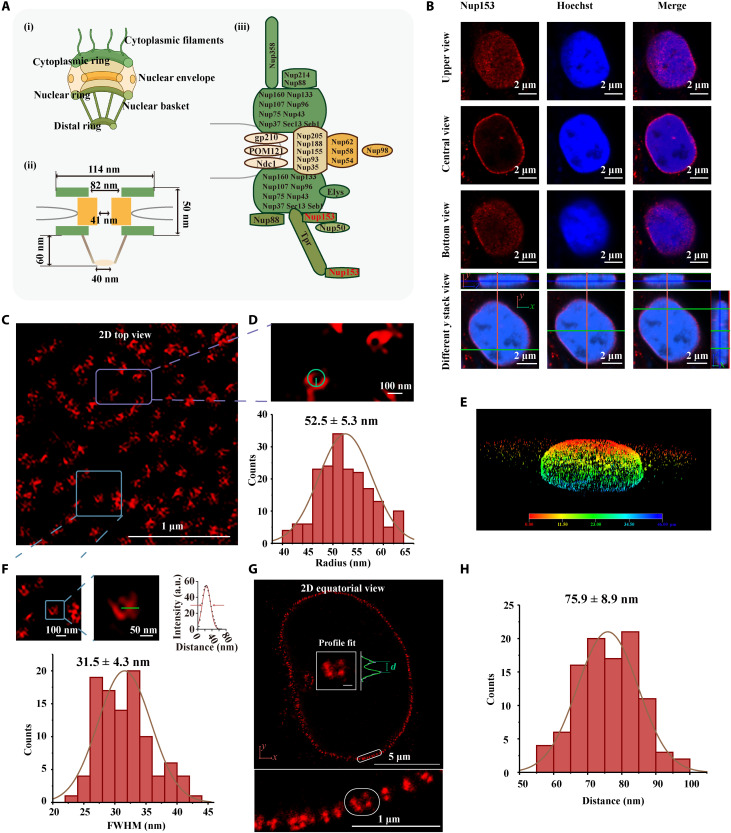
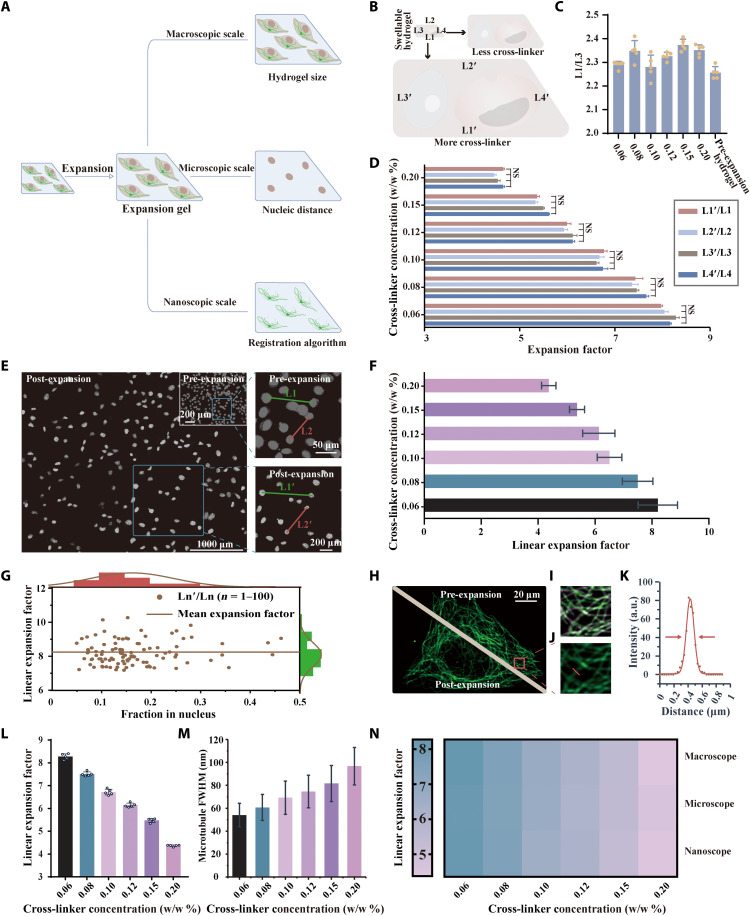
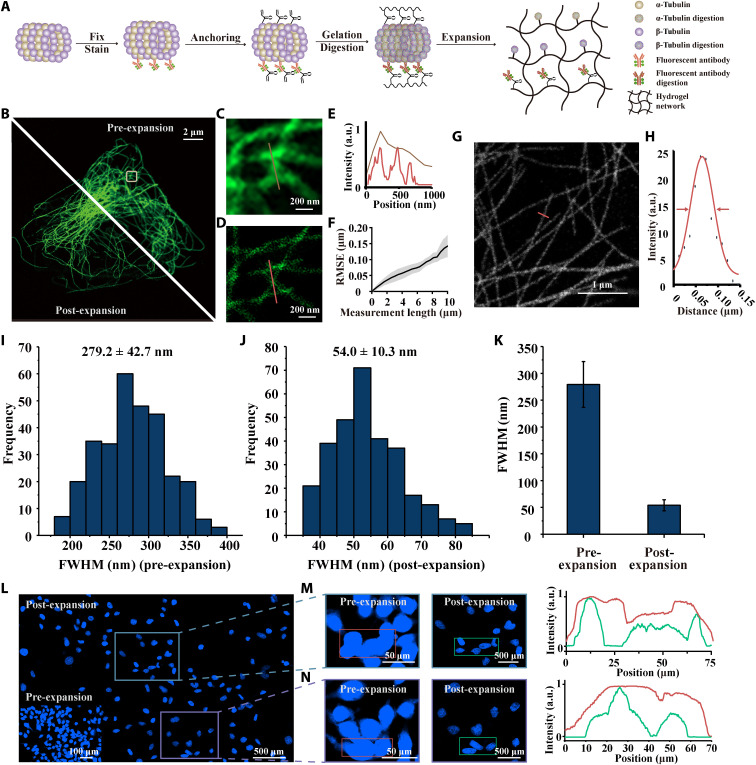
Superresolution microscopy enables probing of cellular ultrastructures. However, its widespread applications are limited by the need for expensive machinery, specific hardware, and sophisticated data processing. Expansion microscopy (ExM) improves the resolution of conventional microscopy by physically expanding biological specimens before imaging and currently provides 70-nm resolution, which still lags behind that of modern superresolution microscopy (30 nm). Here, we demonstrate a ninefold swelling (NIFS) hydrogel, that can reduce ExM resolution to 31 nm when using regular traditional microscopy. We also design a detachable chip that integrates all the experimental operations to facilitate the maximal reproducibility of this high-resolution imaging technology. We demonstrate this technique on the superimaging of nuclear pore complex and clathrin-coated pits, whose structures can hardly be resolved by conventional microscopy. The method presented here offers a universal platform with superresolution imaging to unveil cellular ultrastructural details using standard conventional laboratory microscopes.
超分辨率显微镜能够探测细胞超微结构。然而,其广泛应用受到昂贵设备、特定硬件和复杂数据处理需求的限制。扩展显微镜(ExM)通过在成像前对生物样本进行物理扩展来提高传统显微镜的分辨率,目前可提供约70纳米的分辨率,仍落后于现代超分辨率显微镜(约30纳米)。在此,我们展示了一种九倍膨胀(NIFS)水凝胶,使用常规传统显微镜时,它可将ExM分辨率降低至31纳米。我们还设计了一种可拆卸芯片,集成了所有实验操作,以促进这种高分辨率成像技术的最大可重复性。我们在核孔复合体和网格蛋白包被小窝的超成像上展示了这项技术,其结构很难通过传统显微镜分辨。本文提出的方法提供了一个具有超分辨率成像的通用平台,可使用标准的常规实验室显微镜揭示细胞超微结构细节。