Institute for Neuro- and Sensory Physiology, Center for Biostructural Imaging of Neurodegeneration, Cluster of Excellence Nanoscale Microscopy and Molecular Physiology of the Brain, University Medical Center Göttingen, Göttingen, Germany
International Max Planck Research School for Molecular Biology, Göttingen, Germany.
EMBO Rep. 2018 Sep;19(9). doi: 10.15252/embr.201845836. Epub 2018 Jul 9.
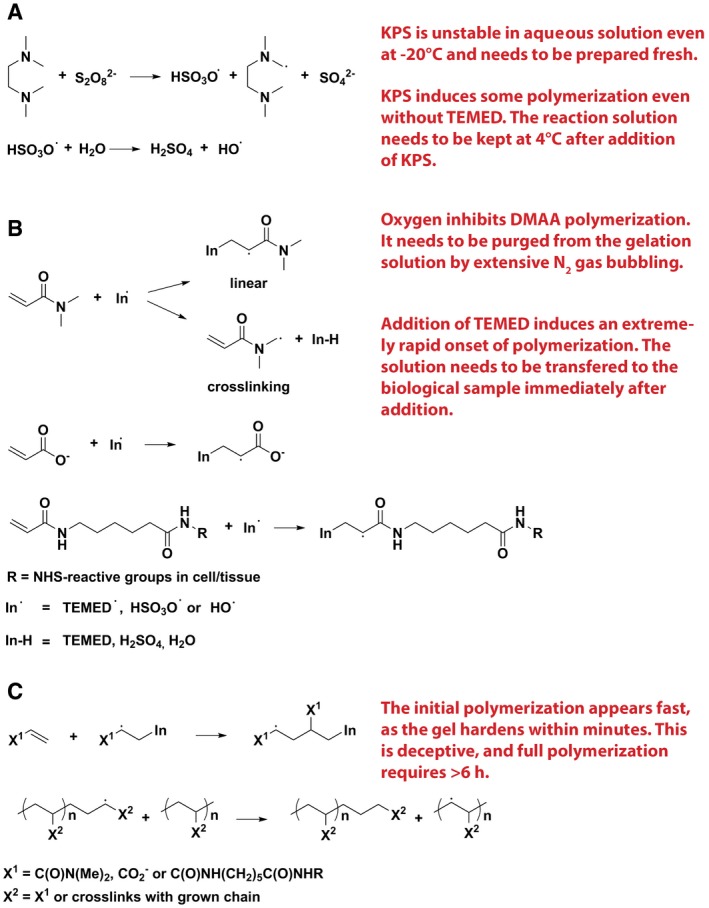
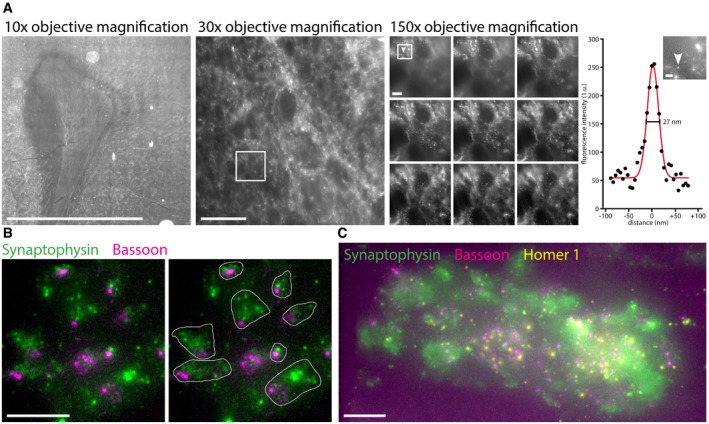
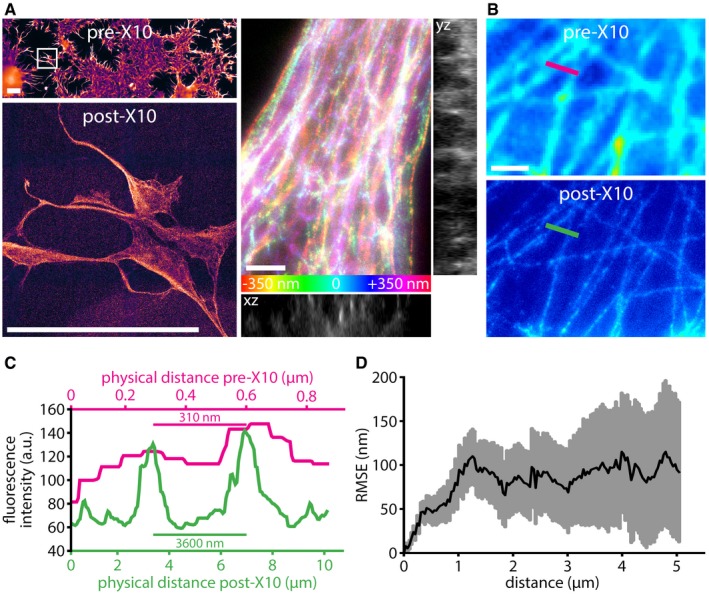
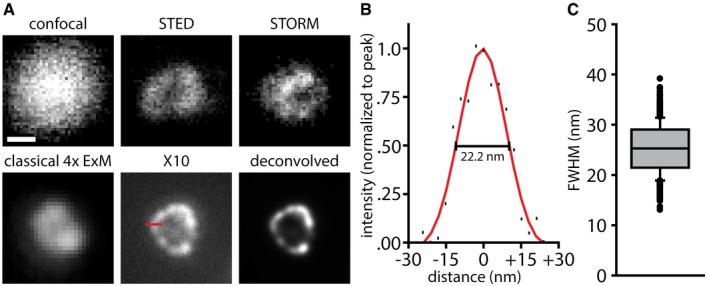
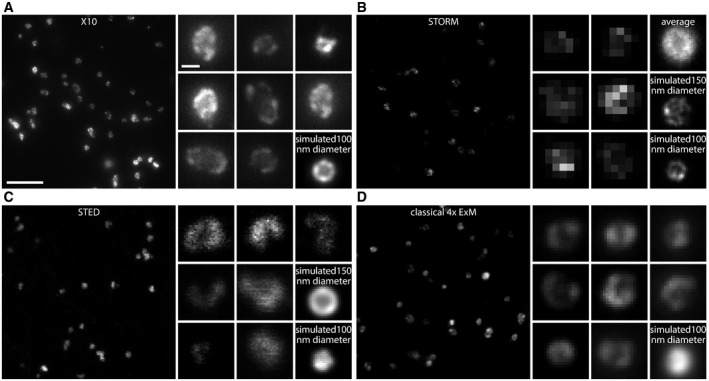
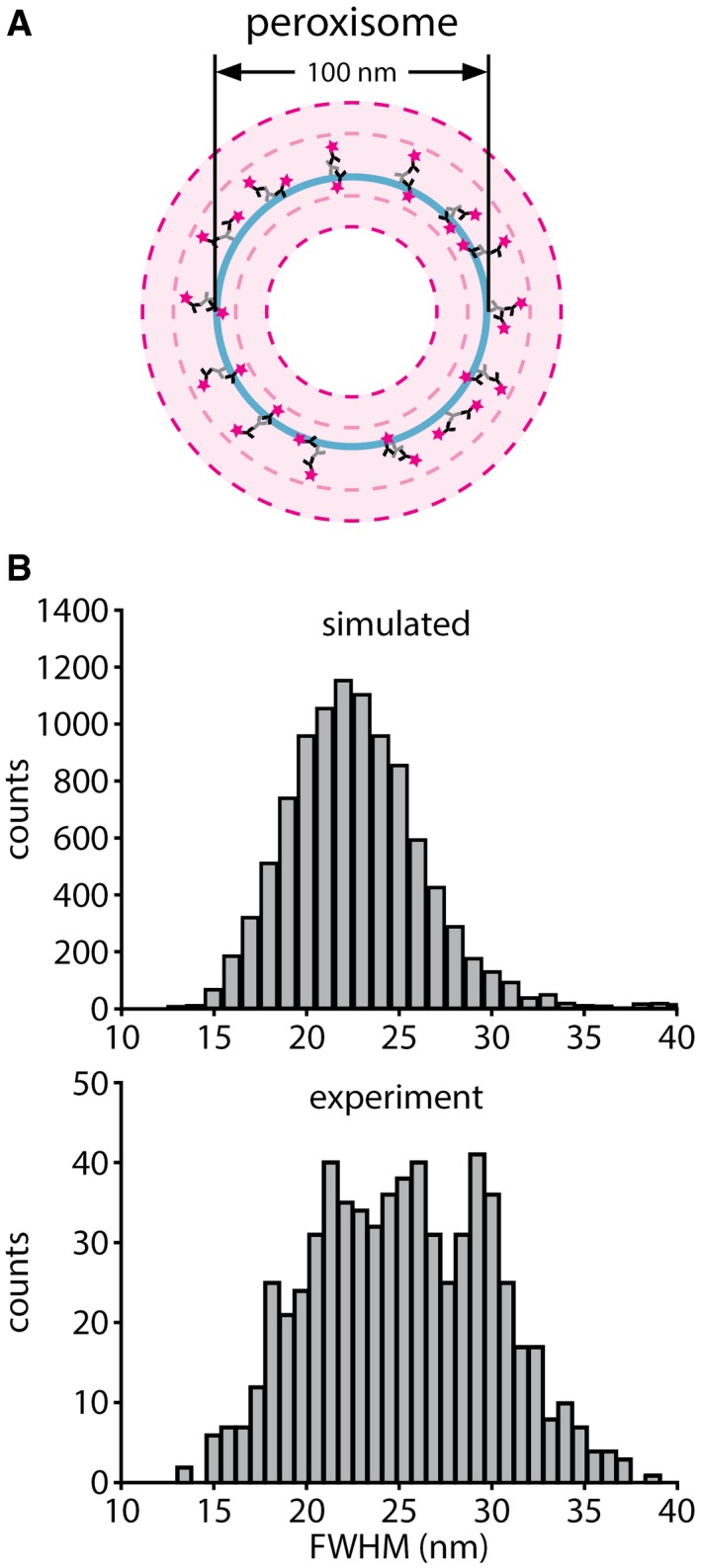
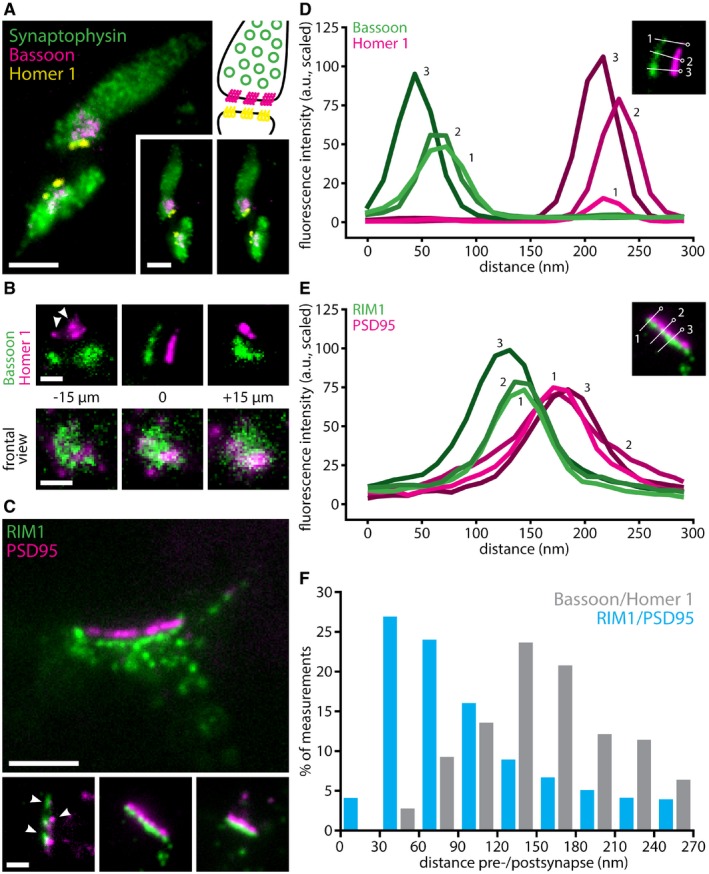
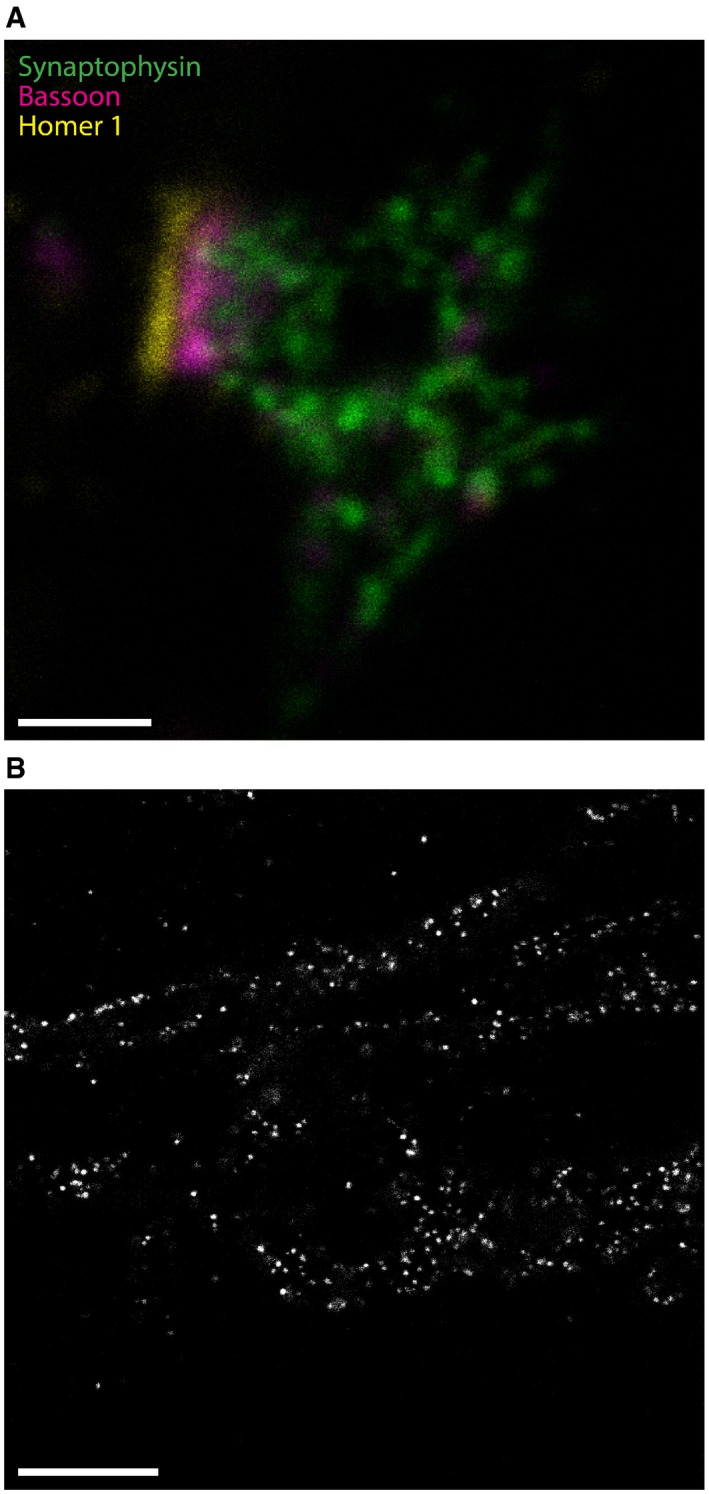
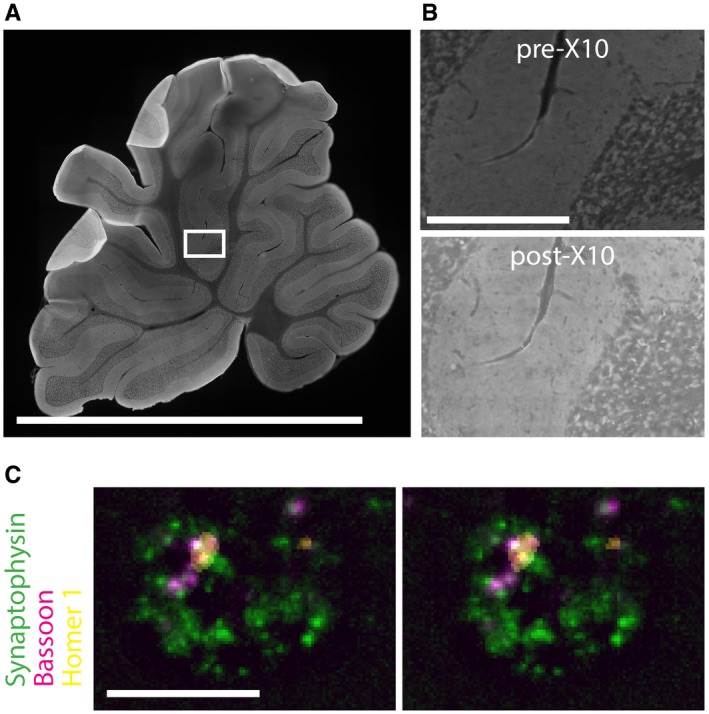
Expansion microscopy is a recently introduced imaging technique that achieves super-resolution through physically expanding the specimen by ~4×, after embedding into a swellable gel. The resolution attained is, correspondingly, approximately fourfold better than the diffraction limit, or ~70 nm. This is a major improvement over conventional microscopy, but still lags behind modern STED or STORM setups, whose resolution can reach 20-30 nm. We addressed this issue here by introducing an improved gel recipe that enables an expansion factor of ~10× in each dimension, which corresponds to an expansion of the sample volume by more than 1,000-fold. Our protocol, which we termed X10 microscopy, achieves a resolution of 25-30 nm on conventional epifluorescence microscopes. X10 provides multi-color images similar or even superior to those produced with more challenging methods, such as STED, STORM, and iterative expansion microscopy (iExM). X10 is therefore the cheapest and easiest option for high-quality super-resolution imaging currently available. X10 should be usable in any laboratory, irrespective of the machinery owned or of the technical knowledge.
扩展显微镜是一种最近引入的成像技术,通过在嵌入可溶胀凝胶后将样品物理膨胀约 4 倍来实现超分辨率。相应地,获得的分辨率比衍射极限大约高出四倍,约为 70nm。这是对传统显微镜的重大改进,但仍落后于现代 STED 或 STORM 设备,其分辨率可达到 20-30nm。在这里,我们通过引入一种改进的凝胶配方来解决这个问题,该配方在每个维度上都能实现约 10 倍的扩展因子,这对应于样品体积的扩展超过 1000 倍。我们的方法称为 X10 显微镜,在传统的荧光显微镜上实现了 25-30nm 的分辨率。X10 提供的多色图像与 STED、STORM 和迭代扩展显微镜(iExM)等更具挑战性的方法产生的图像相似,甚至更好。因此,X10 是目前可用的最高质量超分辨率成像的最便宜、最简单的选择。X10 应该可以在任何实验室使用,无论其拥有的设备或技术知识如何。