Center for the Study of Equity and Governance in Health Systems (CEGSS), Ciudad de Guatemala, Guatemala
Epidemiology and Global Health, Umea University, Umea, Sweden.
BMJ Glob Health. 2022 May;7(5). doi: 10.1136/bmjgh-2022-008530.
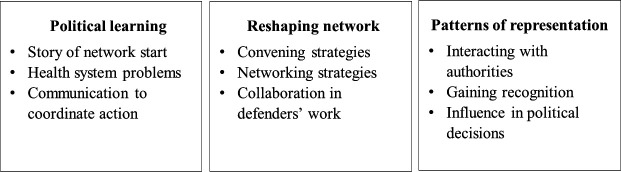
Growing interest in how marginalised citizens can leverage countervailing power to make health systems more inclusive and equitable points to the need for politicised frameworks for examining bottom-up accountability initiatives. This study explores how political capabilities are manifested in the actions and strategies of Indigenous grassroots leaders of health accountability initiatives in rural Guatemala. Qualitative data were gathered through group discussions and interviews with initiative leaders (called defenders of the right to health) and initiative collaborators in three municipalities. Analysis was oriented by three dimensions of political capabilities proposed for evaluating the longer-term value of participatory development initiatives: political learning, reshaping networks and patterns of representation. Our findings indicated that the defenders' political learning began with actionable knowledge about defending the right to health and citizen participation. The defenders used their understanding of local norms to build trust with remote Indigenous communities and influence them to participate in monitoring to attempt to hold the state accountable for the discriminatory and deficient healthcare they received. Network reshaping was focused on broadening their base of support. Their leadership strategies enabled them to work with other grassroots leaders and access resources that would expand their reach in collective action and lend them more influence representing their problems beyond the local level. Patterns of representing their interests with a range of local and regional authorities indicated they had gained confidence and credibility through their evolving capability to navigate the political landscape and seek the right authority based on the situation. Our results affirm the critical importance of sustained, long-term processes of engagement with marginalised communities and representatives of the state to enable grassroots leaders of accountability initiatives to develop the capabilities needed to mobilise collective action, shift the terms of interaction with the state and build more equitable health systems.
人们越来越关注边缘化公民如何利用制衡力量使卫生系统更具包容性和平等性,这凸显了需要建立政治化的框架来审查自下而上的问责制倡议。本研究探讨了在危地马拉农村地区,健康问责制倡议的土著基层领导人的行动和策略中如何体现政治能力。通过与三个市镇的倡议领导人(称为健康权捍卫者)和倡议合作者进行小组讨论和访谈,收集了定性数据。分析以评估参与式发展倡议的长期价值的政治能力的三个维度为指导:政治学习、重塑网络和代表性模式。我们的研究结果表明,捍卫者的政治学习始于捍卫健康权和公民参与方面的可行知识。捍卫者利用他们对当地规范的理解,与偏远的土著社区建立信任,并影响他们参与监督,试图让国家对他们所接受的歧视性和有缺陷的医疗保健负责。网络重塑的重点是扩大他们的支持基础。他们的领导策略使他们能够与其他基层领导人合作,并获得资源,扩大他们在集体行动中的影响力,并使他们在地方一级之外更有能力代表他们的问题。他们与各种地方和区域当局代表利益的模式表明,他们通过不断发展的驾驭政治环境和根据情况寻求正确权威的能力,获得了信心和信誉。我们的研究结果肯定了与边缘化社区和国家代表持续进行长期接触的重要性,以使问责制倡议的基层领导人能够发展动员集体行动、改变与国家互动的条件和建立更公平的卫生系统所需的能力。